A drive train sold as one package
In October 2026, South African equipment supplier BMG (Bearing Man Group) used the trade press to describe how it supplies drives for belt conveyors and feeders in mining and bulk materials handling: not as separate orders for a motor, a gearbox and a coupling, but as engineered turnkey drive packages. The package, as BMG describes it, brings together the motor, variable speed drive, couplings, gearbox, pulleys, bearings, lubrication system and condition-monitoring technologies, engineered to operate as one integrated system. Rudzani Ramuageli, BMG's head of projects, puts the reasoning in interface terms: conveyor and feeder drive systems should operate as co-ordinated assemblies, and the objective is to engineer the drive train so that the interfaces between components support conveyor availability rather than become potential points of failure. Two cautions belong on the record before any buyer uses this as a reference. The account is the supplier's description of its own offer, carried by South African trade media, and it was published without project data or measured performance figures. Its value to a buyer is therefore not proof that packaged drives outperform separately bought components; it is that a named supplier has put a package composition and an engineering sequence in writing, which gives buyers a concrete list to specify against — whoever ends up supplying the package.
The design basis runs backwards from tonnes per hour
BMG describes an engineering sequence that starts at the process end and works backwards: it begins with the required tonnes per hour and belt speed, then moves through pulley torque, gearbox ratio, motor power, starting characteristics and control philosophy. Each package is configured for its application, taking into account the required material throughput, belt speed, starting and operating torque, duty cycle, environmental conditions and installation constraints. For a buyer, this sequence defines the minimum content of a serious drive-package enquiry. If the duty data — throughput, belt speed, starting torque, duty cycle, ambient conditions, available space — are not in the request for quotation, the package supplier is sizing against assumptions the buyer has not seen. And once a package vendor does the sizing, its assumptions stop being engineering detail and become part of the bargain: the design basis should be a named deliverable of the package, stating the throughput and belt speed it was built around, the torque margins it carries, and the starting method it assumes. A package quotation that arrives as a single price with no calculation chain behind it is a parts list with one invoice, and it leaves the buyer holding the interface risk the package was supposed to remove.

What sits inside the package boundary — and what stays outside
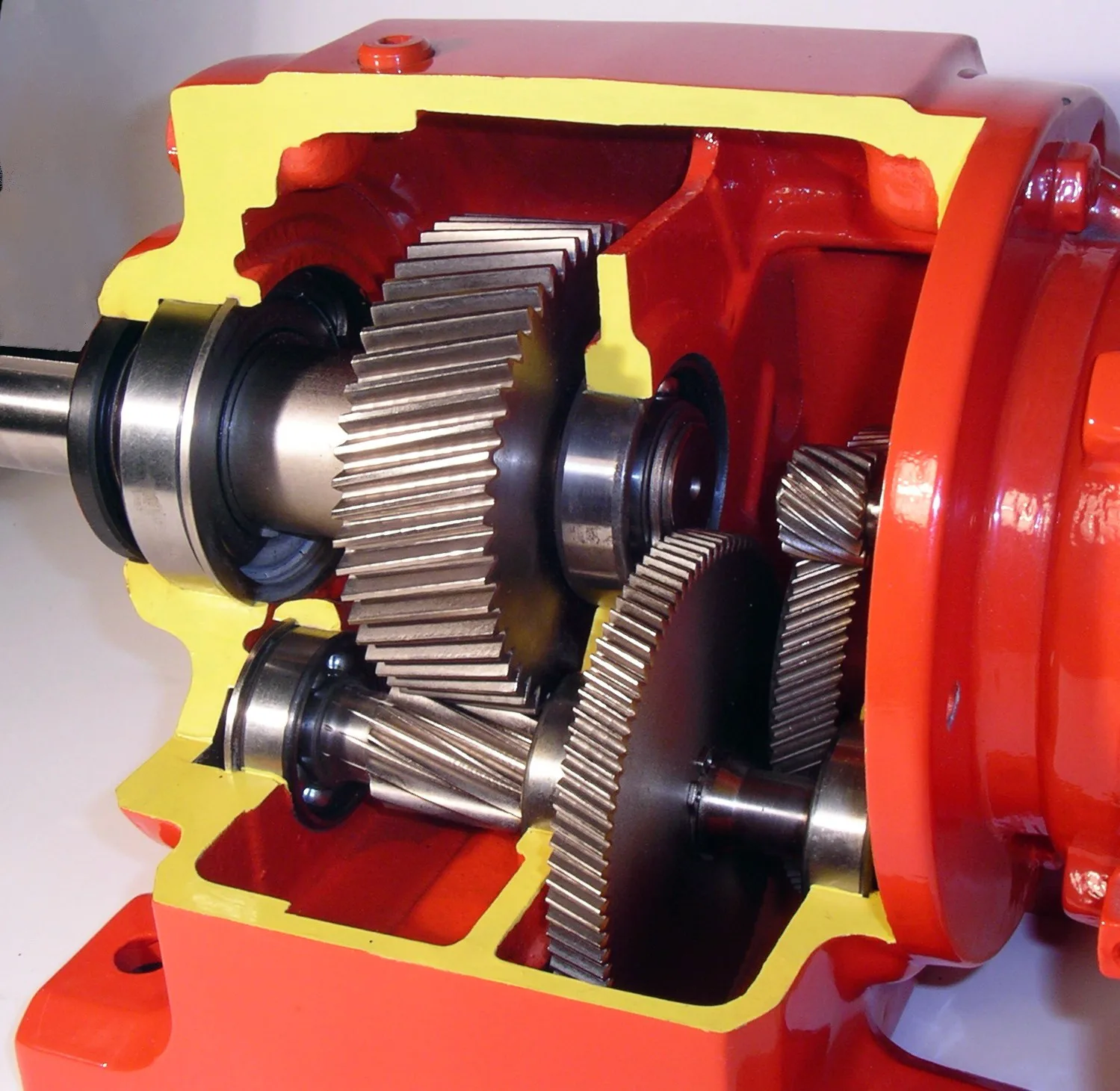
BMG's published composition is specific enough to test other offers against. Depending on operational requirements, a package may include an electric motor, a variable speed drive, an application-specific high-speed or fluid coupling, an industrial or planetary gearbox, a drive pulley, protective guarding and a purpose-designed base frame. Supporting systems can be engineered in rather than added later: lubrication and cooling systems, automatic lubrication equipment and local electrical controls. Condition monitoring is part of the package logic, either integrated through the variable speed drive or provided as shock-pulse monitoring and vibration analysis, so that component condition can be tracked and trended under a condition-based maintenance strategy. The boundary matters as much as the contents. Gearboxes may sit on standard torque arms or on specially manufactured torque arms matched to the layout, which makes the mounting arrangement a package decision. But the conveyor structure itself is explicitly outside BMG's scope, and for pulleys and idlers built by others, BMG's role is to select and supply bearings against those manufacturers' designs — considering radial and axial loads, shaft dimensions, operating speed, expected misalignment, contamination, sealing and lubrication. A package, in other words, does not abolish interfaces; it moves them. The exclusions are exactly where the buyer's remaining interface risk sits, and they belong in the contract, not in the assumptions.
The interface list is the real deliverable
What a buyer is actually purchasing in a packaged drive is a reduction in the number of seams they personally have to manage — and that reduction only exists if the seams are written down. The specification should therefore require an interface list as a contract document, covering at least four groups. Mechanical interfaces: coupling selection and guarding, shaft connections, alignment tolerances, torque-arm reaction points, and the base frame's footprint and foundation loads. Electrical and control interfaces: the motor–drive pairing, starting characteristics, and where the package's control philosophy hands over to the plant control system, including the scope of local controls. Lubrication interfaces: who specifies the oil and the cooling duty, and who owns refilling and sampling once the package is in service. Monitoring interfaces: which condition signals exist — drive-integrated monitoring, shock pulse or vibration — where they are displayed, and who owns the trend data they generate. Against each internal interface, the contract should name a single responsible party: when motor, coupling and gearbox disagree in service, the buyer needs one answer, not a three-way dispute between component suppliers. Interfaces the package does not cover — incoming power, plant control integration, the conveyor structure the package bolts onto — should be listed just as explicitly, marked as buyer-retained or assigned to another package, so that nothing falls between two scopes.
Acceptance runs from factory alignment to commissioning
BMG describes its involvement as a sequence that starts before the order and ends after start-up: site assessment and application engineering, then component selection, assembly and factory alignment, with installation supervision and commissioning support available so the assembled package is installed and brought into operation to the application's requirements. Each stage of that sequence gives the buyer an acceptance gate, and the gates should be specified rather than assumed. At the factory: alignment records for the assembled train, the configured drive parameter set, and any no-load test results the package can reasonably produce before dispatch. On site: the supervision scope in writing — whose technicians, for how many days, and with authority over which installation steps — and commissioning tests that reflect the duty the package was sized for, including starting behaviour and a loaded run. At handover: the as-built interface list, the lubrication and cooling schedule, and baseline condition-monitoring readings against which later trends will be judged. Warranty needs the same treatment: a package bought as one unit should carry a single warranty conversation for failures at its internal interfaces, instead of separate component warranties that each stop at a coupling face. A package-level critical spares list — coupling elements, filters, lubricants, monitoring sensors — completes the acceptance package.
What this specification is not: three neighbouring questions
This article is deliberately narrow: it treats the drive package as a procurement unit — its hardware scope, its interfaces and its acceptance. Three neighbouring questions are handled elsewhere, and confusing them with this one produces bad specifications. First, system architecture: how a long overland conveyor is electrified and how its drive stations are arranged is a system-level decision that sits above any single package; that is the subject of the scheduled companion piece on overland conveyors in the electrified mine, and a package is bought inside that architecture, not instead of it. Second, service contracting: the lifecycle-services piece in this series covers buying the operation of a conveyor as a service — availability commitments, monitoring data ownership and exit terms; a packaged purchase like the one BMG describes keeps operation with the owner, even when installation supervision and commissioning support are bundled in. Third, gearless retrofits: replacing an existing geared drive with gearless permanent-magnet machines, as in the LKAB Malmberget case held in this site's research pool, is a rebuild decision about a specific installed drive, not a specification for buying a conventional geared train as one package. Whichever of those routes a project takes, the question this article leaves on the table is the same: what exactly is inside the boundary — and who answers for the seams?
Manufacturer announcements and our analysis are distinguished. Product claims require verification for the specific application.
Sources
BMG integrates conveyor drive technology to improve mining reliability and availability ↗Original trade-press publication of BMG's account (SA Instrumentation & Control, October 2026, Editor's Choice), opened in full: source for the package composition, the backwards engineering sequence, the scope exclusions and the delivery sequence. The account originates with BMG itself and was published without project or performance data, so this article attributes package claims to BMG throughout.
Conveyor drive technology improved for reliability, availability - Engineering News ↗Independent South African trade publication (2 October 2026) carrying the same BMG account, opened in full and used to cross-check the package composition, the configuration inputs (throughput, belt speed, starting and operating torque, duty cycle, environment, installation constraints) and the site-assessment-to-commissioning sequence against the original publication.
Integrated Conveyor Drive Technology - Bulk Handling Today ↗A third South African trade outlet (27 October 2026) carrying the same supplier account, opened in full. Three outlets publishing one text confirms the coverage is a single BMG statement in circulation rather than independently reported findings, which is why the article treats BMG's statements as attributed supplier claims and draws its specification and acceptance content as editorial procurement method.