Three firsts in thirteen months
On 10 September 2025 International Mining reported that Doppelmayr had won a contract for an ore transport system at an undisclosed major mining company in the Americas that bundles two world firsts: the first Vertical RopeCon, lifting ore more than 400 m up an existing shaft, and the first Tunnel RopeCon, a horizontal unit of more than 1.25 km suspended from a tunnel ceiling. The system moves 700 t/h, its vertical drive sits on the surface, and commissioning is scheduled for Q3 2027. Three weeks earlier the same outlet had reported India's first RopeCon: a 1,500 t/h system for Hindalco's Aditya Alumina refinery in Odisha, crossing 2,300 m of agricultural terrain on just four towers. In October 2026 a third first followed: Indonesia's first RopeCon, awarded by Merdeka Gold Resources' PT Pani Industri Nusantara for the Pani gold mine in Sulawesi. None of the three is a conventional overland route; in each, the constraint is set by the ground, a shaft or a tunnel. That clustering is the news: the aerial, rope-supported conveyor has moved from reference-plant curiosity into the option set that route studies now have to price. This article reads the three awards as procurement evidence - what is verified, what is still vendor-only, and what to ask before specifying one.
What is actually being bought
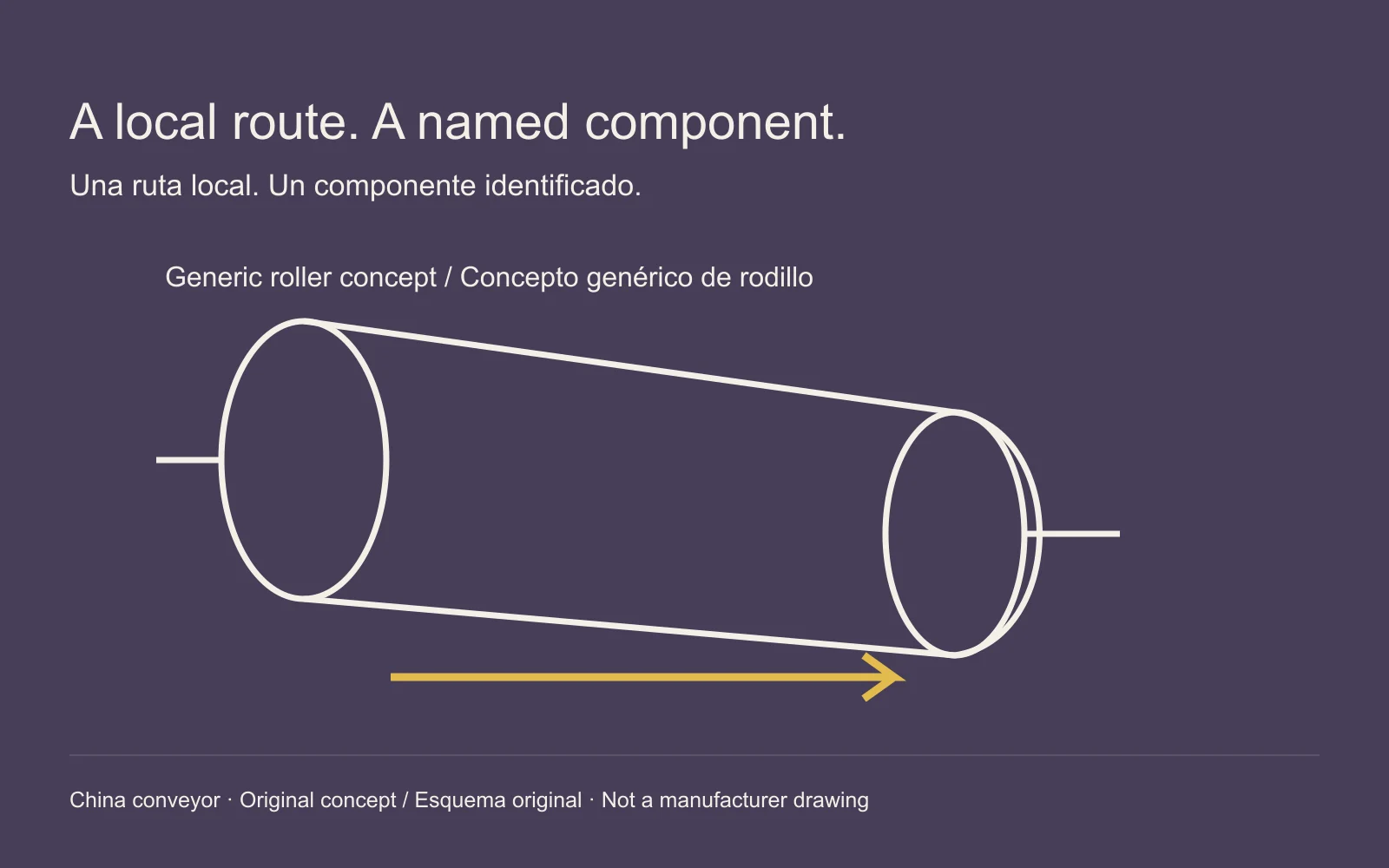
A RopeCon is not a ropeway with buckets, and not a belt conveyor on tall trestles. As International Mining's Hindalco report describes it, the material travels on a flat belt with corrugated side walls; the belt itself performs the haulage function and is fixed to axles fitted with plastic running wheels at either end, and those wheel sets run on track ropes that are anchored at both ends and carried over tower structures. The drive works like a conventional belt conveyor drive, at a station. What a buyer is therefore pricing is a hybrid bill of materials: belt and stations from the conveyor world, plus track ropes, anchorages, towers and several hundred wheel sets from the ropeway world, with one supplier integrating both. Two consequences follow for specification. First, the wear parts are different: wheel sets, ropes and rope anchorages join the usual belt, drive and chute list, and their inspection and replacement regimes become contract items, not afterthoughts. Second, the maintenance geometry is different: the moving parts are mounted on the belt and pass through the stations, which is where Doppelmayr concentrates maintenance - so the service questions centre on the stations, the rope inspection method and the inspection vehicle, rather than on walkway access along the line.
Three routes, three different constraints
Read as route evidence, each award isolates one constraint. The Americas system is about space and air underground: the tunnel unit hangs from the ceiling to save floor space, the vertical unit reuses an existing shaft, and placing the drive on the surface is credited by Doppelmayr with cutting the underground truck fleet and its heat and exhaust load - a vendor claim no owner has yet confirmed in operation, because the customer is undisclosed. The Hindalco system is about ground take on the surface: four towers carry the line 2,300 m across farmland with a 241 m drop, ground clearance is maintained throughout, and the system is designed to run tailings back in the opposite direction later, while the downhill loaded run is reported to regenerate up to 907 kWh. The Pani system is about terrain that resists corridors altogether: the geomechanics.io brief on the award describes steep, dissected ground in Sulawesi where towers can be sited to avoid unstable slopes and waterways, carrying crushed ore directly to the carbon-in-leach plant. Buyers should note what is missing at Pani: neither Doppelmayr nor the owner has published the system's length or rated capacity in the sources checked, so the Indonesian reference currently proves selection, not scale.
Questions a conventional conveyor RFQ does not ask
A route study that prices a RopeCon against a ground conveyor needs a different question set. On ropes: what track-rope specification and design life are offered, how are ropes inspected in service, and what does a rope change cost in downtime? On wheel sets: how many are installed, what is the demonstrated wheel life at your tonnage, and what spares holding is recommended? On the capacity and lift envelope: ask for the reference list sorted by throughput and lift - the published anchors are 700 t/h with a lift above 400 m for the vertical system, 1,500 t/h at Hindalco, and earlier surface references around 909 t/h at Booysendal - and ask which of those are operating rather than merely awarded. On towers and foundations: who designs and warrants the foundations, what geotechnical data the vendor requires, and what wind and clearance limits apply along the corridor. On the underground variants specifically: how shaft and tunnel inspections are performed if, as the vendor states, the shaft needs no access for installation or operation. And on commercial structure: this is a proprietary single-source system, so price the spares pipeline, in-country service coverage, rope and wheel-set supply security and the availability guarantee - and how availability is measured - before the engineering is finished, not after.
Not the rail-running option: where each architecture sits
This site's earlier article on the rail-running conveyor at the Sentinel mine in Zambia covered the other alternative architecture now winning references, and the two are easy to confuse in a route study because both replace the idler-supported belt. They solve different geometry. The rail-running system stays on the ground: its belt rides on wheeled carriages on a rail track at grade, so it follows the terrain with earthworks and still needs a ground corridor, in exchange for very high capacity on long overland routes. The RopeCon leaves the ground: the corridor requirement falls to tower footprints and an aerial clearance envelope, obstacles such as roads, rivers, farmland and unstable slopes are crossed rather than rebuilt, and an existing shaft or a tunnel ceiling can become the route - but the buyer accepts a proprietary rope system, a capacity envelope proven so far, on the cited awards, in the hundreds-to-1,500 t/h range, and single-source support. The conventional overland conveyor remains the default wherever a serviceable ground corridor exists. The practical sequence is therefore terrain first, architecture second: map where the ground is unavailable, unusable or unaffordable, and only then price the aerial and rail options against the sections they would actually replace.
What to watch: awards are not operating hours
All three first-of-kind systems are still ahead of their start dates: Q3 2027 for both the Americas ore transport system and the Hindalco line, and the Pani installation tied to a carbon-in-leach plant that Merdeka Gold Resources targets to bring on stream in 2028; the owner's August 2026 project update confirms that rope conveyor components are among the long-lead equipment already ordered. Until they run, every performance figure in this article is a design figure, and the vertical and tunnel variants have no operating reference anywhere in the world. That does not disqualify them from a route study; it changes the contract, not the shortlist. Buyers pricing a first-of-kind architecture should weight performance guarantees, availability measurement and remedy clauses more heavily than headline capacity, should ask what happens to rope and wheel-set supply if the project schedule slips by a year, and should treat the 2027 commissioning reports from Odisha and the Americas as the first real evidence - one owner-anonymous, one fully public - on which to update the comparison. We will revisit these three systems once the first of them reports operating hours, and the questions above are the checklist that follow-up will use.
Manufacturer announcements and our analysis are distinguished. Product claims require verification for the specific application.
Sources
Doppelmayr announces contract award for the first Vertical RopeCon - International Mining ↗International Mining (10 September 2025), opened in full. Source for the Ore Transport System award at an undisclosed major mining company in the Americas: the first Vertical RopeCon (lift of more than 400 m up an existing shaft), the first Tunnel RopeCon (more than 1.25 km, suspended from the tunnel ceiling), 700 t/h, drive on the surface and commissioning scheduled for Q3 2027. Customer, ore and mine type are not disclosed; benefit expectations quoted from Doppelmayr are vendor statements, flagged as such in this article.
Doppelmayr to install India's first RopeCon aerial conveyor for Hindalco - International Mining ↗International Mining (18 August 2025), opened in full. Source for India's first RopeCon at Hindalco's Aditya Alumina refinery at Kansariguda, Odisha: about 2,300 m, a drop of 241 m, four towers, 1,500 t/h of bauxite, reversible for tailings return, regeneration of up to 907 kWh as published, start of transport in Q3 2027, and the description of the belt, axle and track-rope mechanism used in this article. The bauxite comes from Odisha Mining Corporation's Kansariguda mines and the refinery EPC is Larsen & Toubro.
Doppelmayr partners with Hindalco for India's first aerial RopeCon installation - AlCircle ↗AlCircle's report of the same Hindalco award, opened in full and used as an independent cross-check of the distance, elevation drop, tower count, capacity and reverse tailings configuration. Its figures agree with International Mining; where wording differs, this article follows International Mining.
Merdeka Sulawesi RopeCon contract: design and haulage lessons for mine planners - Geomechanics.io ↗Geomechanics.io technical brief (22 October 2026), opened in full, reporting the contract awarded by PT Pani Industri Nusantara to Doppelmayr for Indonesia's first RopeCon at the Pani gold mine in Sulawesi, with design commentary on tower siting and terrain. The brief states it is based on International Mining's news reporting; a Doppelmayr press release announcing the selection was also located in syndication. System length and rated capacity are not published in any of these sources, as this article notes.
Pani CIL project update - PT Merdeka Gold Resources Tbk press release ↗Owner-side press release (August 2026) updating the Pani carbon-in-leach project: it confirms that all major long-lead equipment for the CIL project has been ordered, including rope conveyor components, and that CIL construction packages have been tendered with mobilisation under way. Used here as owner corroboration that a rope conveyor forms part of the Pani CIL scope; the release does not name the supplier or publish system parameters.