The deal: seven belt shops change owner at the end of 2024
On 3 December 2024, Motion Industries, Inc. announced that it had signed a definitive purchase agreement to acquire the operating assets of International Conveyor and Rubber (ICR), with the transaction expected to close at the end of December 2024, subject to customary closing conditions. Financial terms were not disclosed. Motion's president described ICR as highly complementary, adding seven strategic locations, new customers and new end markets, and said the ICR owner-operators - including Kory Krinock - would continue to play an integral role in the business; Krinock, for his part, called the combination a perfect match. Trade coverage counted the purchase as Motion's seventh acquisition of 2024, and Industrial Distribution's early-2025 retrospective on Motion's buying pace already lists ICR among the companies added during 2024. Motion itself is not a small buyer: it reports annual sales of over 8 billion US dollars, more than 550 branches and service centers and 17 distribution centers in North America, and it is a wholly owned subsidiary of Genuine Parts Company. For belt buyers in the eastern United States, the practical meaning is simple: a familiar local service counter became part of one of the largest MRO distribution networks in North America.
What was actually bought: a field-service business, not a warehouse
ICR was headquartered in Blairsville, Pennsylvania, with seven locations and 150 employees serving commercial and industrial customers across the eastern United States. Its offer was services wrapped around product: sales, installation, repair and maintenance of conveyor belts and related system products, plus engineering and design services for custom solutions. Its customer list reads like a cross-section of bulk handling - mining and aggregates, power generation, oil and gas, construction, steel, building materials, package handling and distribution, wood, pulp and paper, cement and asphalt, recycling and marine terminals. Under the agreement, ICR joined Motion Conveyance Solutions, the business unit Motion had already formed for conveyor belting, hose, rubber parts and field services. The asset being bought was therefore not primarily inventory or real estate. It was splice and repair crews, shop capacity close to the coalfields and industrial belt of the eastern US, local belt stock, and the customer relationships that make a plant call one number when a belt goes down at night. That distinction matters for how a buyer should judge the deal afterwards.
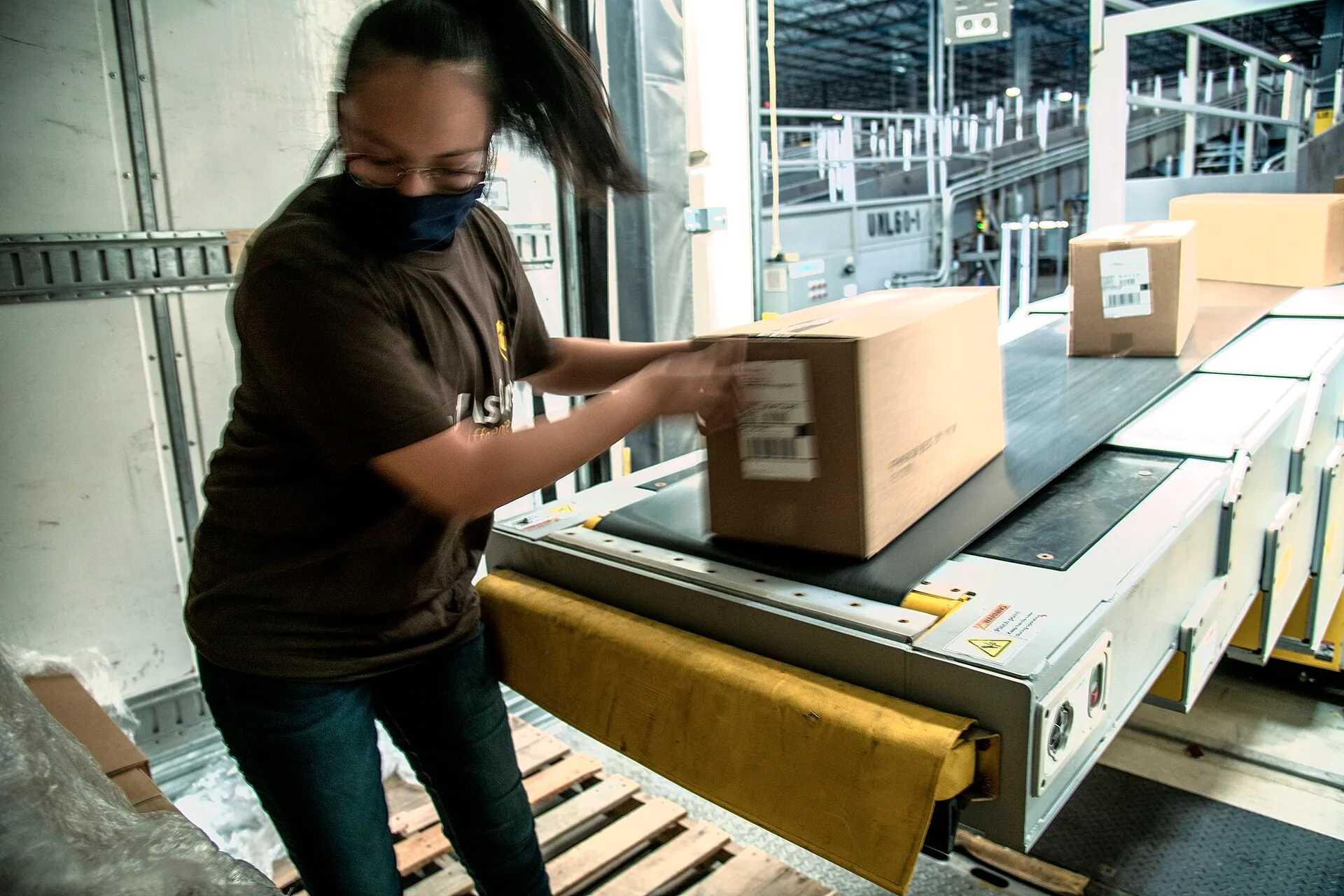
What a belt service relationship actually buys: crews, presses and response
A plant does not buy conveyor belting the way it buys bearings. The belt itself is a fraction of the relationship; the rest is field service: vulcanized splicing with the right press fleet and certified crews, mechanical fastener work for fast temporary repairs, belt installation and change-out during planned outages, emergency call-out when a rip or a failed splice stops production, and the survey and tracking work that keeps a belt from becoming an emergency in the first place. Those services are delivered by people and equipment based within driving distance, and their quality is local: the same company name can mean a two-hour response in one county and a next-day response two states away. This is the editorial lens for the sections that follow: ownership of your belt shop changed, but the product you actually consume is a local crew, a press, a stock shelf and a phone that gets answered. Each of those four things has to be re-verified under the new owner - none of them transfers automatically just because the operating assets did.
Where the public record stops: the post-close picture is not published
Buyers looking for an official account of how the integration went will not find one. Motion's announcement covers the agreement and the intent: ICR inside Motion Conveyance Solutions, the owner-operators staying on. What neither Motion nor its parent has published since is an integration report - no statement confirming which ICR locations trade under which name today, how the seven shops map onto the wider Motion branch network, or whether service terms, escalation paths and account structures changed for ICR customers. ICR's former standalone website no longer serves the company's own site, which is consistent with absorption into the parent brand but proves nothing about any individual shop. The acquiring unit's own site currently presents the combined offer in general terms - conveyor belting, hose, rubber parts and field services, with belt experts providing solutions, service and repair support around the clock, in the company's words - without an ICR-specific location list. The honest summary, and the one this article works from, is that the deal closed into a much larger network, while the shop-level consequences were left for each customer to discover locally. Anything more specific would be speculation.
The re-qualification checklist: what to verify with your belt shop now
Treat an ownership change as a supplier re-qualification, with the same discipline as onboarding a new vendor. First, people: are the crews and the owner-operators you dealt with still there, and who is your named contact now? Second, capability: which vulcanizing presses, winders and splice kits are based at your shop, what splice certifications the crews hold, and does the shop still carry the belt constructions and brands your plant runs - or has the shelf been re-ranged to the parent network's lines? Third, response: what is the emergency call-out arrangement in writing - hours, distance limits, call-out fees and labor rates under the new owner - and has the phone number or dispatch route changed? Fourth, commercial continuity: existing service agreements, warranty handling on splices made before the sale, credit terms and pricing escalators all deserve a fresh signature rather than an assumption. Fifth, the upside, tested rather than assumed: a network with hundreds of branches may offer cover from a neighboring shop when your own is committed, consignment stock, or standardized splice documentation across your sites - ask which of those the local shop can actually deliver, in writing, before you count them as coverage.
A distribution-layer deal in a wider consolidation pattern
ICR was one of several companies Motion added in 2024 alone, alongside automation, hydraulics and fluid-power distributors, and it followed the much larger Kaman Distribution purchase of 2022 - a sustained build-out of service-heavy distribution rather than a single opportunistic deal. For readers of this site, it is worth placing the story in the right layer of the industry: this is consolidation of the distribution and service channel, not of manufacturing. It sits alongside, but is different from, a local manufacturer adding a plant near its mines or a belt maker changing corporate owners; those change who makes the belt, while this one changes who answers for it in the field. The structural effect for buyers is that belt service coverage is increasingly a network specification: the relevant question is shifting from which independent shop serves your plant to what the network behind that shop guarantees - crew depth, cross-shop backup, stock policy and documentation standards. Buyers who write those guarantees into their service agreements while the integration is still young will get more from the change than buyers who simply keep dialing the old number and hope it still rings the same way.
Manufacturer announcements and our analysis are distinguished. Product claims require verification for the specific application.
Sources
Motion enters into agreement to purchase conveyance company - Motion Industries (press release) ↗Motion Industries press release (3 December 2024), opened in full from Motion's press-kit host. Primary source: definitive purchase agreement for the operating assets of International Conveyor and Rubber (ICR), expected to close at the end of December 2024; ICR profile - Blairsville, Pennsylvania headquarters, seven locations, 150 employees, belt sales, installation, repair and maintenance plus engineering and design - and its assignment to Motion Conveyance Solutions, with owner-operators continuing. Terms not disclosed.
Motion Conveyance Solutions - official site ↗Official site of the acquiring business unit, read in October 2026. Current public scope of Motion Conveyance Solutions: conveyor belting, hose, rubber parts and field services, with belt experts offering solutions, service and repair support 24/7/365 in the unit's own wording. The site publishes no ICR-specific integration report or location roster; this article therefore treats the post-close, shop-level status of the former ICR locations as not publicly documented rather than assuming it.
Motion on a Buying Spree - Industrial Distribution ↗Industrial Distribution (early 2025), independent trade-press retrospective on Motion's acquisition pace. It lists International Conveyor and Rubber among the companies Motion added during 2024, alongside Allied Circuits and several Canadian distributors, and sets the deal in the sequence that began with the 2022 Kaman Distribution Group purchase. Used here as post-close corroboration that the ICR transaction was completed as one of Motion's 2024 additions.
Motion to acquire International Conveyor and Rubber - Recycling Today ↗Recycling Today (December 2024), independent trade-press report of the same announcement, carrying the same terms: definitive agreement for ICR's operating assets, expected year-end close, seven locations and 150 employees joining Motion Conveyance Solutions. Used as corroboration of the Motion release.