The event: an operating reference, not a prototype
The 2026 Australian Bulk Handling Awards gave their Excellence in Conveying and Material Transport award to the University of Newcastle, Fluor and First Quantum Minerals, for the Rail-Running Belt Conveyor (RRC) at First Quantum's Sentinel copper mine in Zambia. The system has carried copper ore at up to 5,000 tonnes per hour since January 2026, along a 3.5 km route. An award on its own is marketing material. What makes this one a procurement story is that the technology now has a commercial-scale operating reference - and that in November, Virta, the Fluor subsidiary that supplies the system, and First Quantum will host prospective customers at Sentinel to inspect it in operation.
The installation is not a greenfield showcase. It is a retrofit: an existing conventional conveyor that the mine relocated and extended as the pit developed. That origin matters to buyers, because it puts the rail-running system in the same decision frame as a conventional rebuild - same duty, same route problem, different transport architecture.
What changes mechanically: carriages on rails instead of idlers
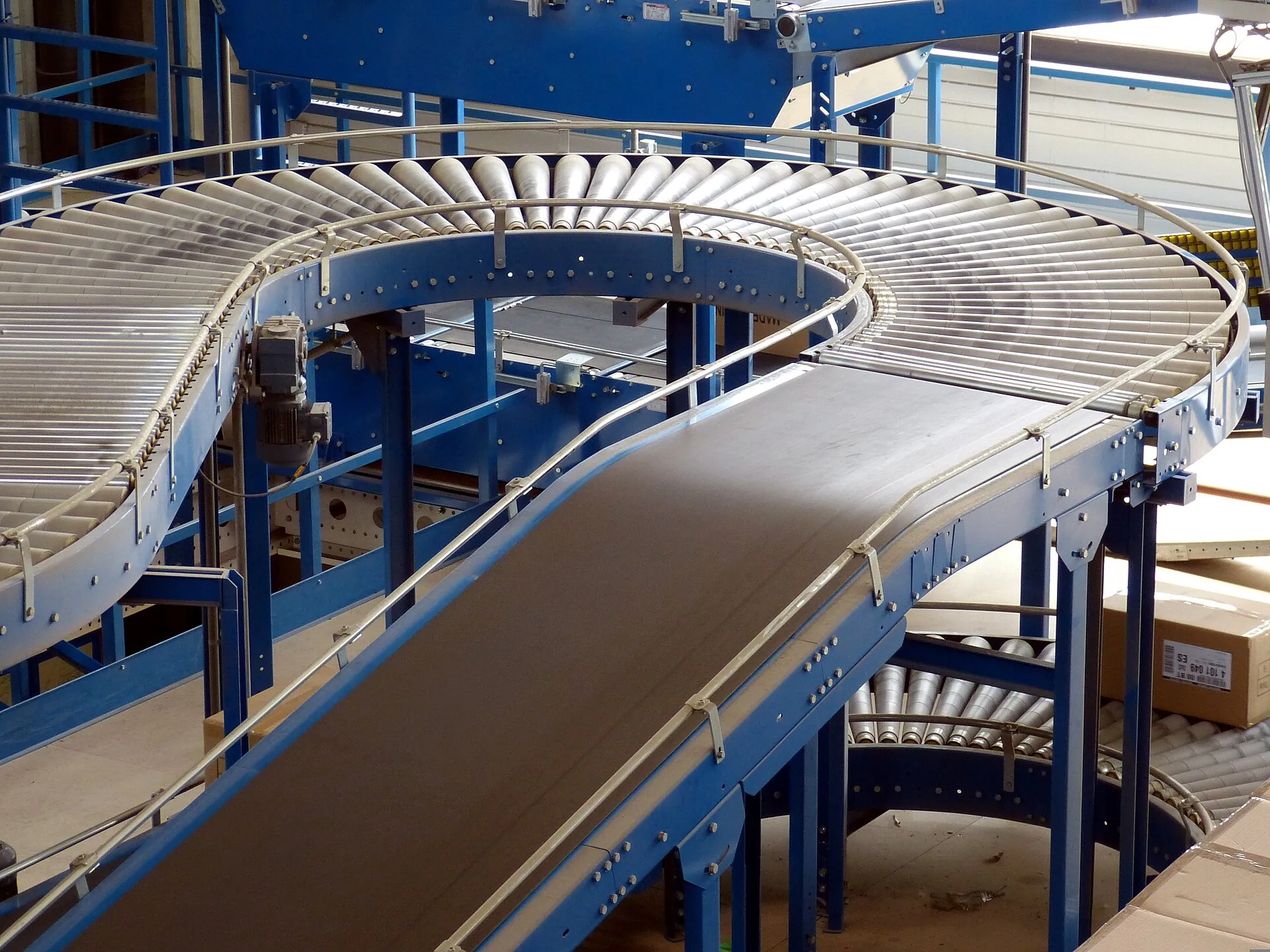
On a conventional belt conveyor the belt rides on idlers - thousands of rotating rolls whose resistance is a major share of the power needed to move the belt. On the rail-running conveyor the belt rests on light carriages that run on rails, carried along by their contact with the belt. Rolling resistance on a steel rail is far lower than idler resistance, so belt tension falls - and with it the required belt strength, the number and size of drives, and much of the wear-parts population.
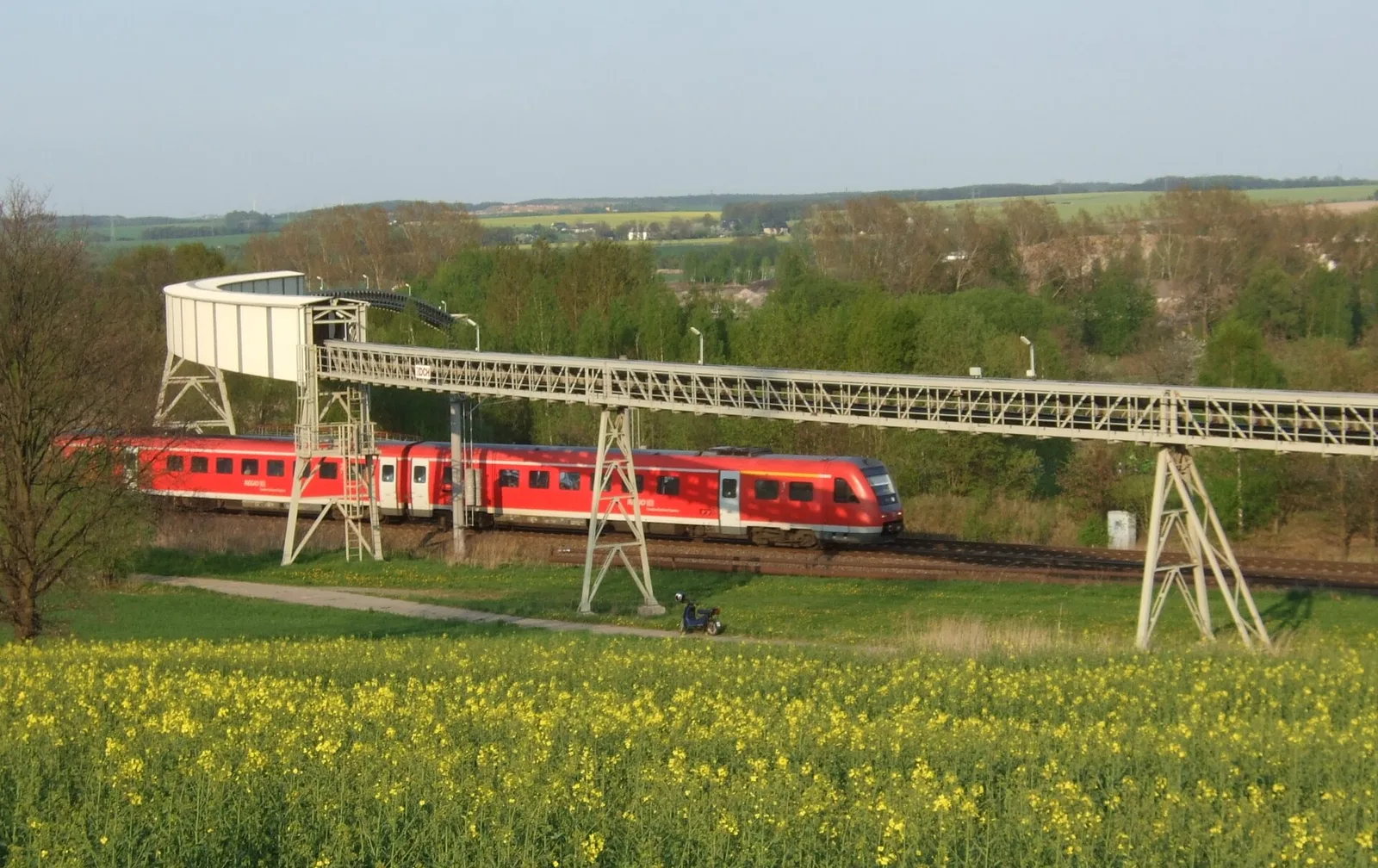
The second difference is geometry. The Sentinel route includes two horizontal curves with radii of about 1,500 metres, which let a single flight do the work that the project partners say would have taken three conventional flights. Two transfer points disappeared with the extra flights, and every transfer point removed takes out a chute, a drive station, a dust and spillage zone and a known belt-wear location. For a buyer, the comparison is therefore not belt against belt. It is an architecture with fewer and different components - rails, carriages and wheels in place of idler sets - set against the deepest spare-parts ecosystem in bulk handling.
The measured number, and what it does not prove
The strongest evidence offered for the concept is an efficiency assessment by Overland Conveyor Company, a conveyor engineering firm independent of the supplier, which processed operating data furnished by the mine through its ConveyorIQ digital-twin service. It put frictional losses on the rail-running portion of the Sentinel conveyor at approximately 0.010 kilowatt-hours per tonne-kilometre, against approximately 0.060 on the conventional portion of the same legacy system. For context, the assessment cites 0.060 to 0.080 for conventional high-efficiency conveyors at similar tonnages, and 0.045 to 0.070 for heavy-haul rail when the empty return leg is included.
Treat the wider percentages with more care. Claims of 20 to 80 percent lower operating cost and power, capital cost up to 30 percent lower and an idler maintenance burden around 98 percent lower are the supplier's figures, published in a sponsored profile; they are design-case ranges, not audited results from Sentinel. The friction figure is narrower and better sourced, but it is still one system, in its first year, assessed on data the mine supplied. It is a reason to demand the operating data in a serious evaluation - not a number to paste into a business case.
Where the comparison applies - and where it does not
The rail-running case is strongest where the route itself is the problem: long distances with horizontal curves that would force a conventional design into several flights, or a relocation in which an existing conveyor has to be re-routed as a pit moves. Sentinel is both. Where a route is short and straight, the conventional idler conveyor's advantages - many competing suppliers, commodity spare parts, any local contractor able to maintain it - are hard to beat, and the friction saving is small in absolute terms.
Buyers should also price the dependency. The technology is patented, the University of Newcastle's related patents are licensed to Virta as the university's commercialisation partner, and the engineering team sits inside one supplier group. The project has already changed hands once: it was reported under FLSmidth's name during installation in 2025, and the team continued within Virta after an ownership change that year. None of that disqualifies the system, but it means the contract, not the brochure, has to carry the long-term position - spare carriages, wheels and rail sections, design documentation, and what happens to support if the licence or the team moves again. Earlier versions of the underlying rail-conveyor technology also operate on two 8 km conveyors in China, with elements that have since been superseded; Sentinel is the first reference for the current version at mining scale.
Questions to put to any rail-running proposal
First, the reference data: ask for Sentinel's measured energy per tonne-kilometre against your route's lift profile rather than the headline range, plus the availability and carriage-maintenance records from the first year of operation. The November customer visit is the obvious moment to ask in front of the machine. Second, the route fit: minimum curve radii in both planes, gradient limits, and what happens to the comparison if your route needs none of the curvature that makes the system shine. Third, the component list: how many carriages, wheels and rail joints per kilometre, their expected wear life, unit prices and lead times - the idler line items do not disappear, they change their names. Fourth, the belt itself: the lower-tension claim should arrive in the offer as a lower belt rating; if the belt specified is the same class as in the conventional alternative, ask where the saving went. Fifth, the guarantees: which figures the supplier will warrant contractually - power, availability, wear life - and on what measurement basis, given that the published efficiency assessment rests on operating data the mine provided.
The boundary with the electrified-overland story
Long-distance conveying is also being reshaped from the other direction: conventional overland systems are being electrified and specified more tightly, with more capable drives and controls on an idler-based architecture. The rail-running system answers the same cost problem differently - instead of managing a conventional conveyor's losses more cleverly, it removes most of the rolling resistance that creates them. The two approaches will compete for the same project budgets, and confusing them in an evaluation produces bad comparisons: a rail-running proposal should be priced against a conventional design for the same route and duty, not against a generic cost per metre.
For most component buyers the practical conclusion is narrow. Belts, idlers and drives for conventional systems remain the volume business, with competing suppliers and well-understood specification risk. But when a project's route forces extra flights and transfer points, there is now an awarded, operating alternative whose first-year evidence is specific enough to interrogate. That is the point at which a new architecture belongs on the tender list - as a priced option with hard questions attached, not as a curiosity.
Manufacturer announcements and our analysis are distinguished. Product claims require verification for the specific application.
Sources
Award-winning Rail-Running Belt Conveyor transforms mine-haulage efficiency ↗Sponsored profile published by International Mining in October 2026 carrying the project partners' account of the Sentinel installation: 3.5 km route, up to 5,000 t/h since January 2026, two transfer points eliminated, and the supplier's cost and energy ranges. The Overland Conveyor Company efficiency assessment quoted in it is reported there in detail; the percentage savings claims are the supplier's, and this article treats them as such.
Australian Bulk Handling Awards 2026 winners announced ↗Quarry Magazine's announcement of the 2026 Australian Bulk Handling Awards winners (4 October 2026), independently confirming the Excellence in Conveying and Material Transport award to the University of Newcastle, Fluor and First Quantum Minerals.
FQM says FLS Rail Running Conveyor to be commissioned at Sentinel in 2025 ↗International Mining news report of 24 July 2025 on First Quantum's Q2 2025 results, confirming the installation then under way at Sentinel, the 5,000 t/h design duty and the wheeled-cart operating principle. Used for the project's commissioning history and the earlier supplier association; the operating claims are as reported at that date.