Identify the actual assembly
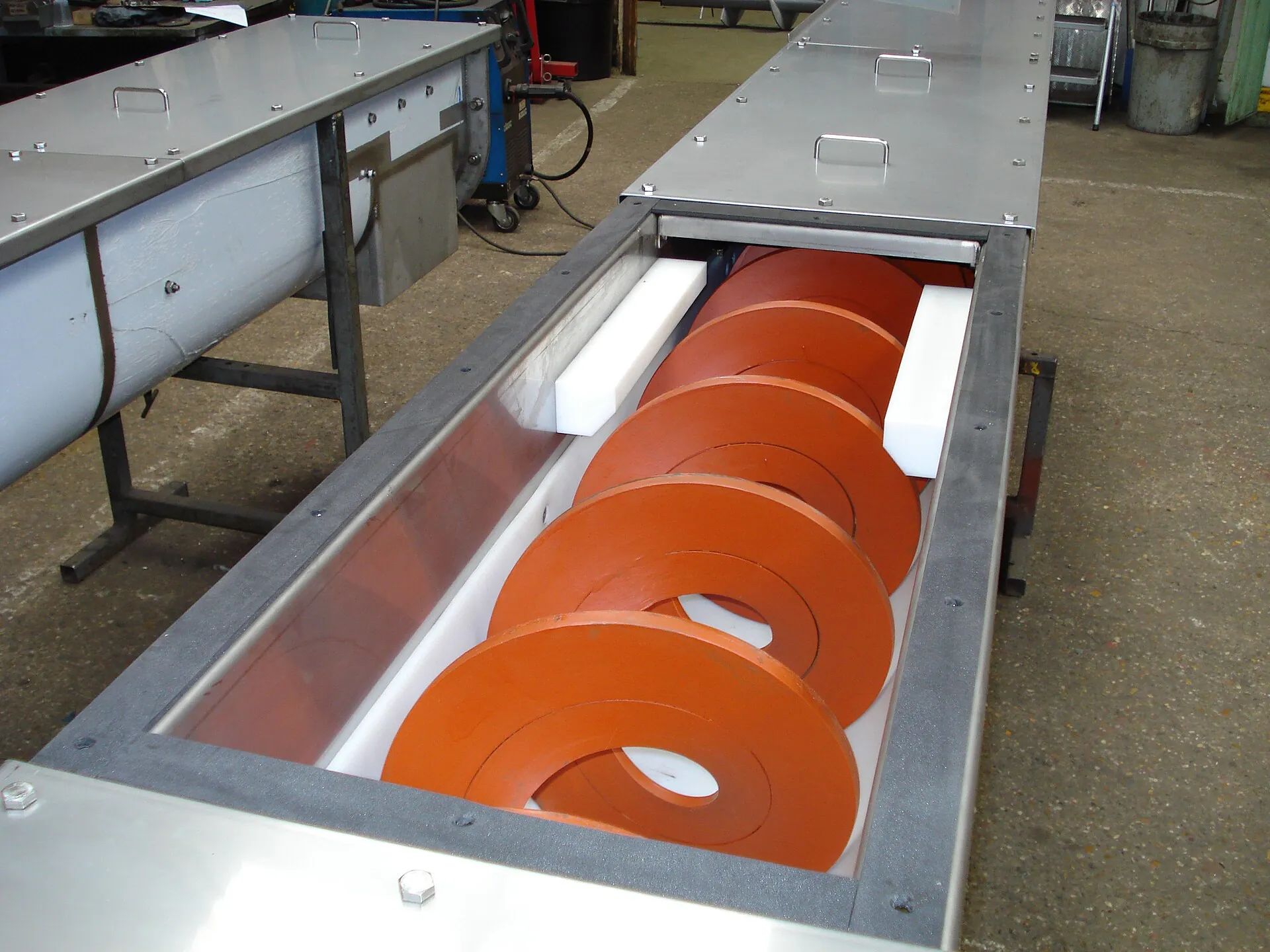
Treat the liner of a shaftless screw conveyor as part of the machine's working arrangement, not an unspecified plastic spare. Before ordering a replacement, identify the conveyor manufacturer, model, drawing revision and installed liner arrangement. Ask whether the supplied records still describe the equipment after any previous repair or modification. Photographs can help explain the request, but they should accompany the identification and measurements required by the equipment supplier.
Record the material being conveyed and any changes in its condition or operating duty since the original selection. If a recurring wear problem prompted the order, describe the observation and its location instead of requesting a harder material without a review. A useful replacement enquiry gives the supplier a defined machine and duty to assess. It also distinguishes a like-for-like spare from a proposed change to the machine's original design.
Understand what supports the screw
KWS's engineering guide distinguishes shafted screws mounted on a centre pipe from shaftless spirals supported by wear liners in the trough. That difference makes the support arrangement an important part of a replacement decision. Ask the supplier to identify the intended liner sections and how they relate to the installed spiral. Do not assume that another screw conveyor's component list describes the assembly being maintained.
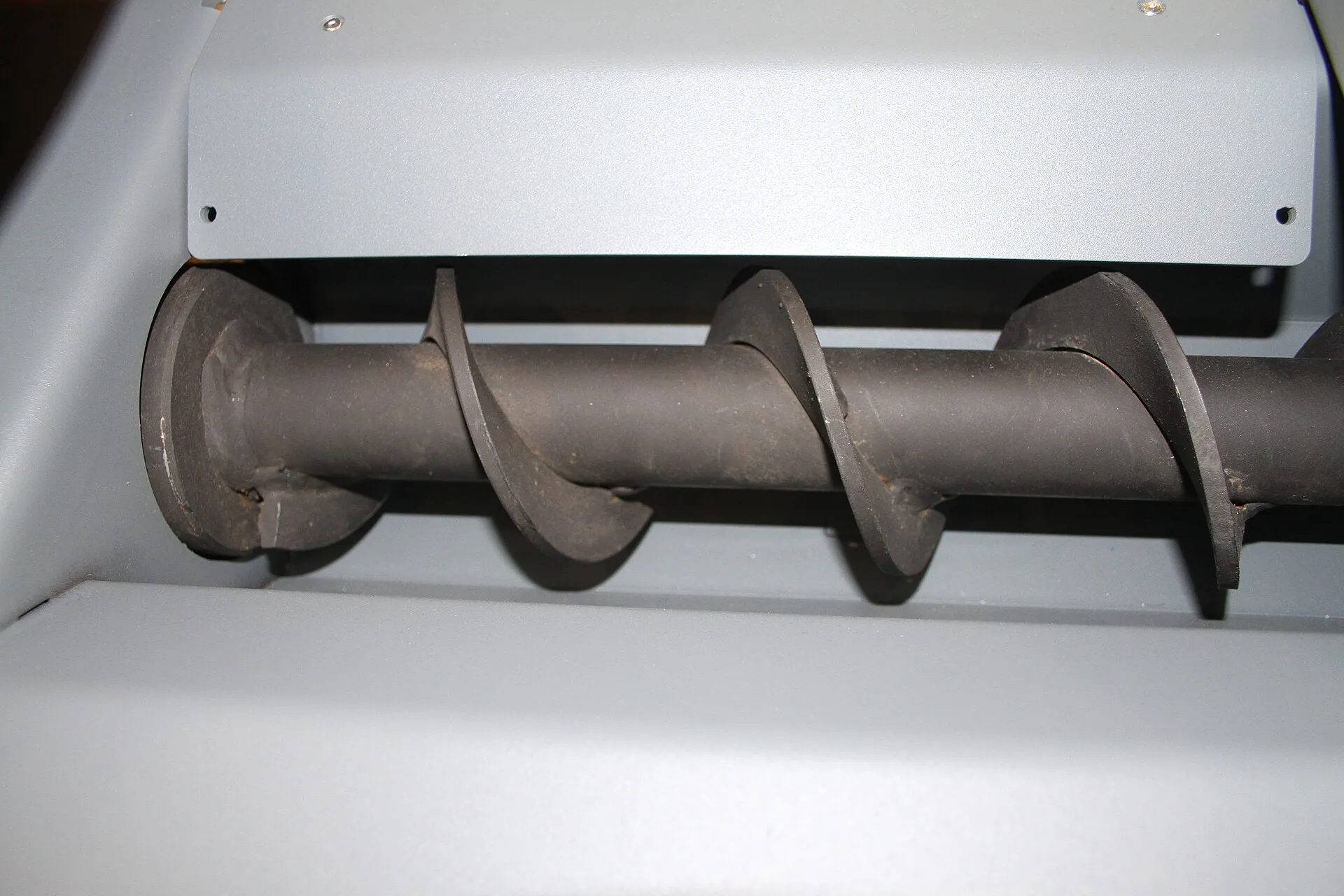
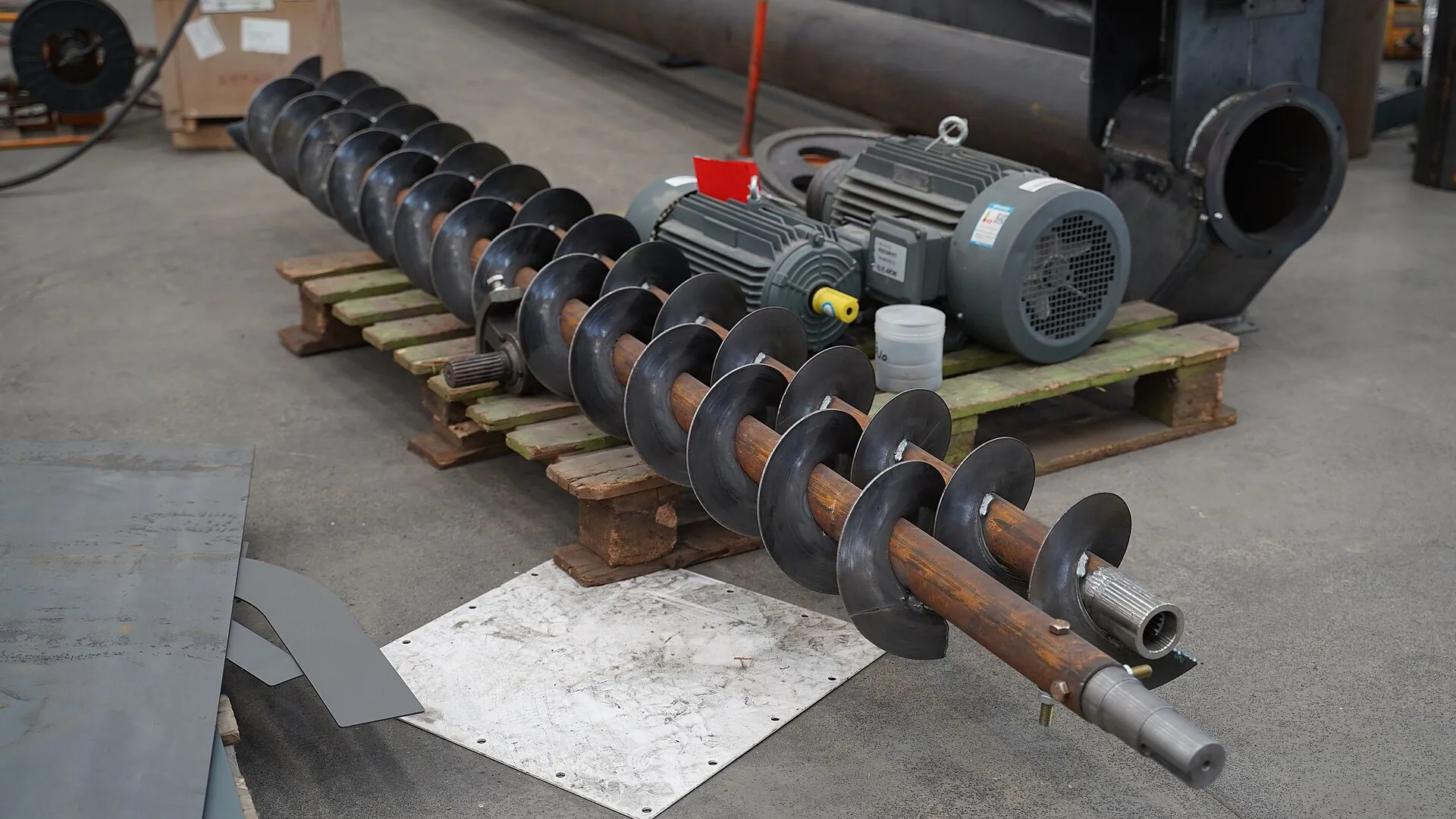
The comparison photograph below shows a shafted auger and separate drive motors, not the shaftless assembly in the cover photograph. Its visible centre pipe helps illustrate the distinction. Use the actual machine drawings to discuss replacement parts rather than matching the general appearance of an industrial screw. Ask which dimensions and component identities the supplier needs before it can confirm compatibility, and record who is responsible for approving any proposed alternative arrangement.
Specify material and attachment
KWS's liner guidance treats both liner material and attachment method as application-dependent choices. Apply that distinction when comparing quotations: ask for the exact liner designation, the intended fastening arrangement and the supplier's basis for selecting them for your material and duty. A quotation that says only wear-resistant liner leaves the important compatibility decision undocumented. Request identification of any required clips, seals or other associated parts rather than assuming the liner alone completes the repair.
Where a substitute is proposed, ask what differs from the existing specification and what confirmation is needed from the equipment manufacturer. Include the actual operating conditions in that review. Do not infer compatibility from colour, a generic polymer name or a seller's claim of longer life. If the supplier cannot confirm a detail, keep it visible as an unresolved engineering question before purchasing the replacement.
Agree the inspection criteria
Ask the equipment supplier for inspection locations, a suitable recording method and the replacement criteria for the installed arrangement. Define who performs the inspection and how observations are reviewed. Follow the machine-specific instructions and the site's safe-access and energy-isolation procedure. Do not inspect a moving spiral, reach through an opening during operation, or remove a guard to obtain a measurement while the conveyor is running.
KWS describes a two-colour liner option that indicates wear by exposing a contrasting layer. That is a feature to confirm for the particular product, not a reason to assume every coloured liner provides the same indication. Ask what evidence establishes the replacement point for the liner actually supplied. Avoid copying an inspection interval, remaining thickness or expected lifespan from a different conveyor. Keep a consistent record so the responsible maintenance team can evaluate repeated observations against the approved criteria.
Prepare a documented replacement
Order the parts and information needed for the complete approved task. Ask for the applicable drawing, installation instructions, component list and any checks required before the machine returns to service. Confirm whether the proposed replacement requires specialist support and what access or handling equipment must be available. Agree who confirms that the intended parts are installed and that the required guards are restored before an authorised restart.
After the task, update the equipment record with the parts fitted, the date and the observations that prompted replacement. If an alternative was approved, preserve the approval and the revised specification for the next order. Compare future quotations against that record rather than restarting from an informal description. The practical goal is a repeatable maintenance decision supported by the actual machine documentation, not a universal wear limit or a promise that one liner material will eliminate maintenance.
This guide helps define questions and requirements. Technical decisions require application documentation and review.
Sources
KWS: Shaftless Screw Conveyor Liners ↗Explains liner support, material and attachment choices, including a product-specific colour wear indicator. No universal service life is adopted.
KWS: Shaftless Screw Conveyor Engineering Guide ↗Distinguishes shafted and shaftless support arrangements. Inspection limits and design details must match the actual equipment.