A duplicate conveyor starts commissioning at S11D
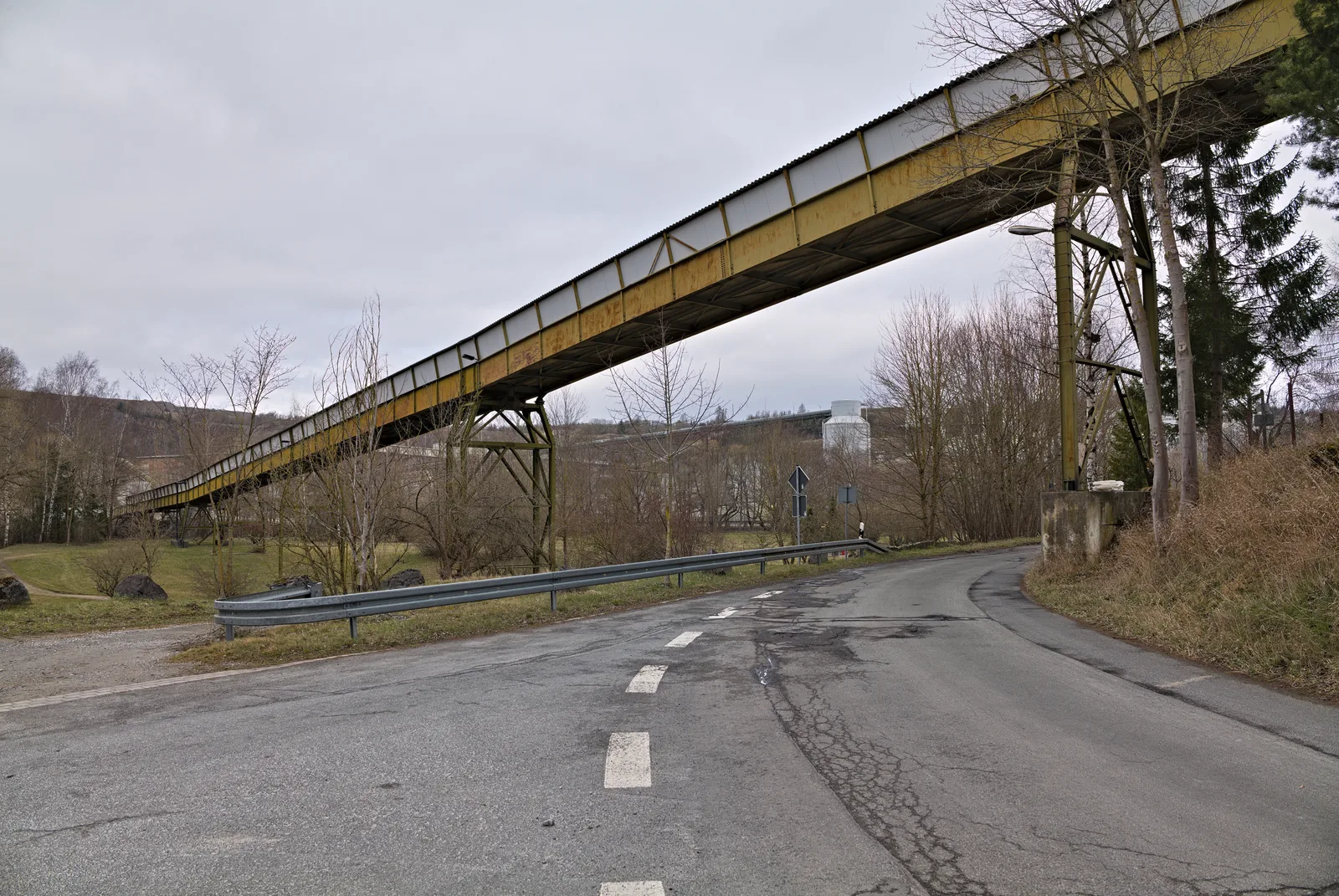
Vale started commissioning the long-distance belt conveyor (TCLD) of its Serra Sul +20 project at the S11D iron ore complex in Canaa dos Carajas, Para, on 30 July 2026, the company announced the same day, marking the start of start-up for the expansion. The conveyor is a duplicate of the 9.5-kilometre TCLD that has hauled ore at S11D since the mine opened: the +20 project replicates the existing long-distance conveyor system, opens new mining areas, installs a new semi-mobile crushing system and adds processing lines at the plant, for a total investment of US$2,844 million. Vale's second-quarter 2026 results put the project at 88% physical progress and 71% financial progress, with completion expected in December 2026; together with the separate Compact Crusher project, due to start up in the fourth quarter, Serra Sul +20 is designed to add 20 Mt/y of capacity and operating flexibility. Chief executive Gustavo Pimenta said in the announcement (translated): "Serra Sul +20 is a strategic project that further strengthens our position at S11D, one of the most competitive iron ore operations in the industry. It also increases the operational flexibility of the iron ore business and strengthens our capacity to offer high-grade products to the market."
The design was duplicated; the supply chain was not
The editorial judgement belongs up front: Vale duplicated the design, not the supply chain. The wear part was frozen - the new conveyor runs on the same Continental Phoenocord ST8000 steel-cord belt as the first TCLD - but the system around it went back to the market and, on International Mining's reporting, was supplied by Shanghai Keda Heavy Industry Group Co Ltd (KDHI), a Chinese heavy-industry manufacturer, rather than through the design-and-supply lineage of the original. The works quantities behind that split are not trivial: the TCLD 2 project deployed some 10 km of conveyors, aerial stretches up to 50 metres high, 2 million cubic metres of earthworks, 1,200 piles, 30,000 cubic metres of concrete, 1,000 metres of cable-stayed curtains and 30,000 tonnes of structures and equipment. This is the transferable pattern of duplication done deliberately: freeze the interfaces that carry operating risk and spares commonality - belt specification, splice regime, drive philosophy - and re-compete the structural and mechanical packages, where a supplier that was not in the original competition can win on fabrication capacity. Two gaps belong on the record: Vale has not published the TCLD 2 supply value or KDHI's exact scope split between design, fabrication and erection, and no KDHI-side release fills them; the split is visible in outcomes, not in contract documents.
5,000 commissioning protocols, and a crusher still to come
Commissioning, at this scale, is itself a specification. International Mining counts 5,000 commissioning protocols on TCLD 2 - the documented tests and load steps that stand between 'construction complete' and an owner's acceptance - and buyers of long-distance systems should ask a supplier for that protocol list and its closure criteria, not just a start date. What has started is the conveyor; what has not yet finished is the project. Vale's results report records load testing already under way at the primary and secondary crushers of the separate Compact Crusher project (US$755 million, 50 Mt/y capacity, 95% physical progress at the end of the second quarter), whose fourth-quarter start-up gates the full +20 Mt/y: until the crusher and the new plant lines are in, the duplicated conveyor adds flexibility and redundancy before it adds saleable tonnes. Vale has published no ramp-up tonnage milestones for the new conveyor line, and none should be inferred from the July start date.
The 9.5 km original that earned a copy
The system being copied earned the right to be copied. The first TCLD - designed and supplied under a 2011 contract with AC-Tek and Sandvik MGS, as International Mining reported from Vale Day in February 2026 - runs four conveyors over 9.5 km, each designed for 19,200 t/h, on ST-8000 belt originally of Goodyear manufacture and now a Continental product. It is the backbone of S11D's truckless design, in which crushing and conveying replace a large haul-truck fleet between pit and plant. Duplication buys three things a redesign cannot: a decade of operating data on the exact duty, a spare-parts and splice-practice pool shared across both lines, and commissioning risk confined to execution rather than engineering. One scheduling note for buyers who plan on conference reporting: the February 2026 trade coverage pointed to load commissioning in the second quarter, Vale's own filings spoke of the second half, and the start came in July - the filing, not the conference report, was the reliable calendar.
A belt store opens inside the mine fence
The service layer is being rebuilt at the same time as the hardware, and on the same site. In September 2026 Continental inaugurated an In-Company Store inside the S11D complex, a dedicated on-site structure for belting materials and technical support for Vale's splicing and vulcanisation work. Jarina Silva, a Vale supply chain specialist, said at the inauguration: "It will be extremely important for our splicing and vulcanisation activities, as well as for material availability." For contract holders, the timing deserves a note rather than an alarm: the belt incumbent deepening its on-site footprint is the same ContiTech business that Continental agreed in July 2026 to sell to Lone Star Funds - a transaction still awaiting closing at the time of writing and examined in this site's companion review of the sale - so the store's stock ownership, staffing and service obligations belong on the contract-continuity list that the ownership change already makes necessary.
Five checks for buyers copying a proven system
First, when duplicating a proven conveyor, freeze the belt specification and the splice regime in writing before re-competing anything else; commonality of the wear part is where most of the operating value sits. Second, ask which packages were re-competed and which stayed with incumbents, and make the supplier explain the split - at S11D the belt stayed and the system moved, and that asymmetry is a decision, not an accident. Third, specify commissioning as a counted deliverable: require the protocol list, its closure criteria and the load-test sequence as contract documents, because 'commissioning started' is a headline, not an acceptance state. Fourth, contract the service footprint explicitly - on-site stock, store staffing, response times - and draft it to survive a change of ownership of the supplier. Finally, schedule against the pacing package outside the conveyor contract: S11D's duplicated belt started in July, but the project's 20 Mt/y waits on a crusher with a fourth-quarter start-up, and a buyer's own timeline should be built on the pacing item, not on the conveyor's start date.
Manufacturer announcements and our analysis are distinguished. Product claims require verification for the specific application.
Sources
Vale market announcement of 30 July 2026, via SMM - Serra Sul +20 conveyor commissioning begins ↗English rendering of Vale's 30 July 2026 market announcement (full Portuguese text published the same day as a 'Comunicado ao Mercado'): commissioning of the Serra Sul +20 long-distance conveyor started, marking project start-up; scope is duplication of the conveyor, new mining areas, semi-mobile crushing and added plant lines; mining operating licence received September 2025; Compact Crusher start-up expected Q4 2026; CEO Gustavo Pimenta quoted (translated in the text).
International Mining - Continental inaugurates In-Company Store at Vale's S11D complex (21 September 2026) ↗Reports that the duplicate TCLD was supplied by Shanghai Keda Heavy Industry Group Co Ltd (KDHI) and lists the TCLD 2 works quantities (10 km of conveyors, 50 m aerial stretches, 30,000 t of structures, 5,000 commissioning protocols) and the Continental Phoenocord ST8000 belt; carries the In-Company Store inauguration with verbatim quotes from Vale's Jarina Silva and Danilo Marques and Continental's Rodrigo Salera. KDHI's contract value and scope split are not stated here or by Vale.
Vale 2Q26 results report - Iron Ore Solutions project annex ↗Vale's official second-quarter 2026 results report, project annex: Serra Sul +20 capex US$2,844 million, physical progress 88% and financial progress 71% at 2Q26, with the comment 'Commissioning of the Long-Distance Conveyor Belt began in July 2026'; Compact Crushing S11D capex US$755 million, 50 Mt/y capacity, 95% physical progress, load testing started at the primary and secondary crushers, start-up 4Q26.