One length can hide several measurements
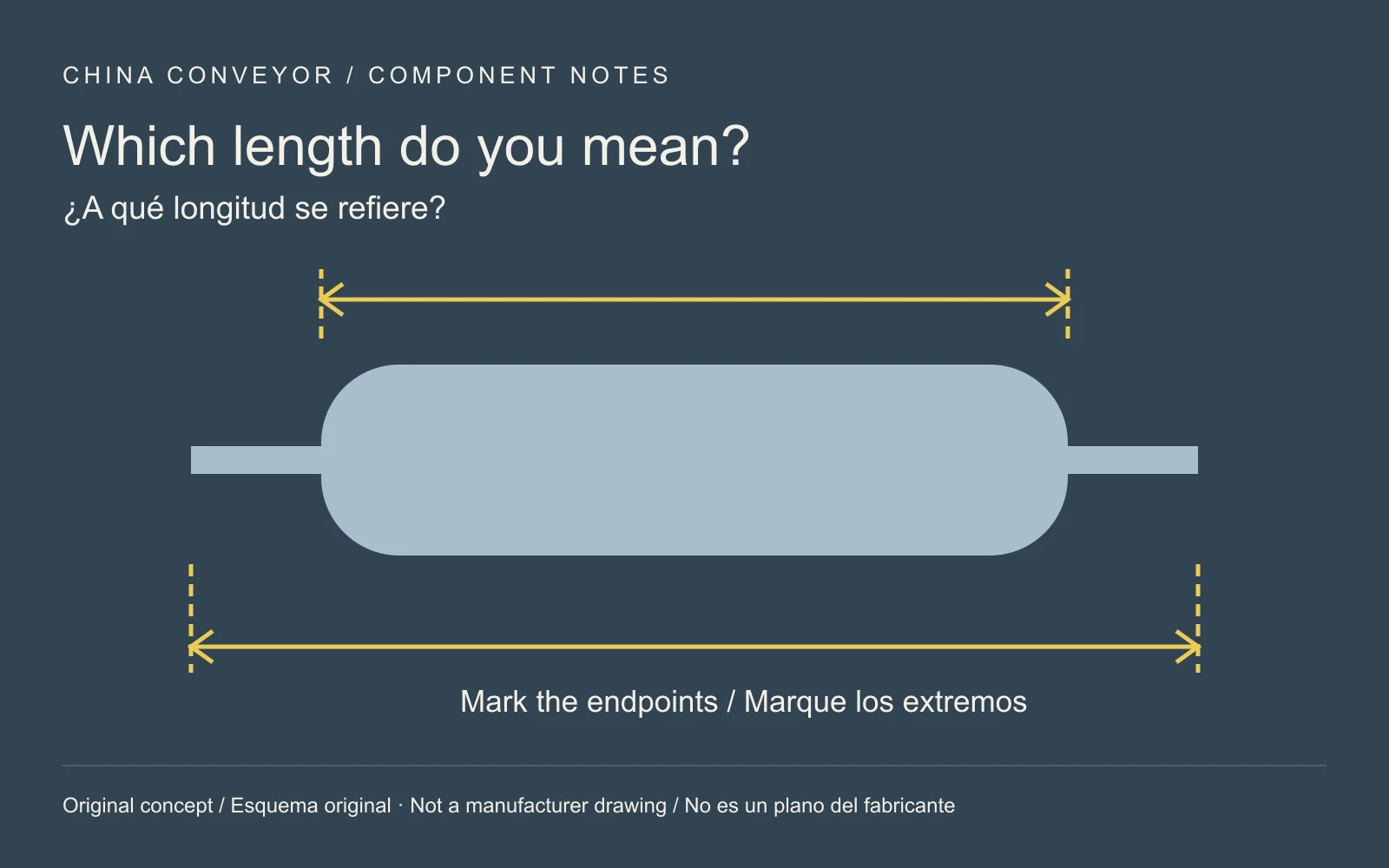
A stores label saying roller length can mean the tube, the distance between the frame profiles or the complete part over its shaft ends. If the original drawing is missing, two suppliers can interpret the same number differently without either noticing the ambiguity. Start by naming the dimension being supplied.
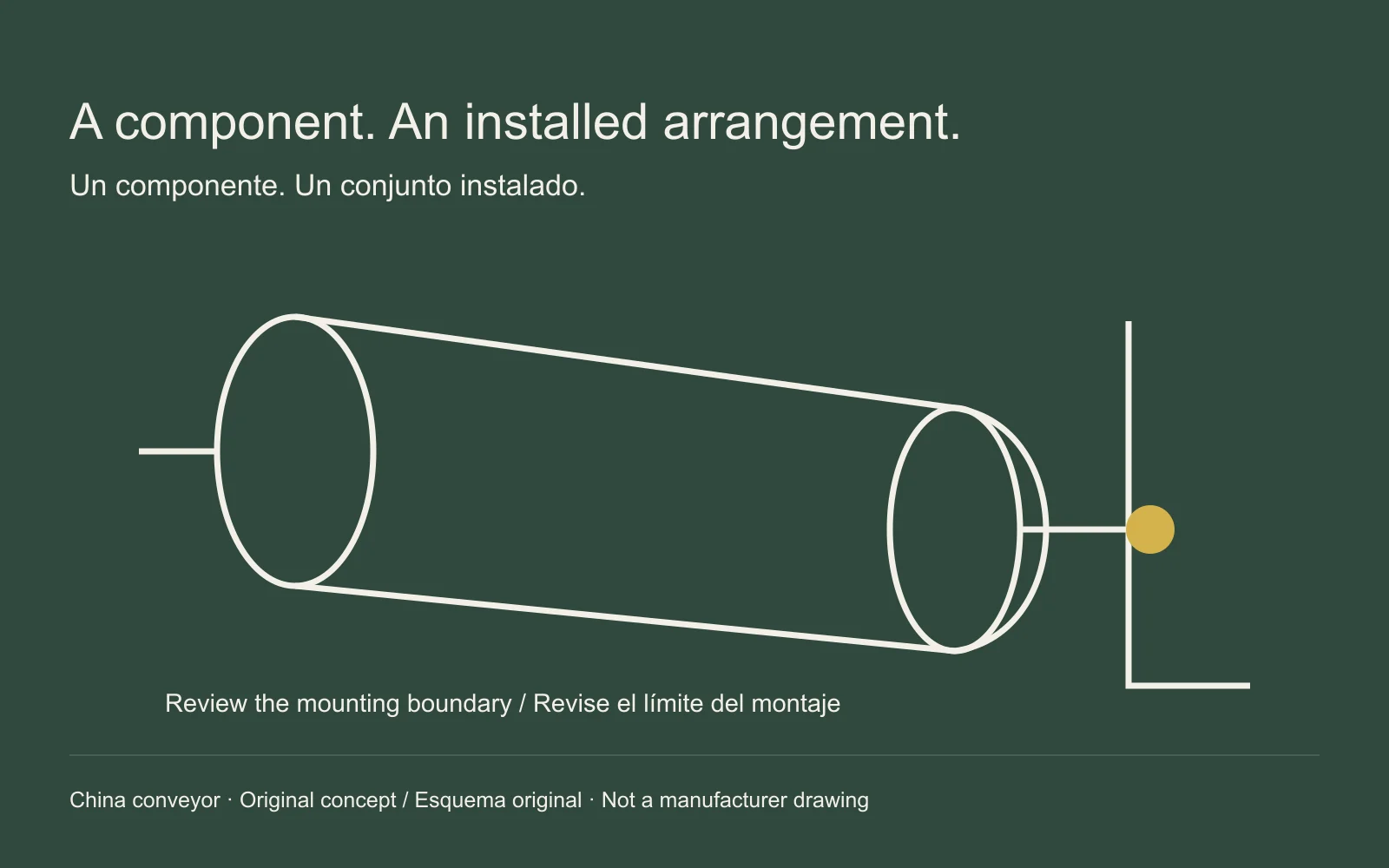
Use the conveyor identity and the roller position to recover the original reference where possible. Photograph both shaft ends during an approved inspection and include the frame interface. Mark measured values on a sketch with clear endpoints. Do not let a single unlabelled measurement replace the installed configuration.
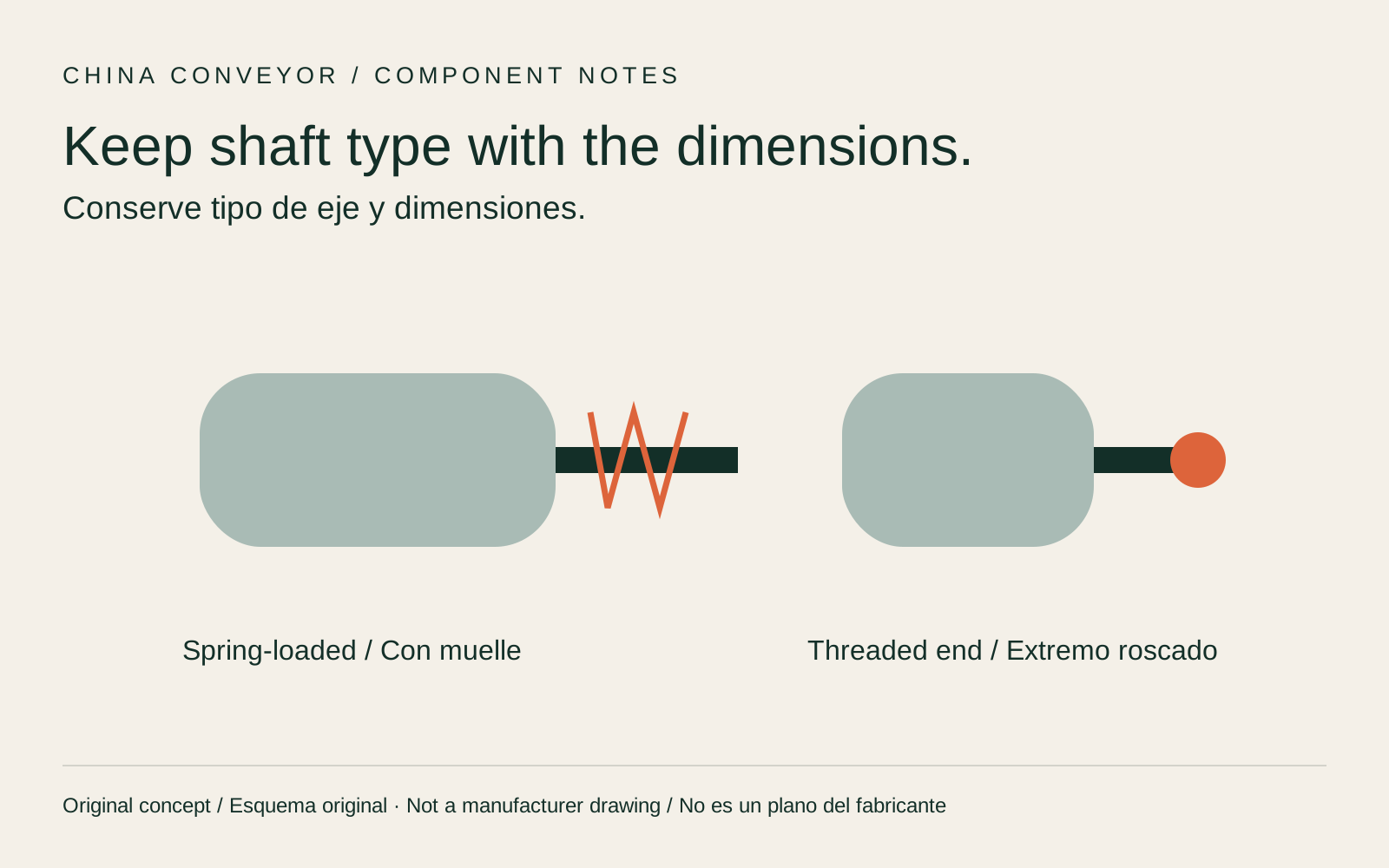
The shaft version belongs in the drawing
Interroll's roller catalogue distinguishes spring-loaded, female-threaded and other shaft designs, with dimensions tied to the chosen version. Its technical information also discusses consequences of changing shaft length, including the relationship to axial support and capacity. These are reasons to identify the assembly, not an invitation to alter an existing roller.
Ask the supplier to show the proposed shaft ends and its dimension symbols on the quotation drawing. Confirm which dimension represents the installation space and which represents the usable conveying surface. Retain the manufacturer's own definitions instead of assuming that every catalogue uses the same shorthand.
If the proposal changes the fastening arrangement, have the conveyor supplier review the frame interface. A roller that can be placed between two profiles has not thereby been shown to have the correct mounting arrangement.
Include the function at that position
Record whether the part is an unpowered roller or includes a drive interface, sleeve, groove or other specified feature. Show the position of those features relative to the frame and material path. The replacement enquiry should preserve the features that perform the work, rather than treating them as details to be decided after the length is ordered.
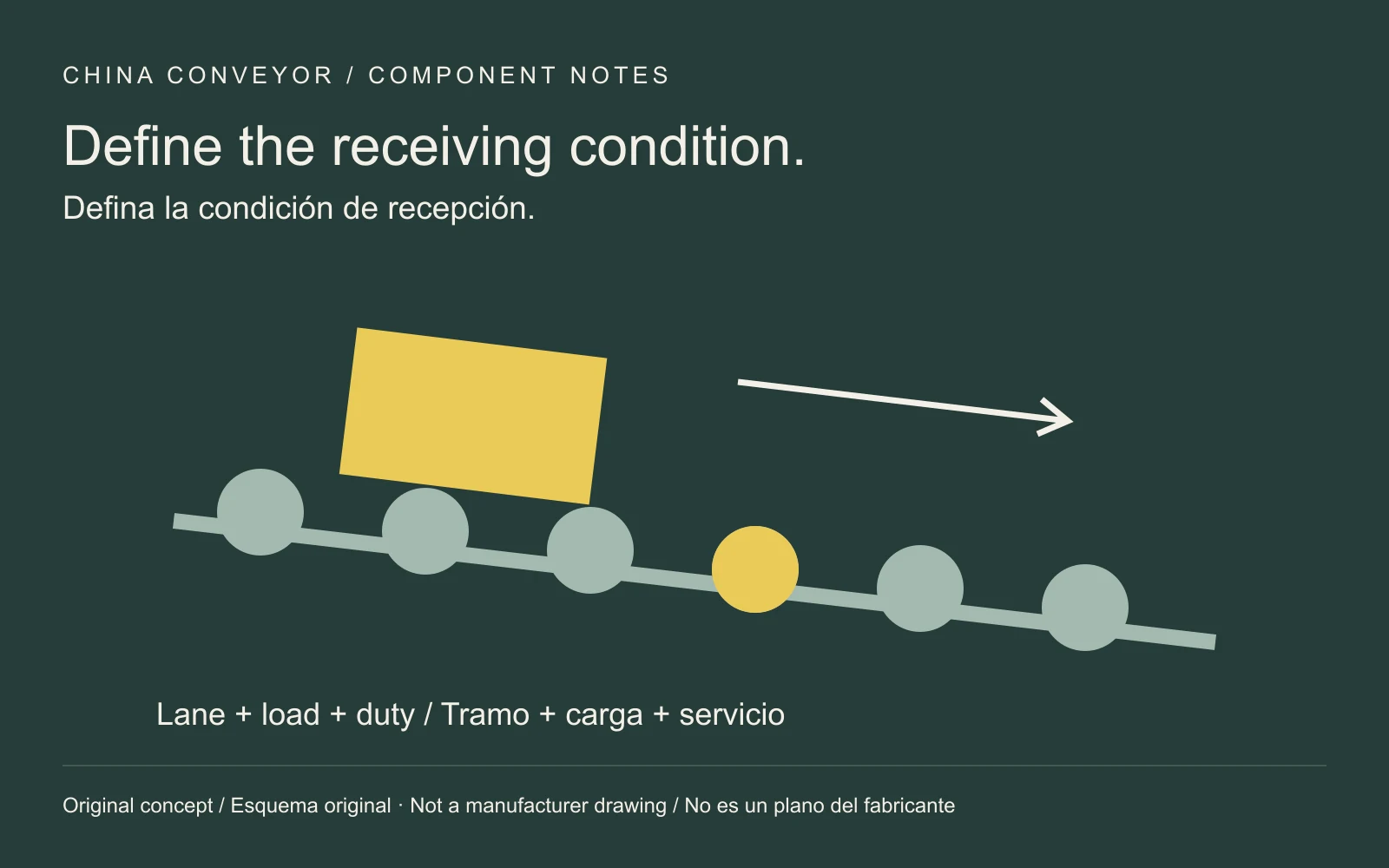
Provide the load and application information the supplier requests for its selection. If a different construction is offered, request the basis for the proposed replacement and the conditions attached to its rating. Do not infer a load capacity from tube diameter alone or transfer a catalogue rating to a modified shaft arrangement.
Turn the accepted drawing into the spare reference
Before purchase, resolve the dimensional references and keep the approved drawing revision with the part number. On receipt, check identification, quantity and specified features against that record. For a set of different positions, keep the position-to-reference relationship clear in the order.
The original illustrations distinguish the tube and shaft endpoints without supplying manufacturing tolerances. They are not instructions for drilling the frame or lengthening a shaft. The useful result is a roller that the supplier and maintenance team describe with the same dimensions and mounting reference.
Manufacturer announcements and our analysis are distinguished. Product claims require verification for the specific application.
Sources
Interroll — Roller general technical information and planning ↗Primary discussion of shaft versions and the consequences of length changes. Modification allowances and capacity figures are not copied as general advice.
Interroll — Conveyor roller catalogue, January 2026 edition ↗Dimension drawings distinguish tube, installation and shaft references for specific variants. The document edition is not presented as a new product launch.