The first improvement did not answer the whole question
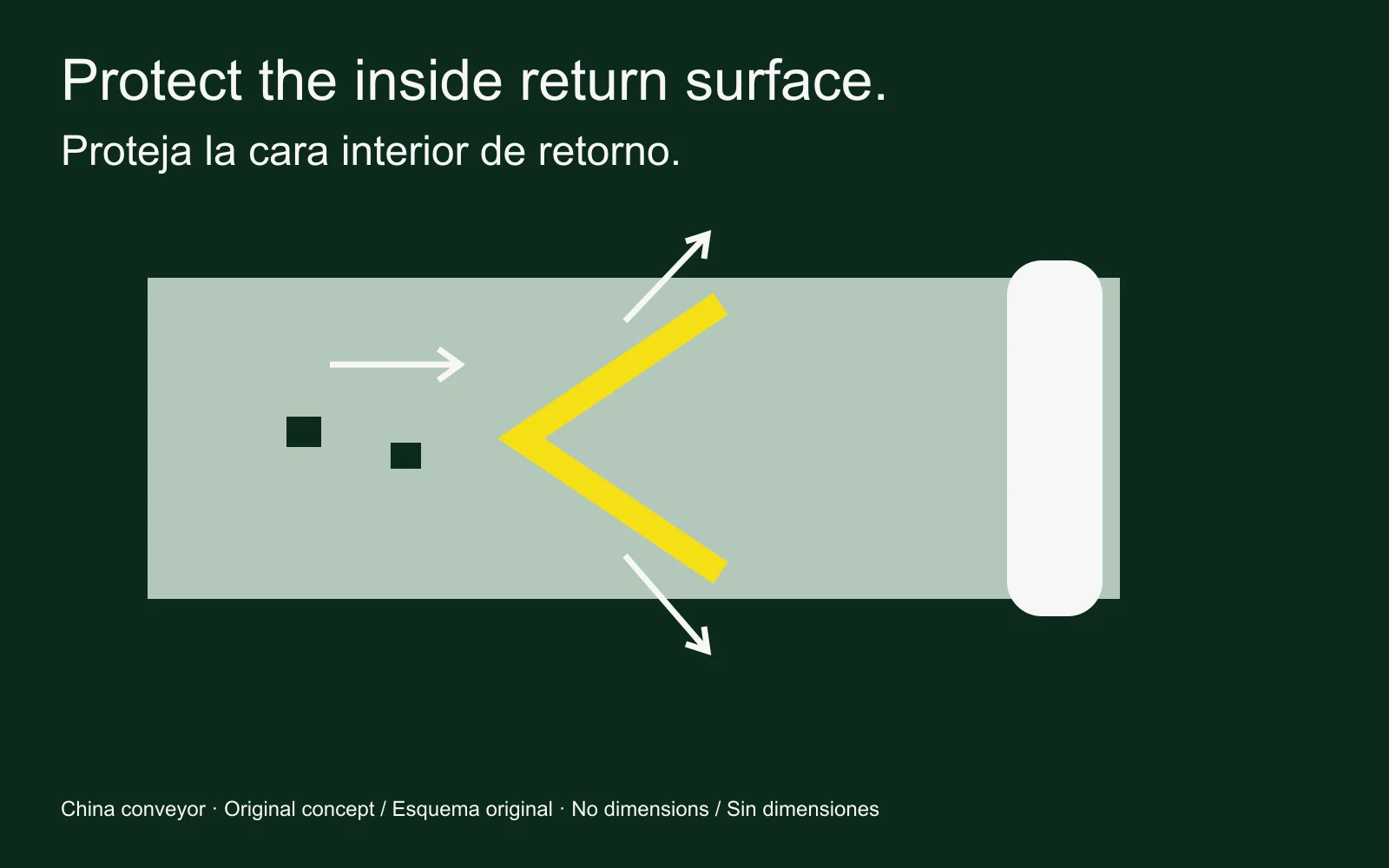
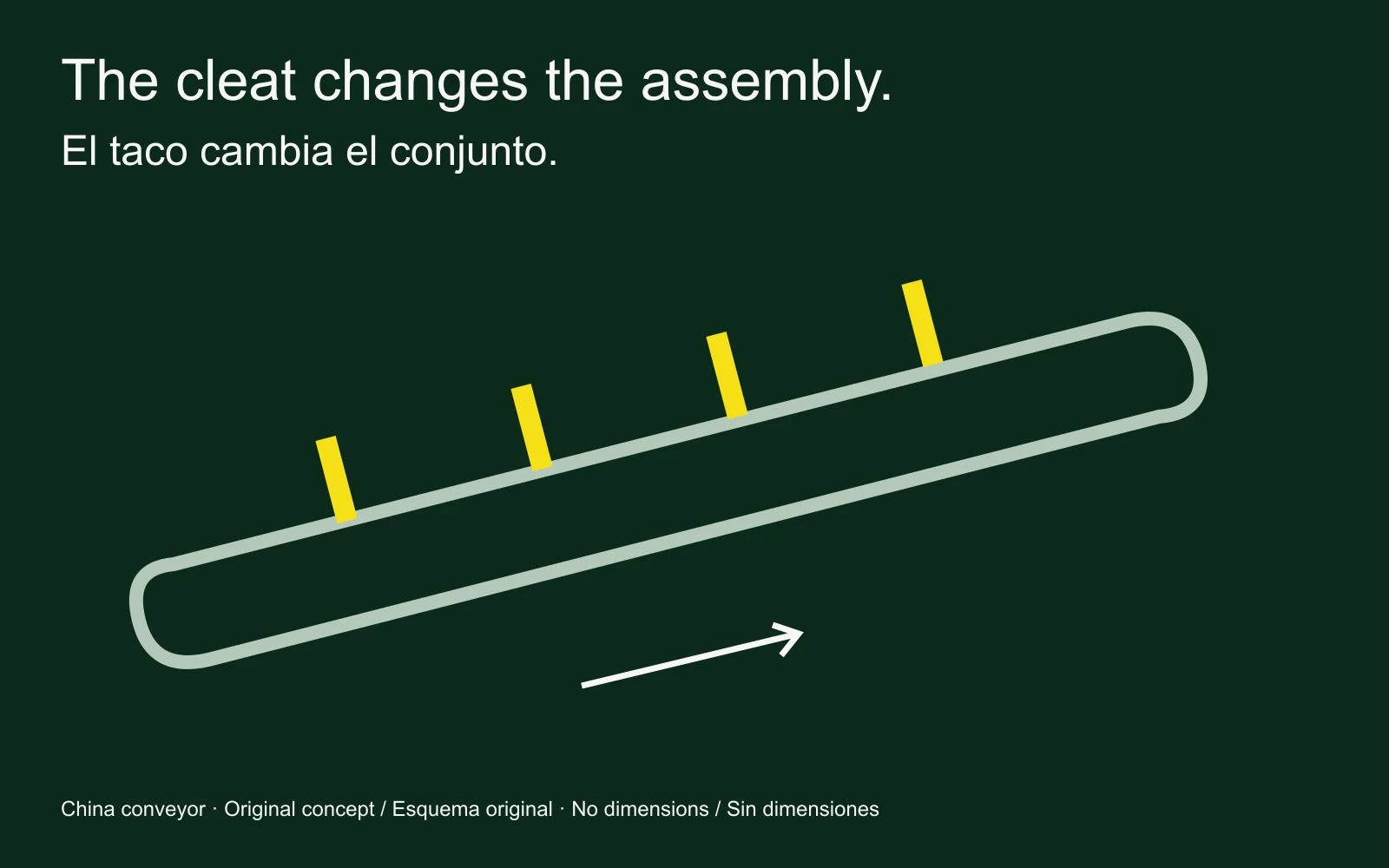
Sparks Belting reports a bakery application in which guides detached before the belt reached the end of its useful life. Its initial segmented-guide proposal stayed attached, but marks from individual lugs then appeared on the carrying surface. The company reports modifying the lugs to make them smaller and more flexible and resolving the new issue.
This is a manufacturer-reported case, not an independently repeated test. Its useful lesson is the sequence: changing a component can remove the first complaint while revealing another acceptance question. A replacement trial needs to preserve the process requirements as well as prove that the new part stays in place.
Describe the complete acceptance question
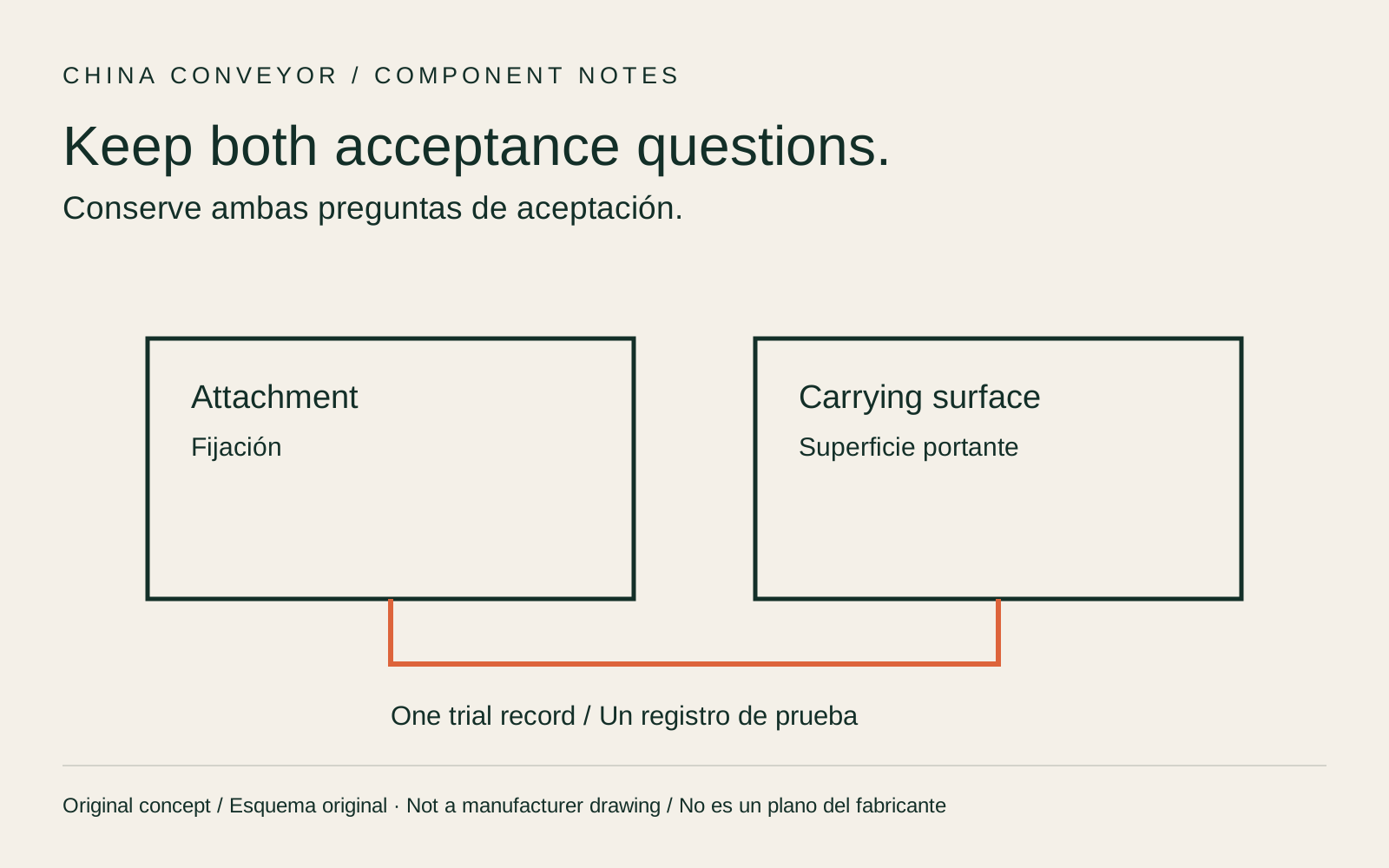
If the original complaint is guide separation, it is natural to make attachment the main observation. Keep that observation, but ask the production team what else the belt surface must do at this location. The conveying requirement may include presenting a product, supporting it through another operation or passing it to a subsequent machine in a defined condition.
Record those requirements before the trial so that a satisfactory result cannot be reduced to one maintenance symptom disappearing. Agree who observes the carrying surface and the handled product, which operating cases are represented and what will trigger a review. Do not wait for a new mark to appear before deciding whether surface condition belongs in the evaluation.
The test record should identify the exact belt, guide configuration and conveyor arrangement. A supplier's catalogue name is less useful than an identifiable trial configuration when the team later asks what changed between two runs.
Review guide and conveyor as a combination
Sparks's general V-guide information distinguishes continuous, notched and segmented options and says guides cannot compensate for poor conveyor design. That places the replacement discussion within the existing conveyor geometry. A guide should be reviewed with the applicable pulley and support arrangement rather than selected as an isolated strip.
Give the supplier the existing drawing, belt reference and the relevant route details. If a different guide profile is proposed, ask what it is intended to change and how its compatibility will be checked. Keep the resulting specification with the belt order, including any changes the equipment supplier must review.
The bakery report does not provide a universal guide profile to copy. Its modification belongs to the application described by the manufacturer. Grinding or altering an existing guide without an approved specification is not the conclusion to draw from the case.
Keep the trial outcome specific
Write the final record around observed outcomes and the conditions represented. Distinguish the initial complaint, the proposed change and any additional issue identified during assessment. Preserve unresolved questions rather than turning a short trial into a claim about the complete service life.
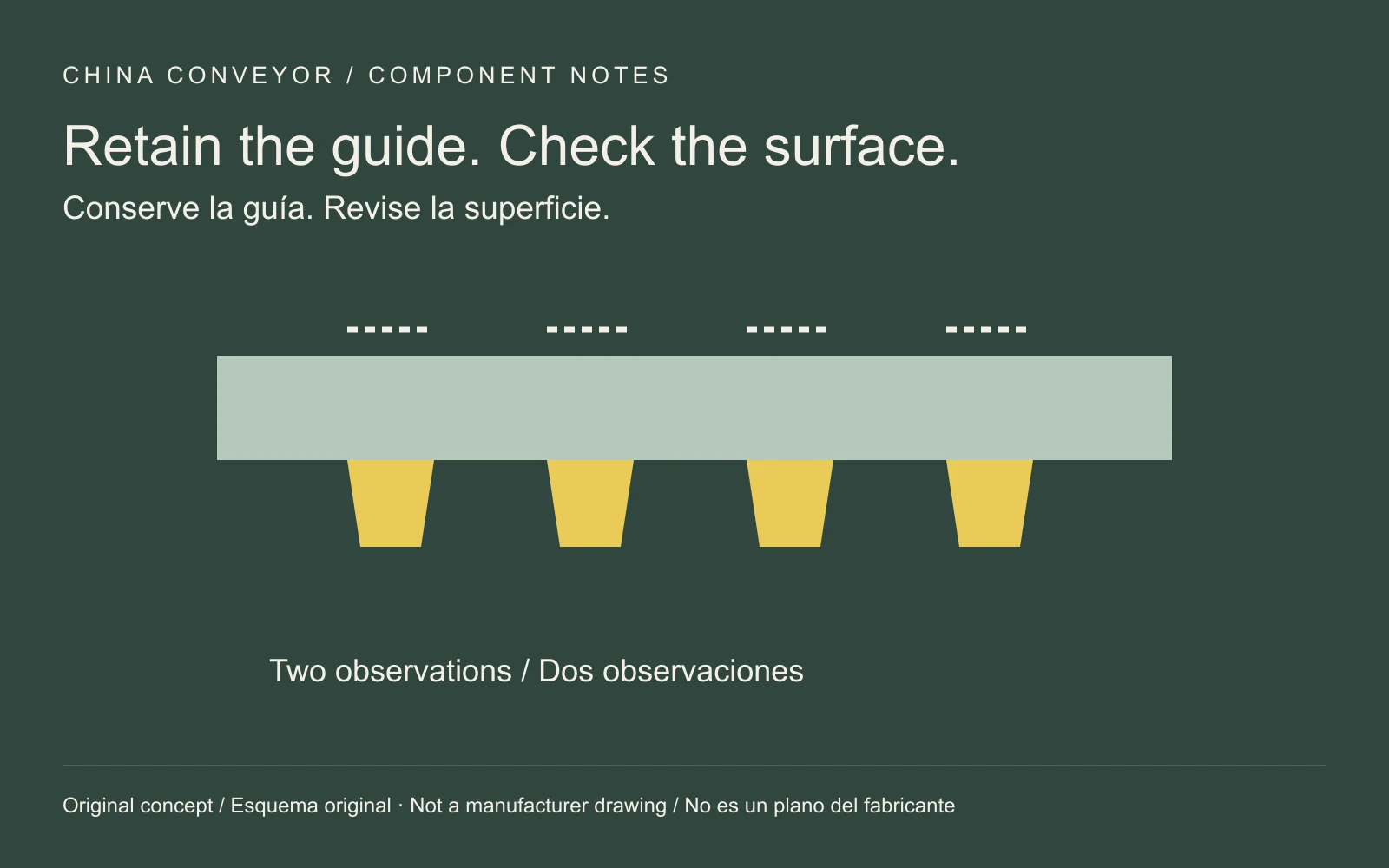
The original drawings contrast retaining the guide with reviewing the carrying surface. They do not reproduce the manufacturer's lug geometry or supply fabrication dimensions. A useful handover explains which configuration was accepted and what the trial actually established, leaving the next replacement team a clearer starting point.
Manufacturer announcements and our analysis are distinguished. Product claims require verification for the specific application.
Sources
Sparks Belting — Bakery custom V-guide case study ↗Manufacturer-reported, undated case reviewed as an existing application. No independent verification, current-event date or quantified saving is claimed.
Sparks Belting — V-guide options and application guidance ↗Describes guide forms and the need for suitable conveyor design. Product dimensions and commercial performance claims are not generalized.