The taper belongs to the curve geometry
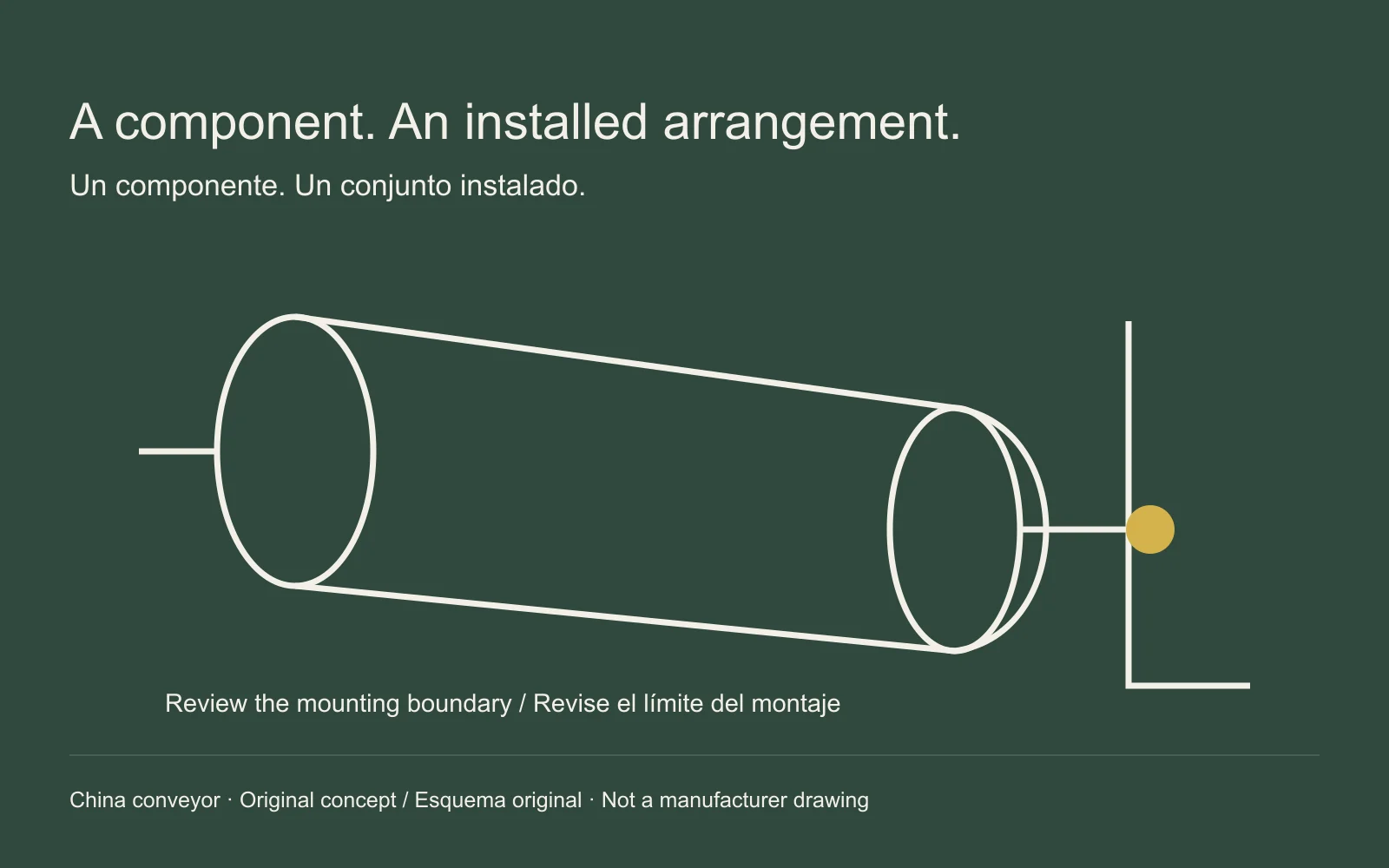
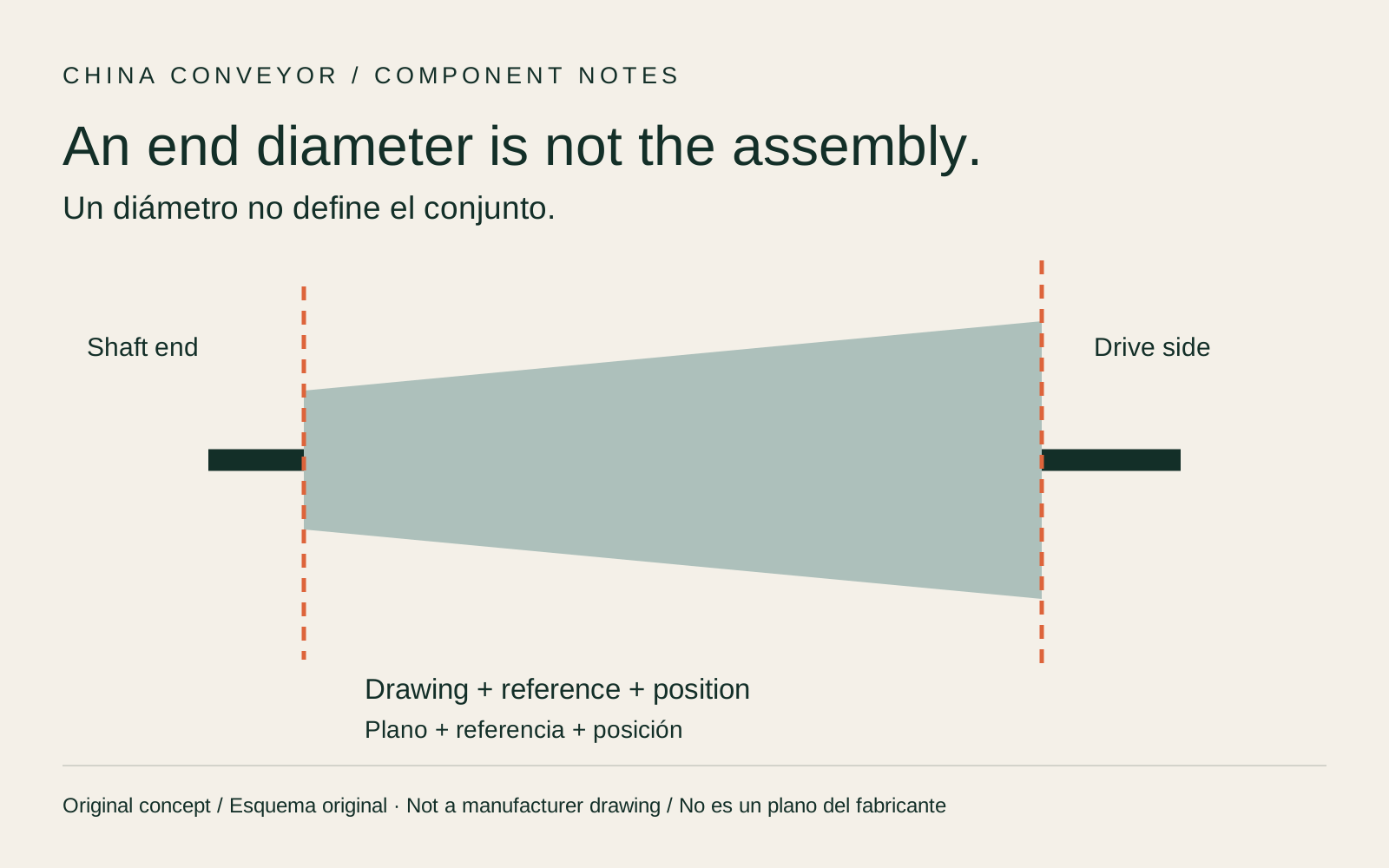
A straight roller can often be sketched with a tube length and one diameter. For a tapered roller in a curve, that shorthand loses the relationship between the inner and outer paths. Mark which end faces the inside of the curve before the part is removed or its packaging separated from its identity.
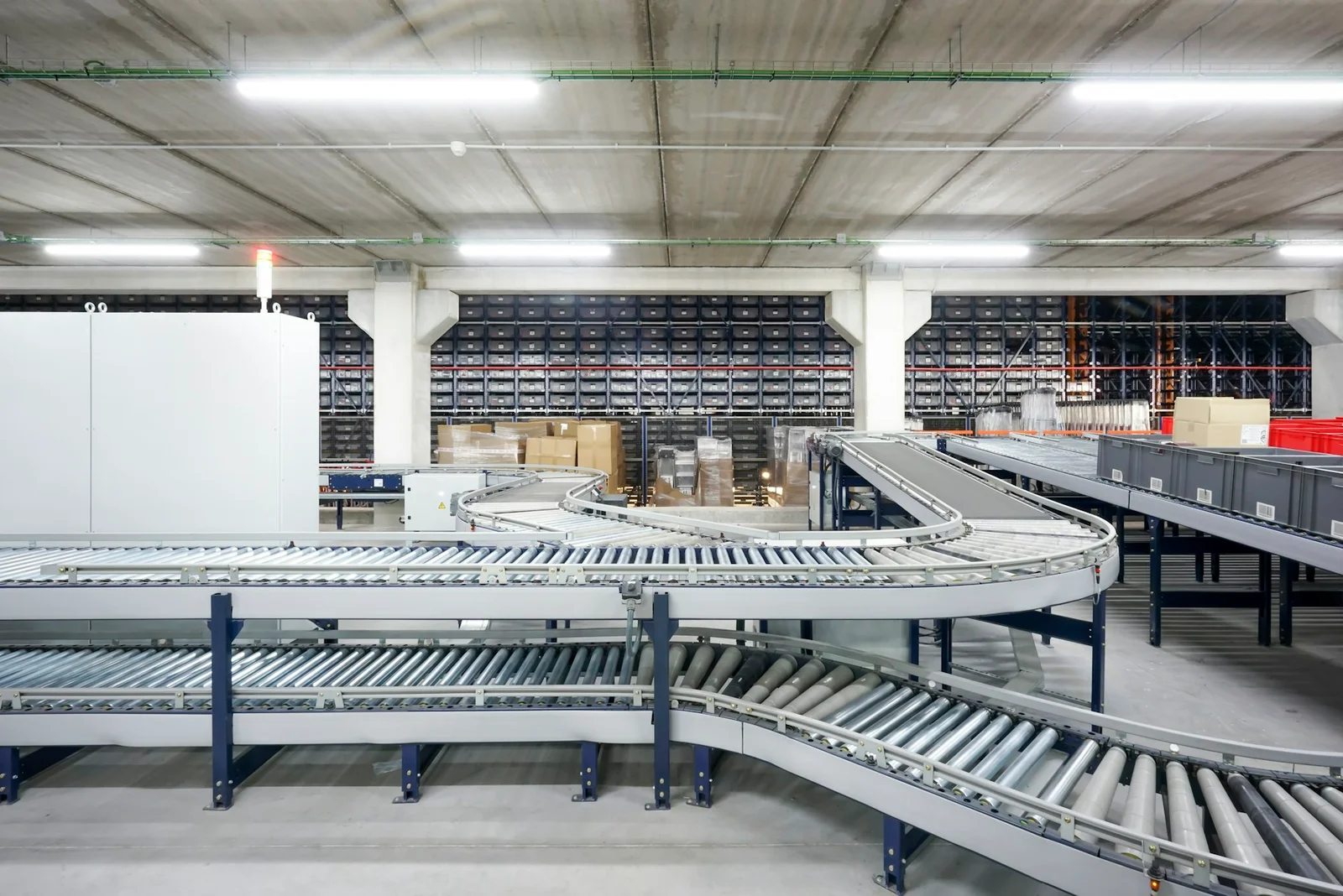
Interroll's 2018 roller catalogue explains that tapered-roller diameter increases toward the outside of the curve. For a driven roller at a shared rotational speed, the different diameters provide different peripheral speeds. This is the geometric principle behind the shape; it does not establish that any tapered roller fits any curve.
Identify the installed configuration
Record the roller reference, installation length, shaft ends, taper arrangement and drive interface using a drawing referenced to the conveyor. Include the position of the drive head where applicable. Ask the supplier to mark the proposed replacement on that drawing so that inside and outside remain explicit.
Interroll's 1700KXO product information lists particular taper and radius options for that series. These are product configurations, not dimensions to copy onto an unidentified conveyor. A matching small-end diameter alone leaves the rest of the assembly unresolved.
Keep the conveyed item in the review
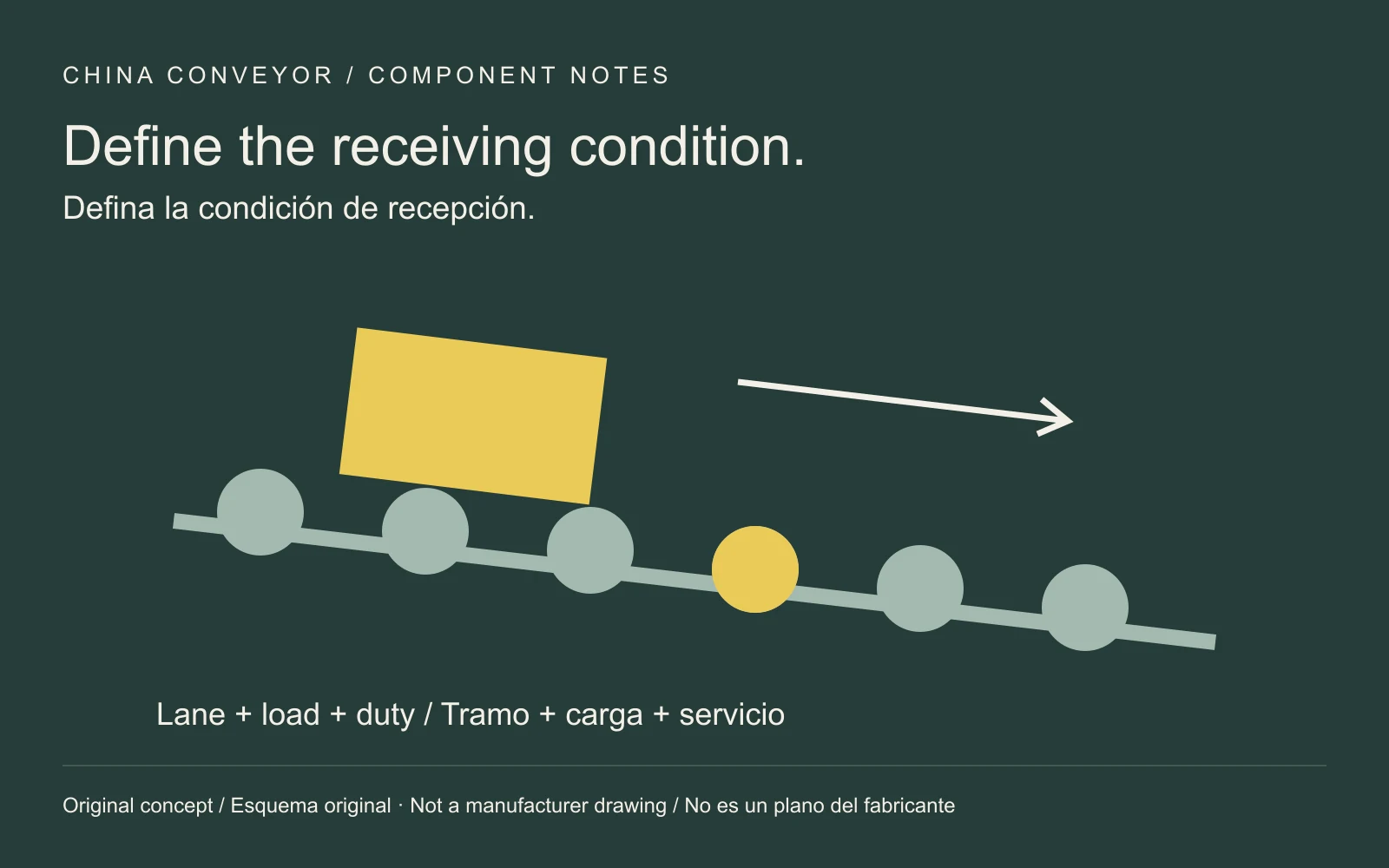
Provide the actual carton, tray or other load's dimensions and underside information, along with the relevant format range. Show the approach to the curve and the required orientation at its exit. Ask the conveyor supplier to review the proposed roller configuration within that complete route.
Treat side guides and the transition arrangement as part of the application rather than assuming that the taper eliminates all need for guidance. The 2018 catalogue's planning discussion has stated conditions; it should not be turned into a universal claim that every load will retain orientation without guides.
Make the stores label point to the drawing
Keep the approved reference and installation position with each replacement roller. For a set, specify the quantities and the positions represented instead of treating all similar-looking tapered parts as one item. This reduces ambiguity before the maintenance shutdown.
The original illustration shows an inner and outer reference, without a manufactured taper angle or allowable curve radius. The enquiry is complete when the supplier can confirm the identified configuration against the existing conveyor and conveyed load.
Manufacturer announcements and our analysis are distinguished. Product claims require verification for the specific application.
Sources
Interroll — Conveyor roller catalogue, 2018, curve planning ↗Existing planning guidance explains taper orientation and peripheral speed. Its conditions are retained; no generic radius or guide-free guarantee is given.
Interroll — Series 1700KXO tapered roller ↗Product-specific configuration examples. Listed angles, radii and load ratings are not used as universal replacement dimensions.