Two signatures: involvement first, construction second
Nueva Centinela is the growth project of Antofagasta Minerals' Centinela district in northern Chile: a second concentrator approved in December 2023 at a project cost of $4.4 billion, adding a 95,000 t/d plant and an expected 170,000 t/y of copper-equivalent production, with first production expected in 2027. The crushing and conveying scope for that plant was not tendered as a finished design. International Mining reports that Early Contractor Involvement (ECI) was awarded in early 2024 to Terra Nova Technologies (TNT) and its joint venture construction partner, Ingenieria y Construccion Sigdo Koppers SA. In April 2024, TNT's then parent Murray & Roberts announced that the joint venture had been awarded an engineering, procurement and construction (EPC) contract worth approximately US$200 million, with TNT's share at 51%, covering a primary crushing facility, a 6.3 km overland conveyor, a 23 kV power transmission system and associated infrastructure, starting that month on a 27-month programme. That announcement did not name the mine; the identification of the package with Nueva Centinela rests on IM's subsequent project reporting. The sequence - involvement first, construction contract second - is the subject of this article.
A specification that freezes in layers
Under a conventional tender, the specification is frozen before the market is allowed to price it. ECI reverses the order: the contractor is appointed while the design is still being developed, and the freeze happens in layers as the design matures. At Centinela, IM reports that the modular primary gyratory crusher station was developed jointly with AMSA's operations and maintenance teams - the people who will run and maintain the plant were inside the contractor's design process, not reviewing its output afterwards. What freezes first in such a sequence is the performance envelope: the 95,000 t/d duty, the route from crusher to concentrator, and the tie-ins to an operating brownfield site. Equipment-level detail - belt class, drive arrangement, maintainability provisions - is settled progressively, with constructability and maintenance access treated as design inputs rather than as variations negotiated after award. For owners weighing the model on other projects, the operative question is which parameters the arrangement names as frozen at each gate, and which remain open to contractor optimisation.
The system on the contract
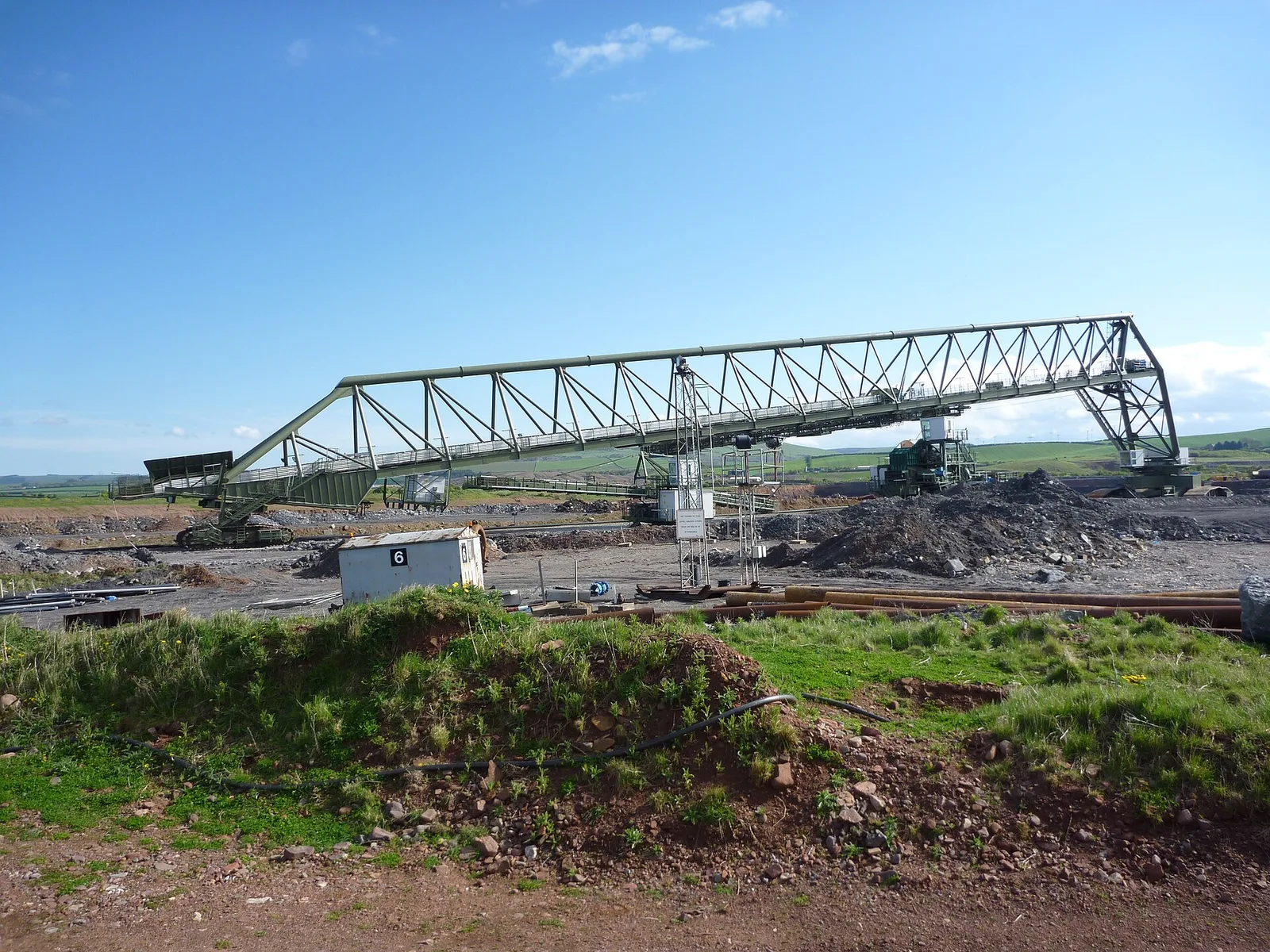
The contracted system is a single high-duty link. IM's Spotlight: Conveyors feature, reporting TNT's account, puts the main overland conveyor at a 1,524 mm wide ST 3150 steel-cord belt running 6.117 km at 6.0 m/s, driven by two 2,250 kW variable-frequency drives and feeding a stacker ahead of downstream processing; the Murray & Roberts announcement describes the conveyor scope as 6.3 km and adds the 23 kV power transmission system. TNT says the system underpins the project's 95,000 t/d design throughput. On a brownfield expansion whose entire new plant output depends on one conveyor flight, availability is not a performance bonus but the production plan itself - which is why the delivery model's maintainability provisions, covered next, matter more than any single component choice. This article records the drive package as a contract fact only; the technology choices behind drives of this class belong to this journal's electrification coverage, not to a delivery-model story.
Maintainability designed by its future maintainers
Three provisions show what the ECI phase bought. The stacker carries a head-pulley removal system, so a major component change does not begin with improvised rigging. Fire suppression and dust suppression are fully integrated into the conveyor and stacker arrangement rather than procured later as separate add-ons. And the belt has a permanent splice station with a powered winder, turning the most schedule-critical belt maintenance task into a planned facility instead of a temporary-works problem. IM links these features, and the project's high degree of modularisation, to construction performance of more than 1.5 million LTI-free hours at the time of its reporting. None of these items is exotic technology; their significance is contractual. They are in the plant because the owner's operations and maintenance organisation helped develop the design before the construction price was fixed. TNT also brought a running reference for the pattern: IM records its Spence SGO overland system, built around the same modular gyratory station concept, as rated at the same 95,000 t/d and in successful operation since 2020.
Interfaces: one contract, two partners, one operating mine
The joint venture splits the delivery chain along a familiar line: TNT leads the engineering, procurement and systems side, while Sigdo Koppers provides the Chilean construction organisation; for the owner, the EPC form keeps a single point of responsibility for the crush-and-convey chain up to its interfaces with the concentrator works and the operating mine. The published timetable shows the procurement consequence. A 27-month programme starting in April 2024 means the long-lead heart of the system - more than six kilometres of high-tensile steel-cord belting, the drive package, the crusher station modules - had to be committed inside the EPC, on the contractor's schedule rather than through owner-run tenders; and because the involvement phase preceded the contract, the contractor's vendor groundwork could start before the EPC signature existed. IM reports the project on schedule for commissioning later in 2026, ahead of the concentrator's first production in 2027: the conveyor must be proven before the plant it feeds can start. Component suppliers reading ECI-to-EPC projects should therefore date their real sales window from the involvement award, not from the construction contract announcement.
A different procurement story from Elang - and from electrification
Two neighbouring stories in this journal should not be merged with this one. The electrification coverage of overland conveyors concerns the technology layer - drive architectures and component selection; this article has stayed at the commercial and execution layer, because the Centinela facts on the public record are contract facts. The Elang project covered in the previous article of this series is almost the mirror image: there, an owner's procurement organisation is being staffed years before a final investment decision, with no contractor yet named and the scope still moving. At Centinela, the owner's investment decision came first, in December 2023, and it is the contractor's delivery chain - involvement, then EPC - that was organised early. What buyers can take from Centinela is a short checklist for any early-involvement offer: which design parameters freeze at which gate; whether operations and maintenance staff sit inside the design team; how long-lead packages are committed between the involvement and construction signatures; and where single-point responsibility ends at the brownfield tie-ins. The answers, more than the label, decide what early involvement is actually worth.
Manufacturer announcements and our analysis are distinguished. Product claims require verification for the specific application.
Sources
International Mining, Spotlight: Conveyors 2026 - TNT nears completion of Centinela project ↗Feature based on Terra Nova Technologies' account, opened in full for this article. Source for the early-2024 ECI award to TNT and Sigdo Koppers, the crusher station developed jointly with AMSA operations and maintenance teams, the main conveyor parameters (1,524 mm ST 3150 belt, 6.117 km, 6.0 m/s, 2 x 2,250 kW VFD drives), the 95,000 t/d design duty, the stacker head-pulley removal system, integrated fire and dust suppression, the permanent splice station, over 1.5 million LTI-free hours, commissioning due later in 2026, and the Spence SGO reference. Parameters are TNT's as reported by IM.
International Mining, 23 April 2024 - Terra Nova awarded major crushing and conveying EPC contract ↗Report of Murray & Roberts' announcement of 22 April 2024. Source for the EPC contract value of approximately US$200 million, TNT's 51% joint venture share, the scope as announced (primary crushing facility, 6.3 km overland conveyor, 23 kV power transmission system and associated infrastructure), the April 2024 start and 27-month duration, and the modular gyratory station following the Spence precedent. The announcement itself did not name the client or the mine.
Antofagasta plc, 20 December 2023 - Centinela Second Concentrator Project approved for development ↗Owner's approval announcement, opened in full for this article. Source for the project background used here: project cost of $4.4 billion including a new 95,000 t/d concentrator plant, an additional 170,000 tonnes of copper-equivalent production per year, first production expected in 2027, and the project's brownfield character within the existing Centinela operation.