One conveying stage can have two outlet questions
Key Technology's existing fresh-cut apple application describes a dewatering shaker before a downstream sorter. Vanmark's Compact Hydrocutter description includes a dewatering conveyor within a wider cutting system. These are examples of conveying equipment performing a process function as well as moving product between machines.
For an enquiry, name the incoming stream and the required product condition at the outlet. Include the equipment immediately before and after the proposed conveyor. The word dewatering alone leaves the next process's requirements undefined.
The cited application material is established manufacturer information, not a new product launch. It illustrates equipment boundaries without establishing the result of a different plant's dewatering stage.
Show where the separated water is intended to go
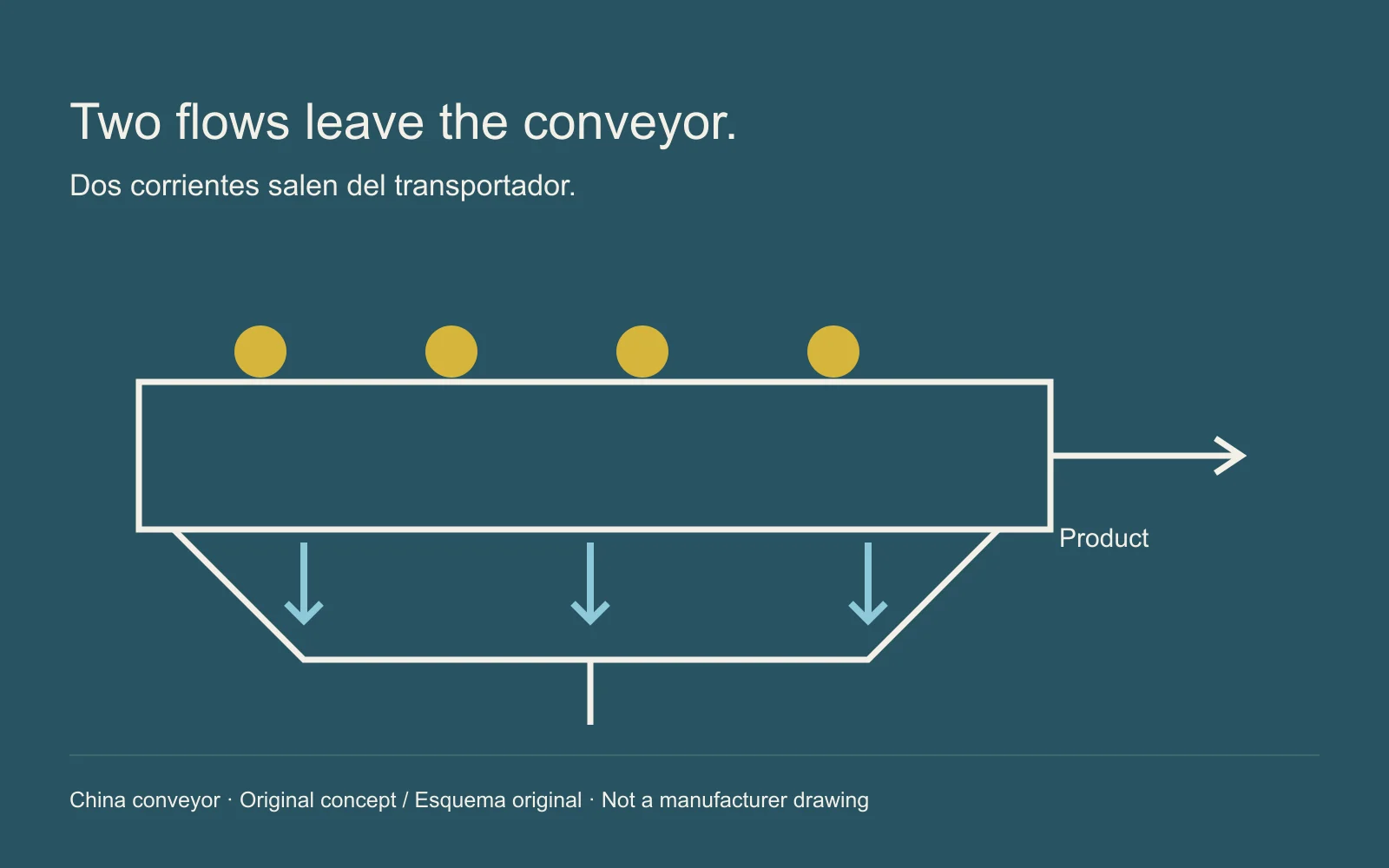
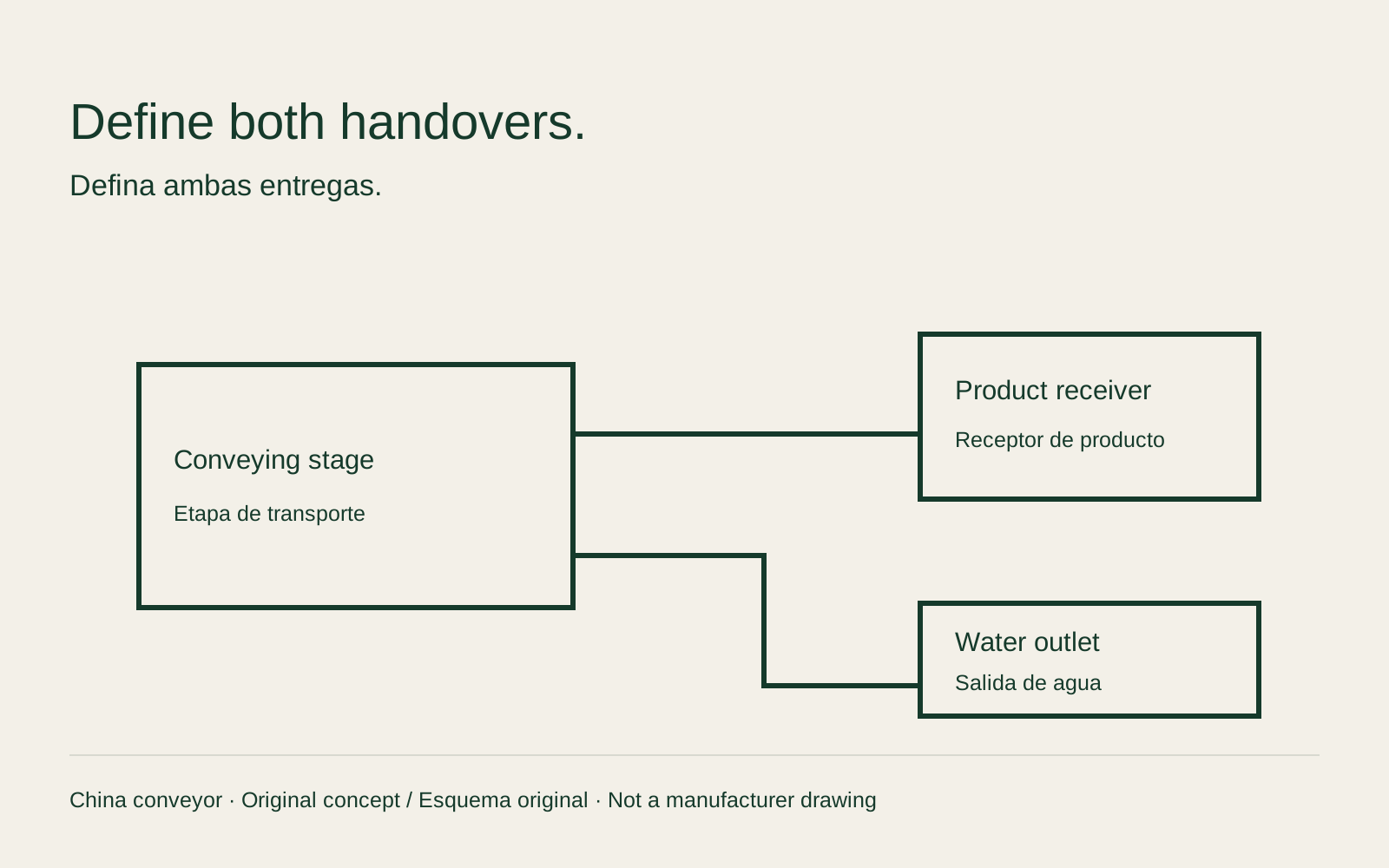
A product-flow drawing may follow food through a line while leaving the separated liquid outside the scope. Ask the process-equipment supplier to identify the proposed collection and outlet arrangements and the interfaces assigned to others. Keep those interfaces on the same identified drawing as the product route.
Describe the product range and the process conditions represented by the enquiry. Ask the supplier to say which incoming conditions its proposal covers and what evidence would demonstrate the intended result. Do not turn a general statement about removing residual water into a guarantee that the outlet is dry enough for every following operation.
If the receiving equipment is a sorter, freezer or packaging machine, have its responsible supplier define the required incoming condition. Record who reviews a change in product or upstream washing conditions. This article does not provide a drainage design, sanitation procedure or wastewater specification.
Include access and accepted observation in the offer
Request the proposed equipment configuration and the documents that identify it. Clarify which supports, collection parts, access arrangements and services the offer includes. Assign the interfaces between the conveying equipment, the liquid outlet and the receiving process before comparing complete prices.
Ask the project team to agree how the intended operation will be observed with representative product and conditions. A useful record identifies the material presented, the supplied configuration and what was actually checked at the product and liquid outlets. Keep untested conditions visible rather than converting one demonstration into a universal moisture-removal claim.
For later service, preserve the approved equipment and component references together with the operating scope. A change to a conveying surface or collection arrangement should be reviewed against its process role, not treated simply as a piece of replacement metalwork.
The original illustrations show product and water taking different routes from a generic conveying stage. They are not Key or Vanmark drawings, drainage calculations or proof of a drying result.
Manufacturer announcements and our analysis are distinguished. Product claims require verification for the specific application.
Sources
Key Technology — Integrated sorting system for fresh-cut apples ↗Existing primary application description places a dewatering shaker before sorting. No historical announcement is presented as a current launch and no moisture-removal value is inferred.
Vanmark — Compact Hydrocutter System ↗Primary equipment description includes a dewatering conveyor in the complete system. It does not define drainage or product-outlet acceptance for an unrelated installation.