Put the handled bottle in the enquiry
An empty-bottle conveying project can arrive with a list of bottle volumes and a desired route. Those details do not fully identify the product the conveyor must handle. Provide the actual empty bottle drawing and samples for the relevant formats, with the process stage clearly stated.
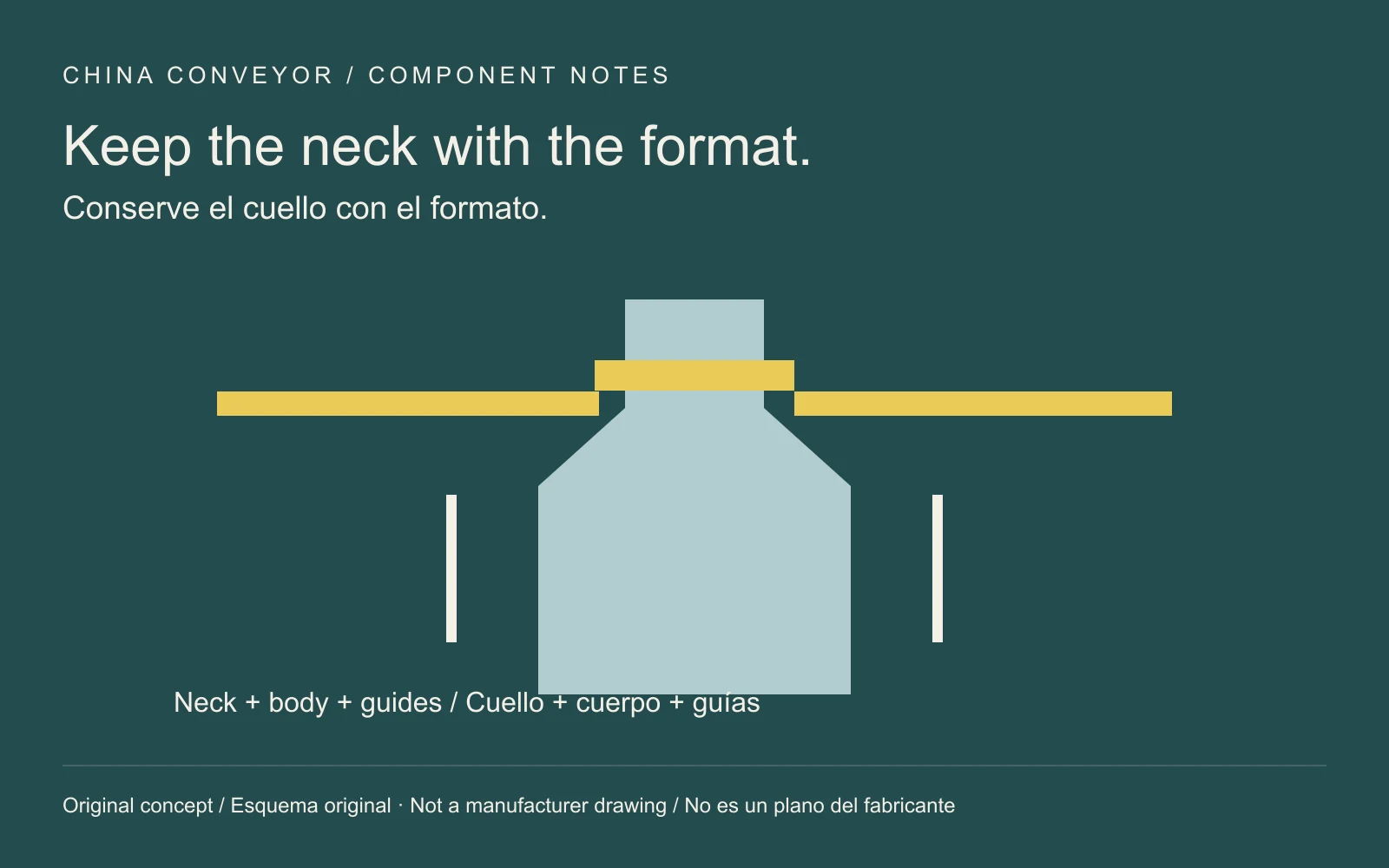
Sidel describes empty-container air conveying between a blower and filler in lines without a combined solution. Its product information identifies under-neck and lateral guide adjustments as part of the format arrangement. That gives the buyer a practical starting point: keep the neck and body details with the format record, not only the nominal capacity of the bottle.
Separate the supplied container drawing from assumptions copied from an older format. If the bottle design changes, make the changed drawing visible to the conveyor supplier before treating the existing setting as applicable.
Define changeover as an identifiable configuration
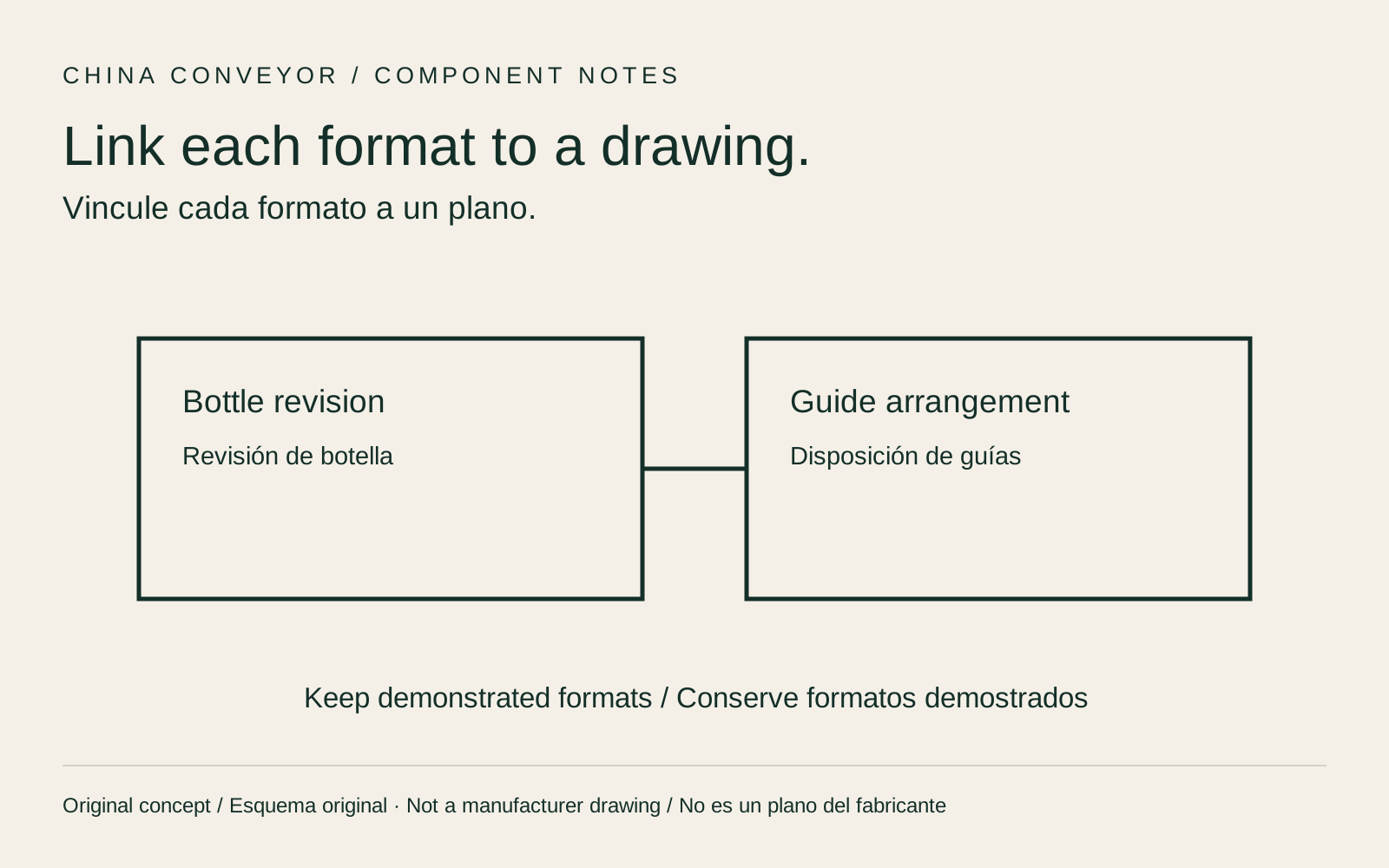
Ask the supplier to show which guides and other format items change, which remain fixed and how the selected arrangement is identified. Sidel describes manual and automatic guide-adjustment options; an automatic-format description should still identify the actual formats represented by the proposal.
Keep the bottle reference, drawing revision and agreed format arrangement together. If the operating team uses a format selection on a control panel, ask how that selection is connected to the approved physical configuration. A format name alone is not evidence that every relevant mechanical item has been accounted for.
Agree how the commissioning demonstration will represent the intended formats and changeovers. State which cases are tested and which remain for later review rather than treating one sample run as acceptance of all future bottles.
Show the air and machine interfaces
Request an explicit description of the air generation, filtration and distribution included in the quoted system. Sidel's conveying literature treats the under-neck guide and air-conveying arrangement as parts of its solution. Ask what utilities and maintenance access the selected proposal requires instead of leaving the air package implied.
Show the route, support arrangement and interfaces with the upstream and downstream machines on the project layout. Describe how the conveying system is expected to respond to pauses and the agreed receiving condition at the next machine. Let the responsible integrator identify the coordinated control requirements.
Keep the scope clear where more than one contractor supplies equipment. The air conveyor should arrive with its applicable instructions and an identified owner for each open interface.
Keep the actual format range with the handover
Archive the approved bottle drawings, format references and demonstration record with the conveyor. Record later changes to the product or handling arrangement so that the need for another application review can be assessed.
The original concept drawings connect the bottle's neck and body to a format record. They do not reproduce a Sidel neck rail or specify a clearance, air pressure, filter rating or production rate. The intended result is a traceable arrangement for the empty bottles actually handled on this line.
Manufacturer announcements and our analysis are distinguished. Product claims require verification for the specific application.
Sources
Sidel — Empty-container air conveying ↗Primary description of line role and guide adjustment for its systems. Bottle dimensions, filtration classes and production claims are not generalized.
Sidel — Conveying solutions brochure ↗Existing manufacturer literature provides under-neck-guide and air-conveying context. Commercial energy-saving figures are not adopted as site results.