Start with the material journey
A replacement project may begin with a trough length, width and construction material because those details are easy to recover from a drawing. A vibratory conveyor enquiry also needs to describe what arrives, where it must go and the condition in which the next process must receive it.
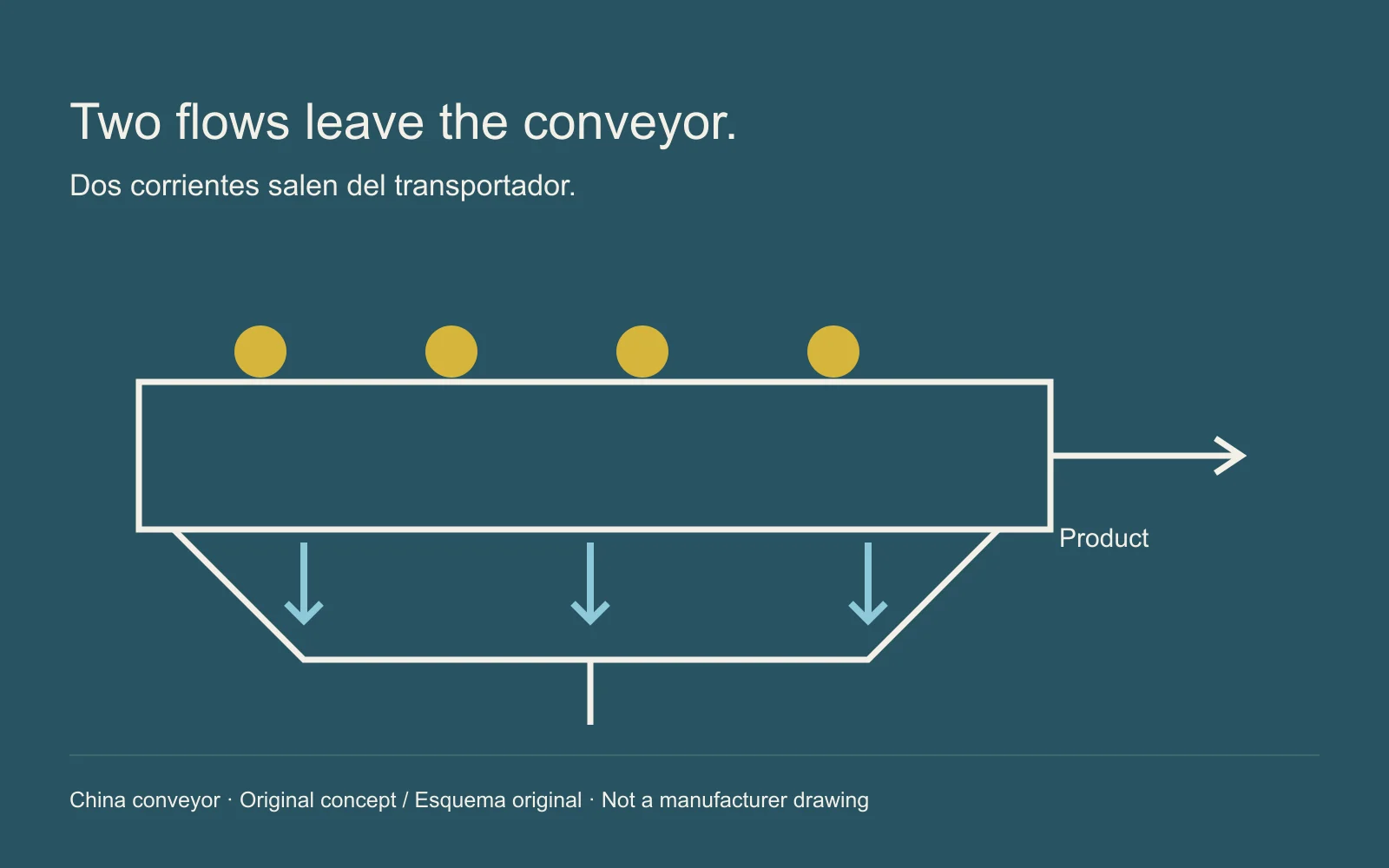
Identify the material and relevant variation, the route and the intended operating duty. Separate conveying from any additional process function expected in the same equipment. If screening or another operation is required, name that requirement rather than leaving the supplier to infer it from the trough's appearance.
For an existing installation, include the complete equipment reference and the reason for replacement. State whether the project renews an established duty or changes the process. That distinction affects which parts of the original specification can be carried forward.
The drive and spring arrangement are part of the machine
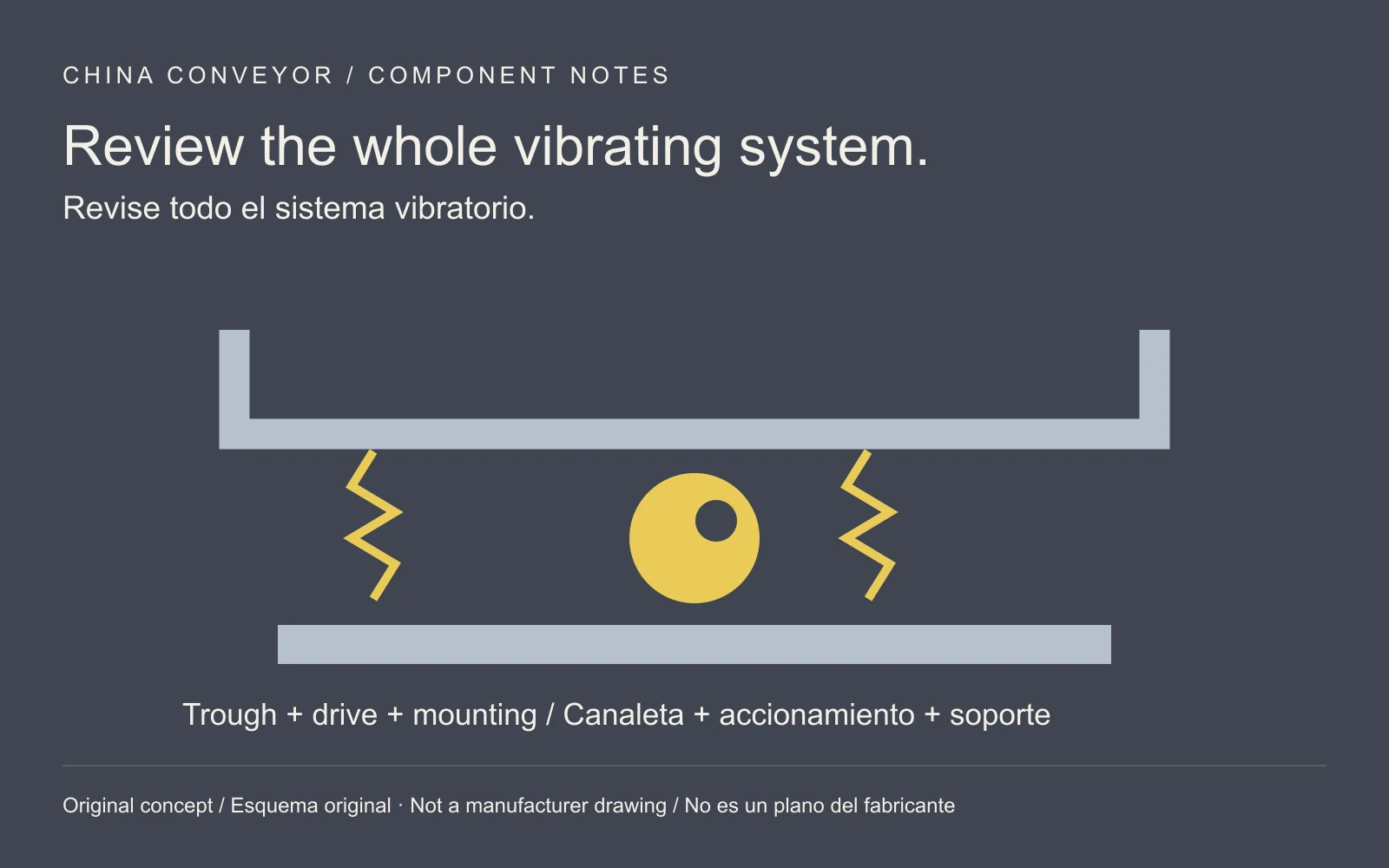
Eriez describes mechanical vibratory conveyors with single-mass and two-mass systems, with spring arrangements depending on the application. Its named TM model uses a spring-coupled arrangement driven by an eccentric shaft and can be designed for base or suspended mounting. These descriptions identify an engineered system, not simply a tray with a motor attached.
Ask the equipment supplier to identify the proposed drive concept, trough construction and mounting arrangement on the quotation drawing. If parts of an existing system will be retained, have it specify which items have been reviewed for the new proposal. Do not assume that a matching trough outline confirms that the drive and supporting arrangement are suitable.
Request the installation information that the responsible structural and mechanical designers need for their review. This article supplies no foundation loads, spring selection or operating-frequency adjustment.
Give the supplier a defined operating case
Erie Technical Systems publishes a vibratory-conveyor application data sheet for project selection. The practical step is to complete the selected supplier's application record with actual process information, making unresolved items visible. Keep the inputs linked to the proposed equipment reference.
Clarify whether the offer addresses a steady conveying condition, a controlled feed into another process or a specified sequence with pauses and restarts. Ask the supplier to state the assumptions behind its proposal and the product conditions represented by any demonstration.
Compare offers against the same duty and supply boundary. A headline capacity or a motor power does not identify the material and arrangement under which the proposal was selected. Retain those conditions with the acceptance record so that later changes have a defined starting point.
Close the interfaces at inlet and discharge
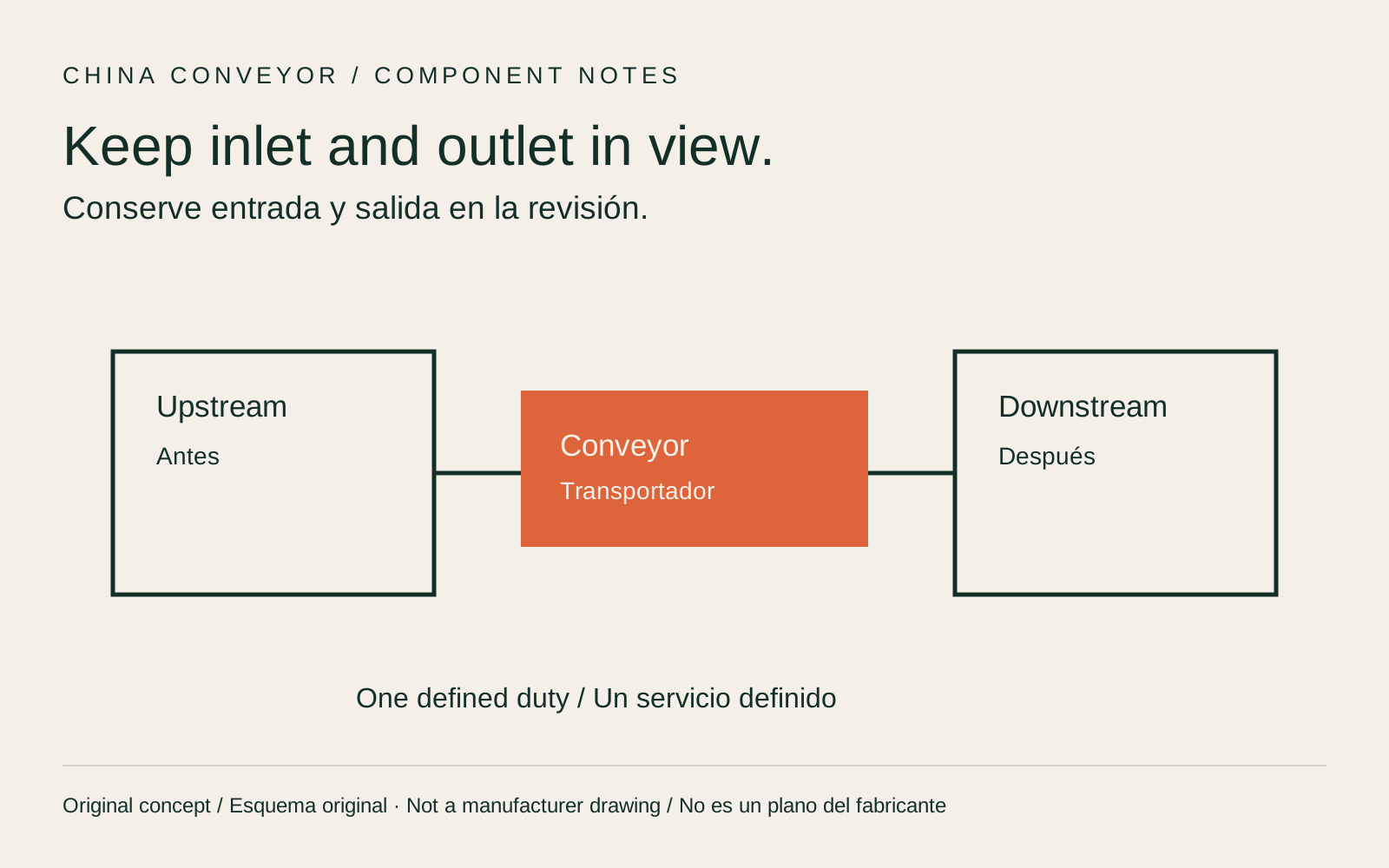
Show the upstream and downstream equipment on the approved layout. Identify who supplies the connections, controls and service access within the proposed arrangement. Confirm included commissioning and demonstration work and record any part assigned to another contractor.
The original concept drawings connect trough, drive and support, then place the assembly between its process interfaces. They contain no manufactured geometry or universal throughput figure. The objective is a complete vibratory-conveyor proposal that the project team can review against a stated material journey.
Manufacturer announcements and our analysis are distinguished. Product claims require verification for the specific application.
Sources
Eriez — Mechanical vibratory conveyors ↗Primary descriptions of single- and two-mass systems, named drive arrangements and mounting options. No frequency, power comparison or capacity is generalized.
Erie Technical Systems — Vibratory conveyors and application data sheet ↗Separate manufacturer's project-application resource supports documenting the selection inputs. Its commercial throughput figures are not adopted.