A flange drawing answers only the fit question
A hopper outlet and a conveyor inlet can make a slide-gate enquiry look like a short mechanical matching exercise. The opening and available space matter, but they do not say what the gate must do when the process is running. Start with a small process sketch showing the equipment above and below the proposed gate.
Mark whether the gate serves normal production, occasional shutoff or another specified duty. Identify the material and its condition. If an existing gate is being replaced, include its reference and explain whether the new order repeats the original duty or changes it.
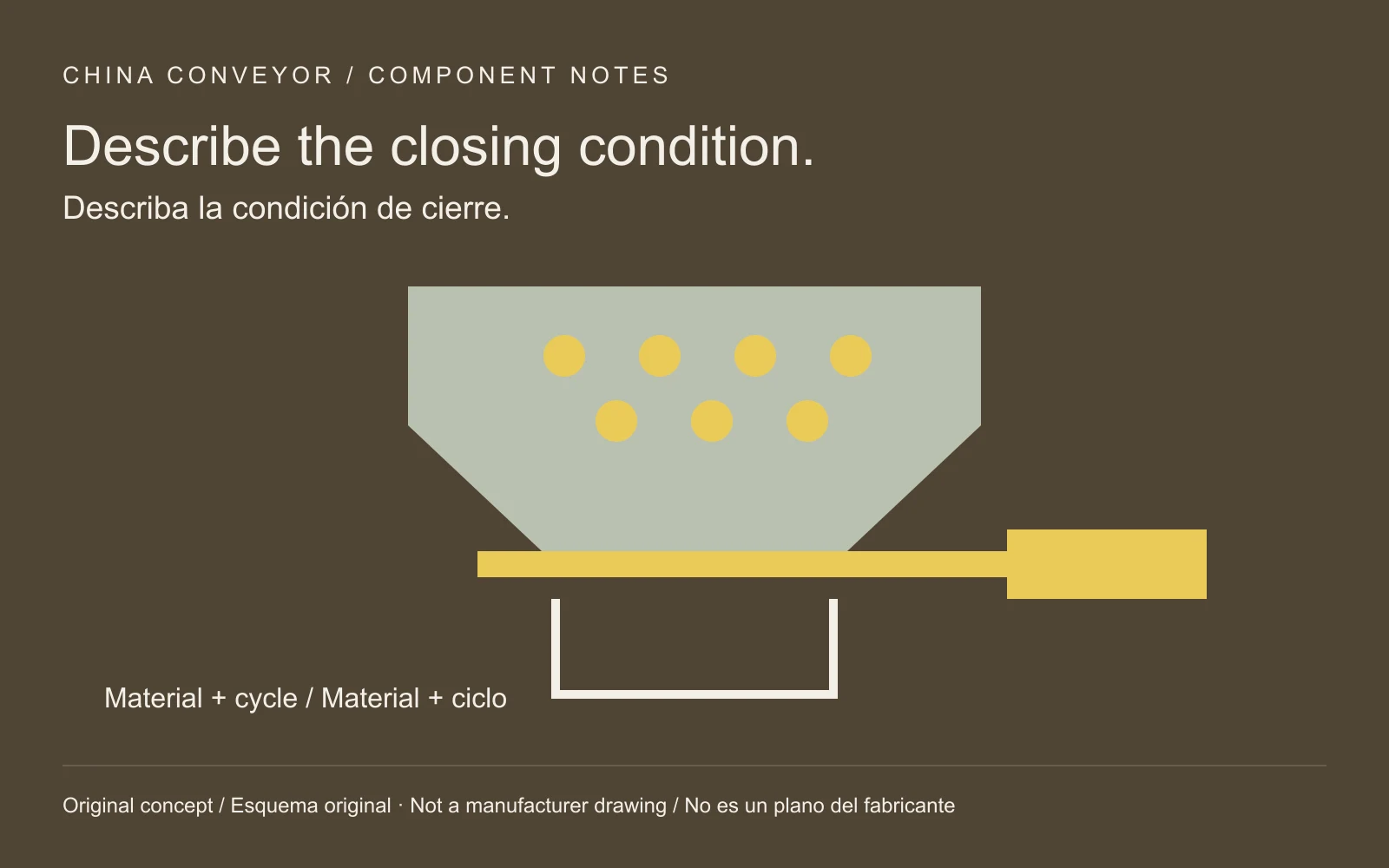
Describe the closing event, not just open and closed
Vortex's technical article on gates below hoppers distinguishes scale, surge and day-bin applications. Its selection questions include the material, flow rate or density, frequency of shutoff, flow aids and the next equipment in the process. The same outlet dimensions can therefore lead to different application discussions.
Tell the supplier what material is present during opening and closing and whether the process has been stopped first. Ask it to confirm the proposed gate's capability for that condition. Keep any pressure or containment requirement explicit instead of assuming that a closed-position signal proves it.
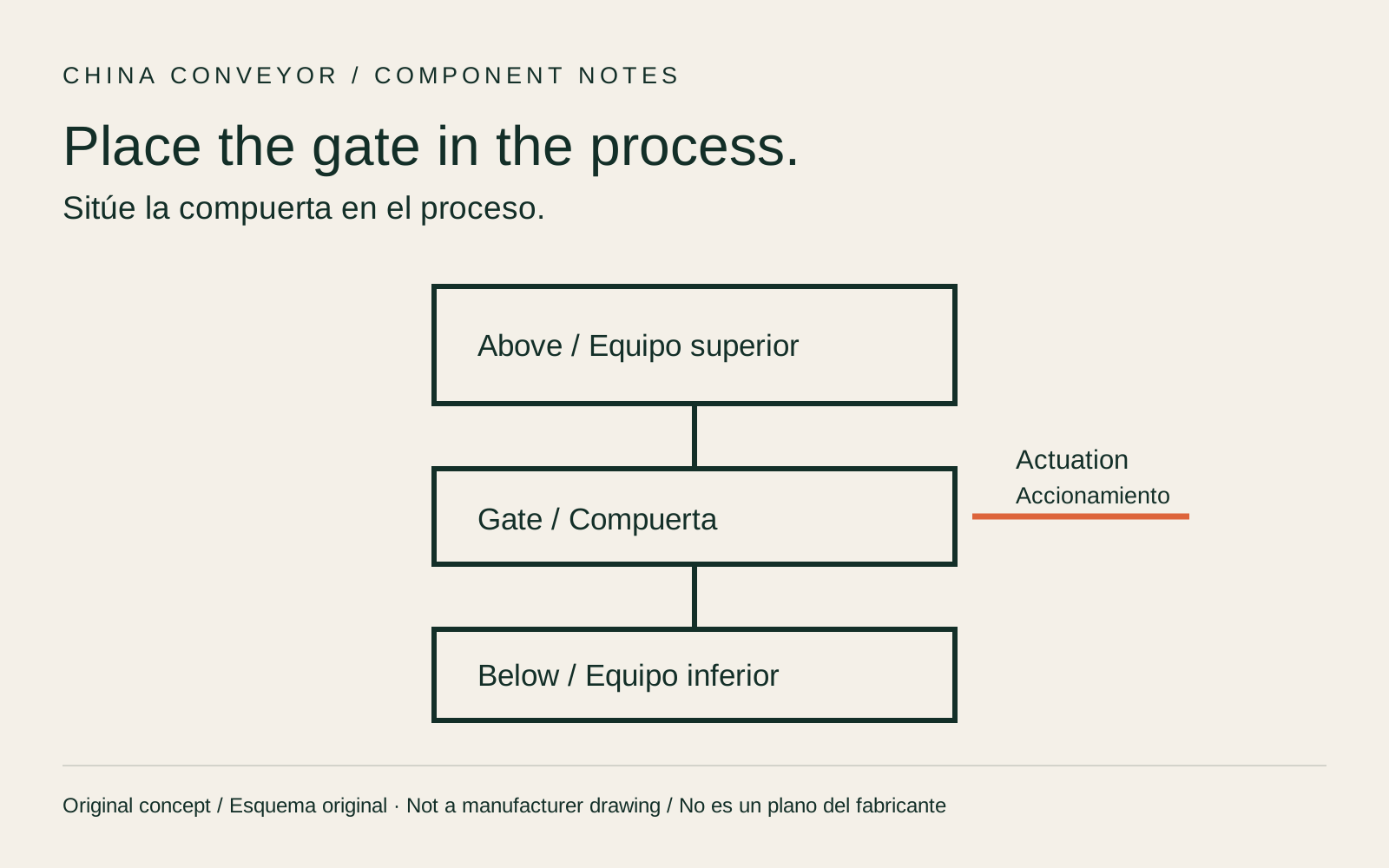
Connect the actuator to the operating cycle
KWS's application guide lists manual, electric, pneumatic and hydraulic actuation. The appropriate comparison is the complete arrangement for the specified duty, with the required utilities, access and controls identified. Request the proposed actuator and position-feedback details rather than an unqualified automatic-gate price.
Show the vertical space and the direction in which the plate or actuator needs clearance. Agree who supplies transition pieces and who reviews the interfaces with the hopper and conveyor. Do not infer that a matching bolt pattern resolves those installation questions.
Define what the handover will demonstrate
Agree a demonstration covering the intended opening and closing sequence, representative material conditions and the required indications. Record which conditions are included and which need separate verification. Archive the approved drawing, actuator reference and supplier instructions with the asset.
The original illustrations place the gate in its process context and show the need to describe the closing condition. They do not establish a load rating, a leakage class or a personnel-protection function. Those requirements need their own specified and reviewed basis.
Manufacturer announcements and our analysis are distinguished. Product claims require verification for the specific application.
Sources
Vortex — Choosing a slide gate below a hopper ↗Primary technical article distinguishes hopper duties and asks for material, cycle and process information. Product recommendations are not generalized.
KWS — Slide gate application guide ↗Describes typical installation locations and available actuation approaches; not a rating for an unspecified gate.