Turn the pallet over before choosing the transport medium
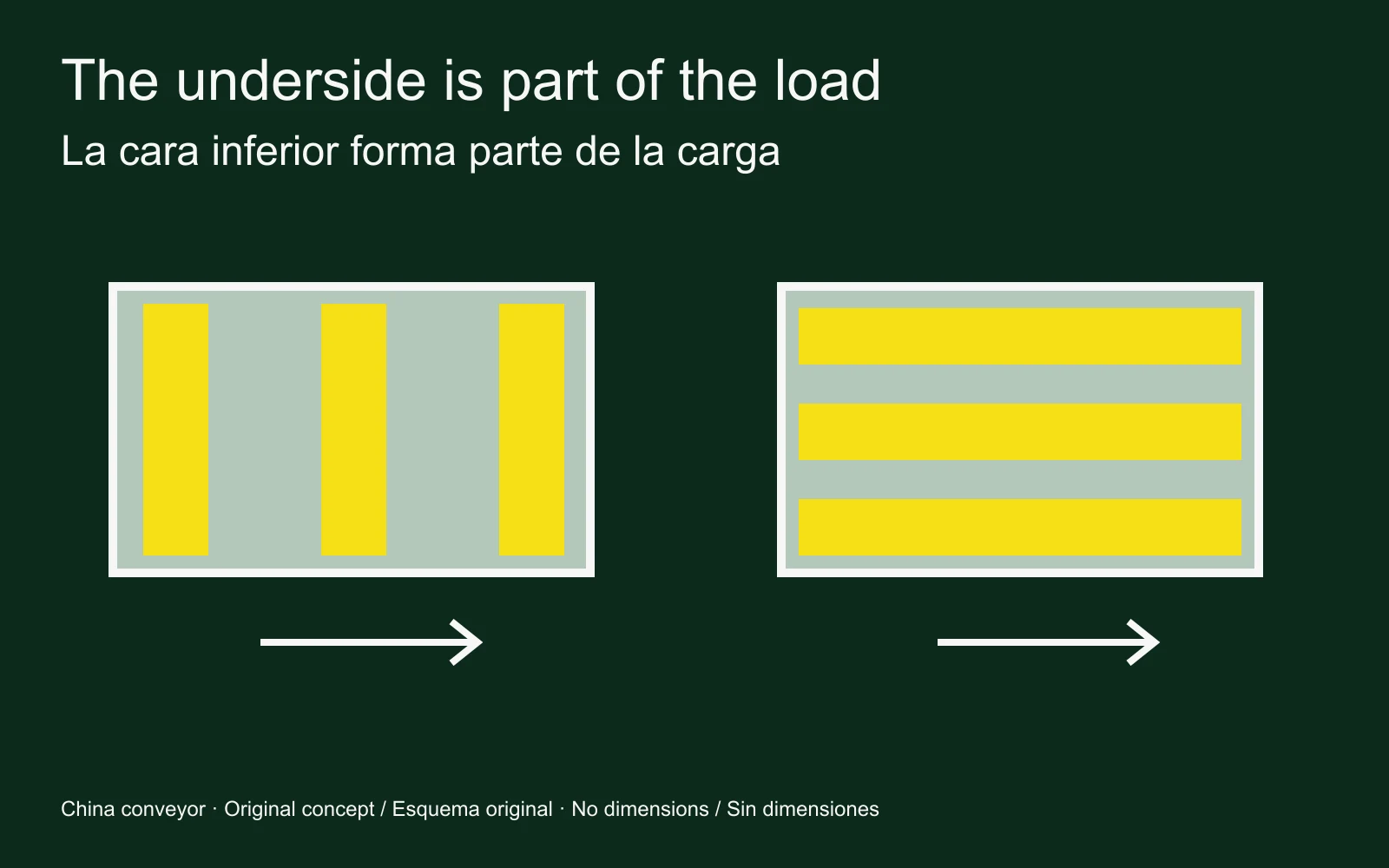
A pallet enquiry often arrives with length, width and maximum load. Those figures describe the outside of the load, but not the surfaces that will actually meet the conveyor. Add an underside view and identify the intended direction of travel before asking for a roller or chain layout.
Interroll's pallet-platform application notes explicitly identify underside condition as a selection input. Mallard's pallet-flow guidance explains orientation in relation to bottom boards and the direction of movement. Mallard is discussing gravity pallet flow; its terminology should not be treated as an approval of every powered conveyor.
Ask about each pallet family, not a nominal standard alone
List the pallet constructions expected in service and show their actual contact surfaces. Include the orientation at entry and any change of direction along the route. Ask the supplier which families its offer covers and which samples it needs to assess. A familiar size designation does not describe every pallet that a facility may receive.
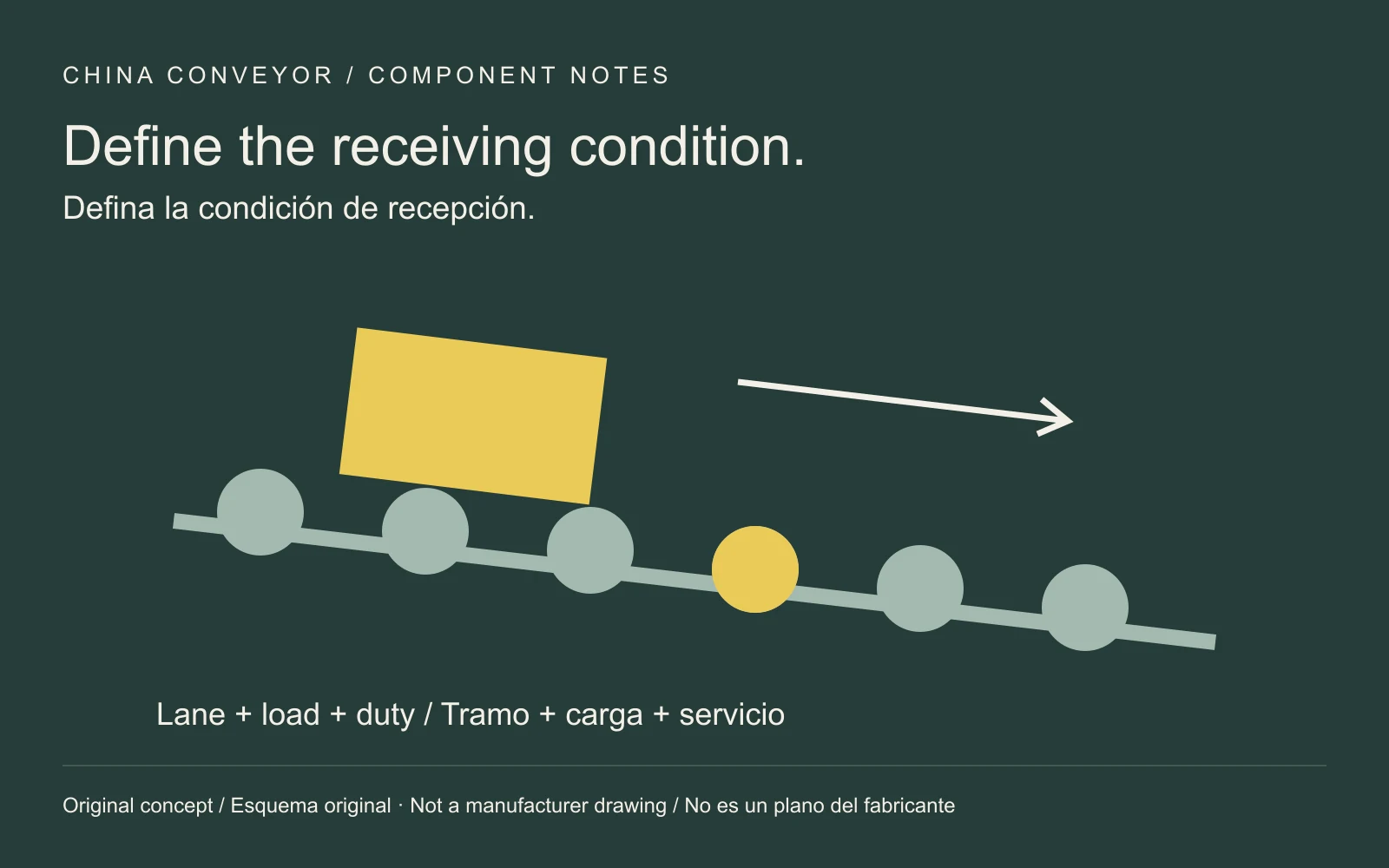
Keep the load description with that record: empty and loaded conditions, load distribution and the condition of pallets admitted to the line. Agree how unsuitable pallets will be identified before entry. That is more useful than assuming the machine will resolve an unspecified damaged or altered base.
Review the handover between modules
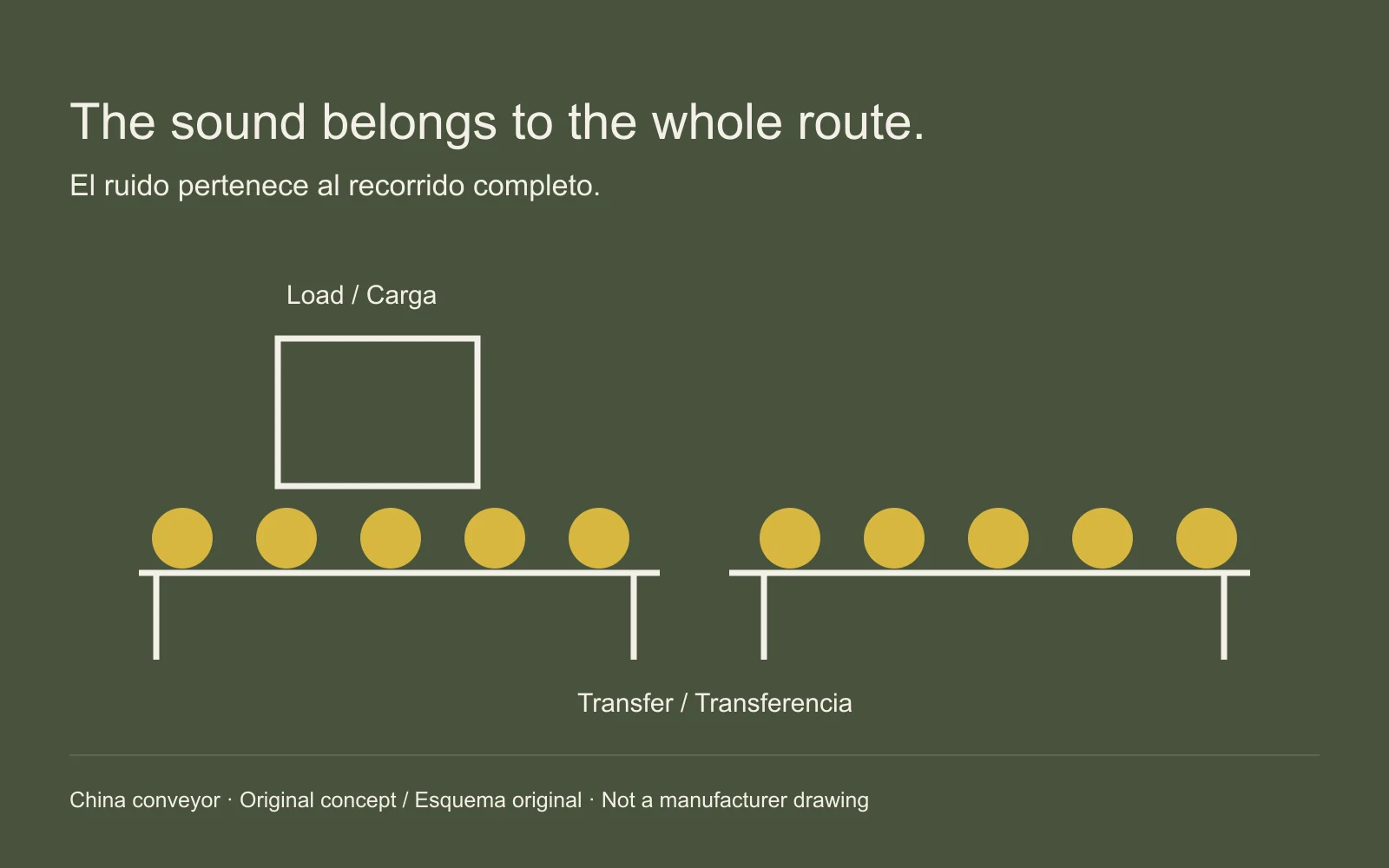
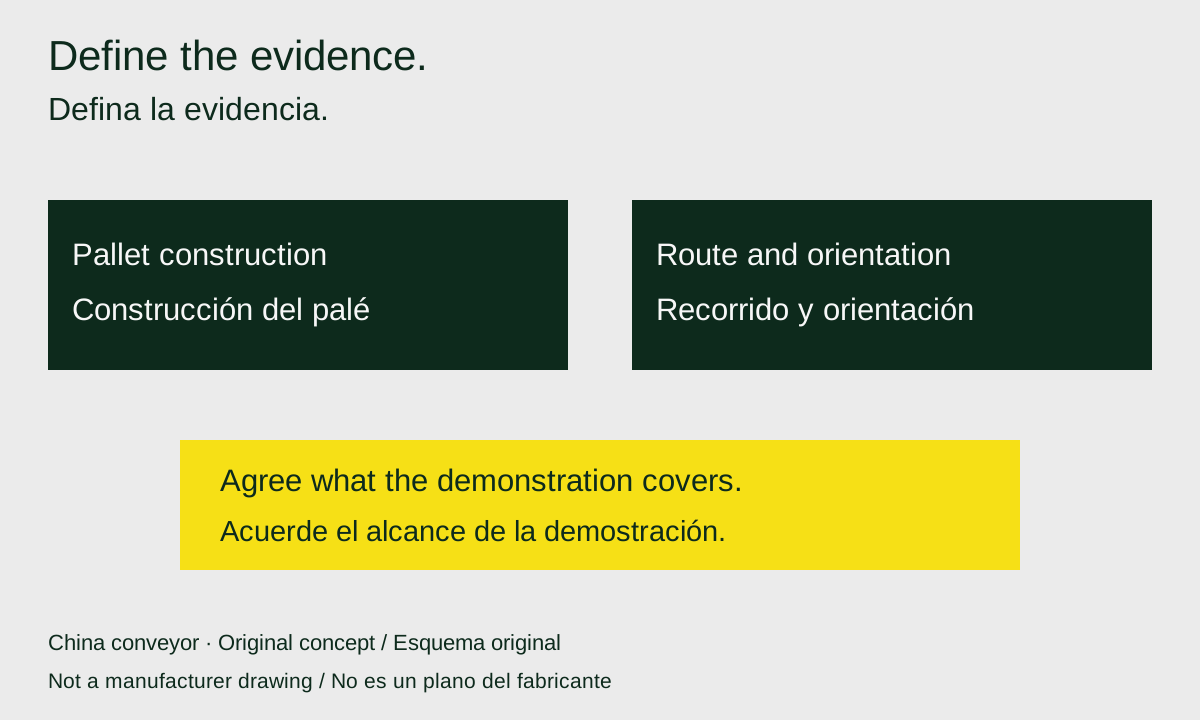
Request a layout showing how the pallet is supported as it enters, stops, changes direction and leaves each relevant module. Ask what the supplier will demonstrate with representative pallets and loads. A pallet travelling successfully along one straight section does not establish how it behaves at a transfer.
Compare quotations against the same pallet list and route. If a proposal changes the transport medium, ask what application assumptions changed with it. Keep unresolved compatibility questions visible rather than recording a general statement that the conveyor handles pallets.
Keep the approved pallet definition with the line
The handover should identify accepted pallet families, permitted orientations, demonstrated loads and any operating restrictions. Give the receiving and purchasing teams access to that information so a later pallet substitution can be reviewed against the installed equipment.
This is an application brief, not a roller-pitch or load-sharing calculation. The original illustrations show contact geometry and the evidence to retain. They do not specify support spacing, approve a pallet or certify the strength of a conveyor.
Manufacturer announcements and our analysis are distinguished. Product claims require verification for the specific application.
Sources
Interroll — Pallet conveyor modules catalogue, October 2024 ↗Application notes name underside condition and load data as selection inputs. No maximum rating is transferred to an unassessed layout.
Mallard — The pallet underside and orientation in pallet flow ↗Explains bottom-board orientation relative to flow. It concerns pallet-flow systems, not blanket approval of powered conveyors.