Follow the belt beyond the closed tube
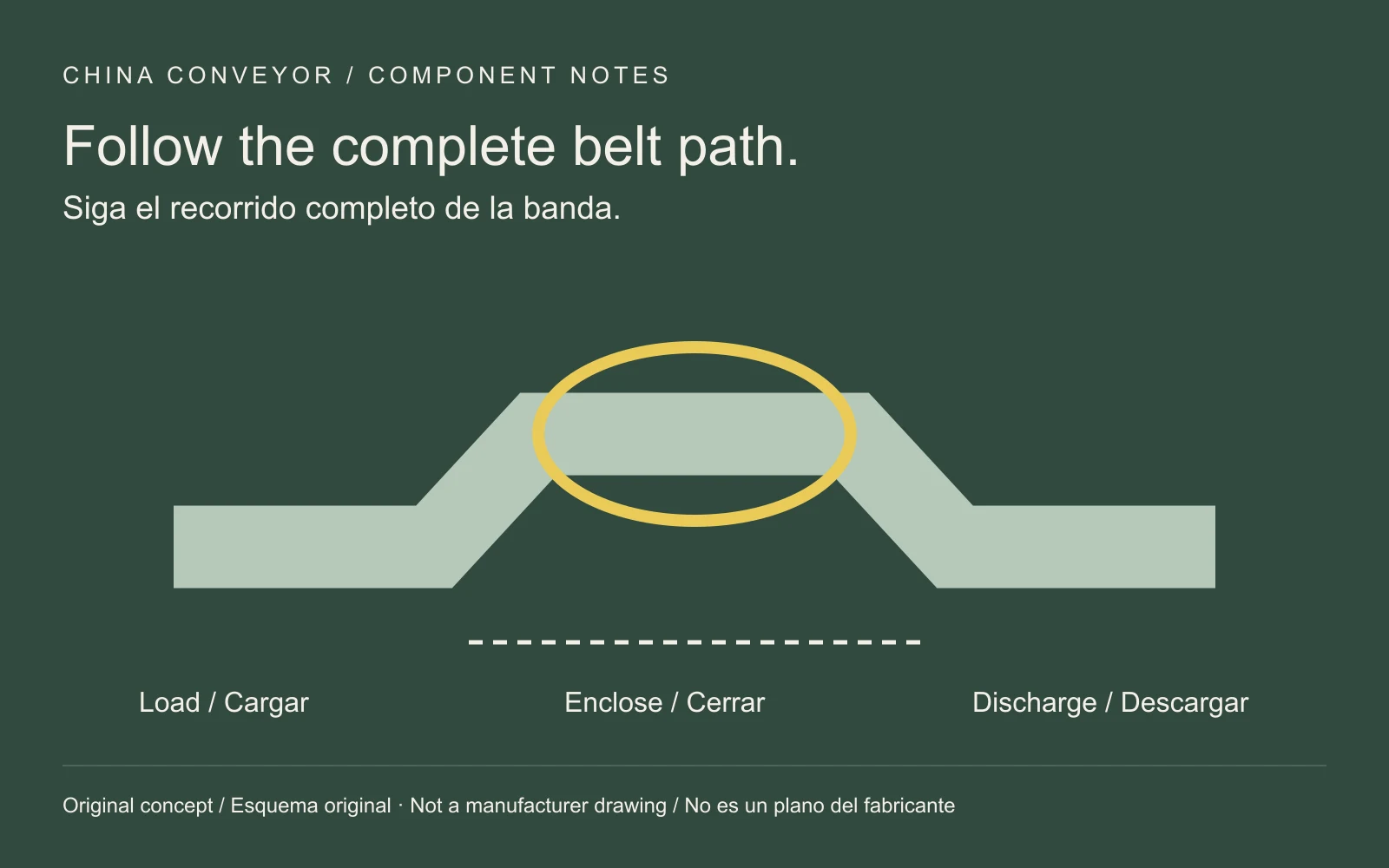
The closed section is the distinctive image of a pipe conveyor, but it is not the belt's shape throughout the route. BEUMER describes an open loading section, rollers that form the belt into a tube and an opening section at the destination for discharge. The return arrangement also forms part of the complete path.
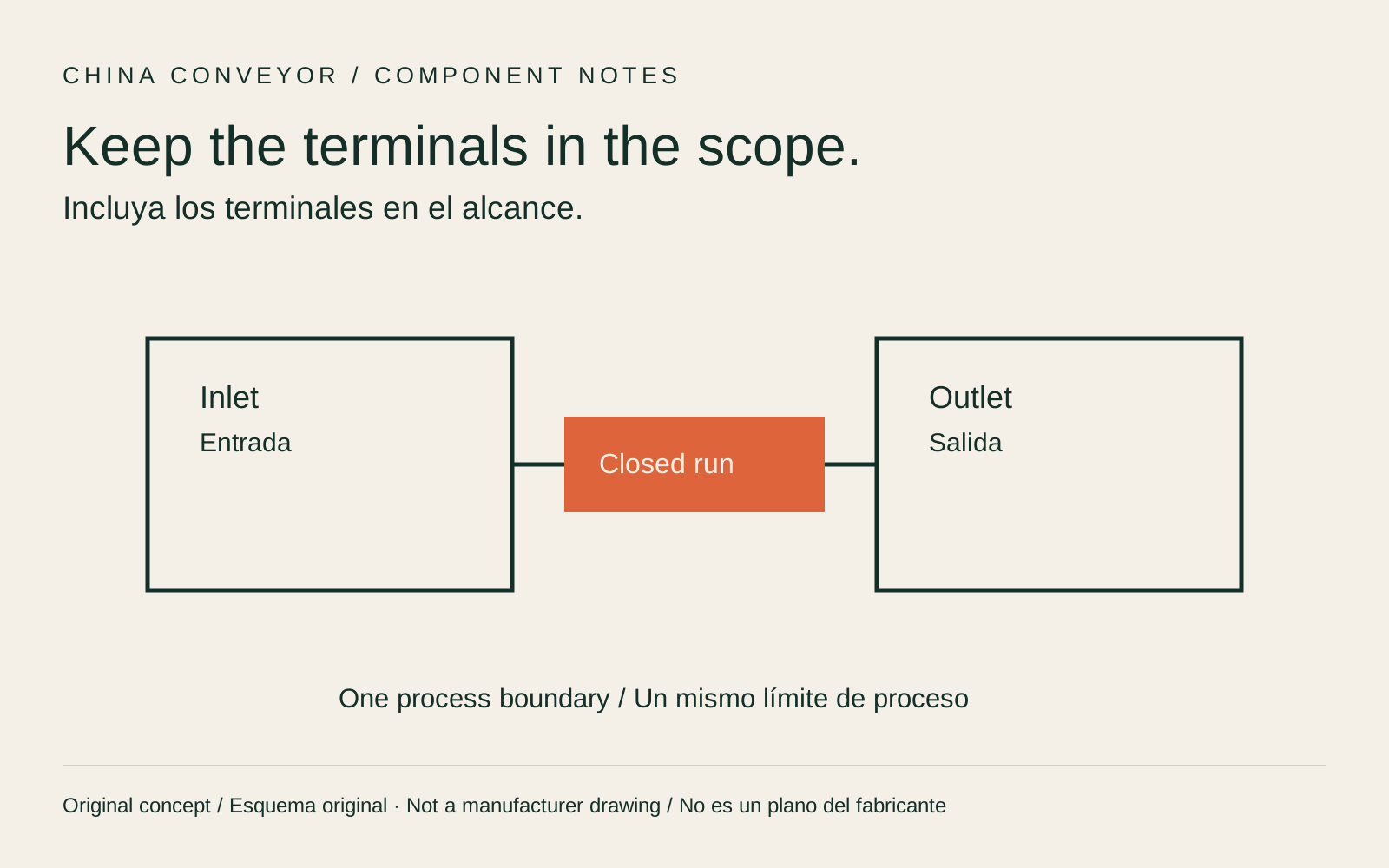
This sequence matters when a project brief focuses only on the long enclosed run. Show loading and discharge equipment on the same layout so that the transitions remain part of the system being evaluated. The terminal interfaces do not disappear because the material travels enclosed between them.
The belt must suit the forming arrangement
Fenner Dunlop describes its Dunlopipe belt with an adapted cross-rigidity fabric carcass for tube formation and flexible edges for closure. Those product descriptions identify a belt-construction question, rather than simply a decision to roll a conventional belt into a smaller space.
Ask the system designer and belt supplier to identify the proposed belt, roller arrangement and terminal transitions as a coordinated design. Keep the selected configuration and its application assumptions together. Do not transfer route or transition dimensions from another installation just because both systems are called pipe conveyors.
Describe the material at the terminals
Provide the material and operating information required for the proposed system, including how it reaches the inlet and how the next process receives it. Identify the intended material range and distinguish confirmed operating data from future possibilities. Have the supplier state the range represented by its design.
If containment is an objective, ask which parts of the supplied arrangement address it, including the open interfaces. A claim about an enclosed conveying run is not a measurement of the complete site's dust performance. Agree the system boundary and the observations required for acceptance.
Compare a complete route
A useful proposal shows the conveying path, transitions, supporting equipment and scope of supply on an approved arrangement. Record who supplies the terminal interfaces and what commissioning work is included. This makes different proposals easier to compare on the same process boundary.
The original diagrams show the progression from open belt to closed run and back to an open terminal. They contain no tube diameter, minimum curve radius or capacity calculation. Manufacturer material is used to explain system architecture, without claiming a new product launch or guaranteeing an unreviewed route.
Manufacturer announcements and our analysis are distinguished. Product claims require verification for the specific application.
Sources
BEUMER Group — Pipe conveyors, design description ↗Primary description of open loading, forming, enclosed transport and opening at discharge. Product envelope values are not generalized.
Fenner Dunlop — Dunlopipe conveyor belting ↗Primary construction description connects adapted cross-rigidity and flexible edges with tube formation. No general efficiency or service-life claim is adopted.