Start with the cleaner assembly
A photograph of a worn cleaner blade may show its colour clearly while hiding its mounting interface and reference. Record the cleaner model, blade identification and installed arrangement during an approved inspection. Keep those details with the conveyor identity so the supplier knows which assembly the enquiry concerns.
Distinguish replacing the existing blade from proposing a different material or retrofit. Both can be legitimate enquiries, but they require different confirmations. A replacement price should say which proposal it covers.
Use colour within the manufacturer's reference system
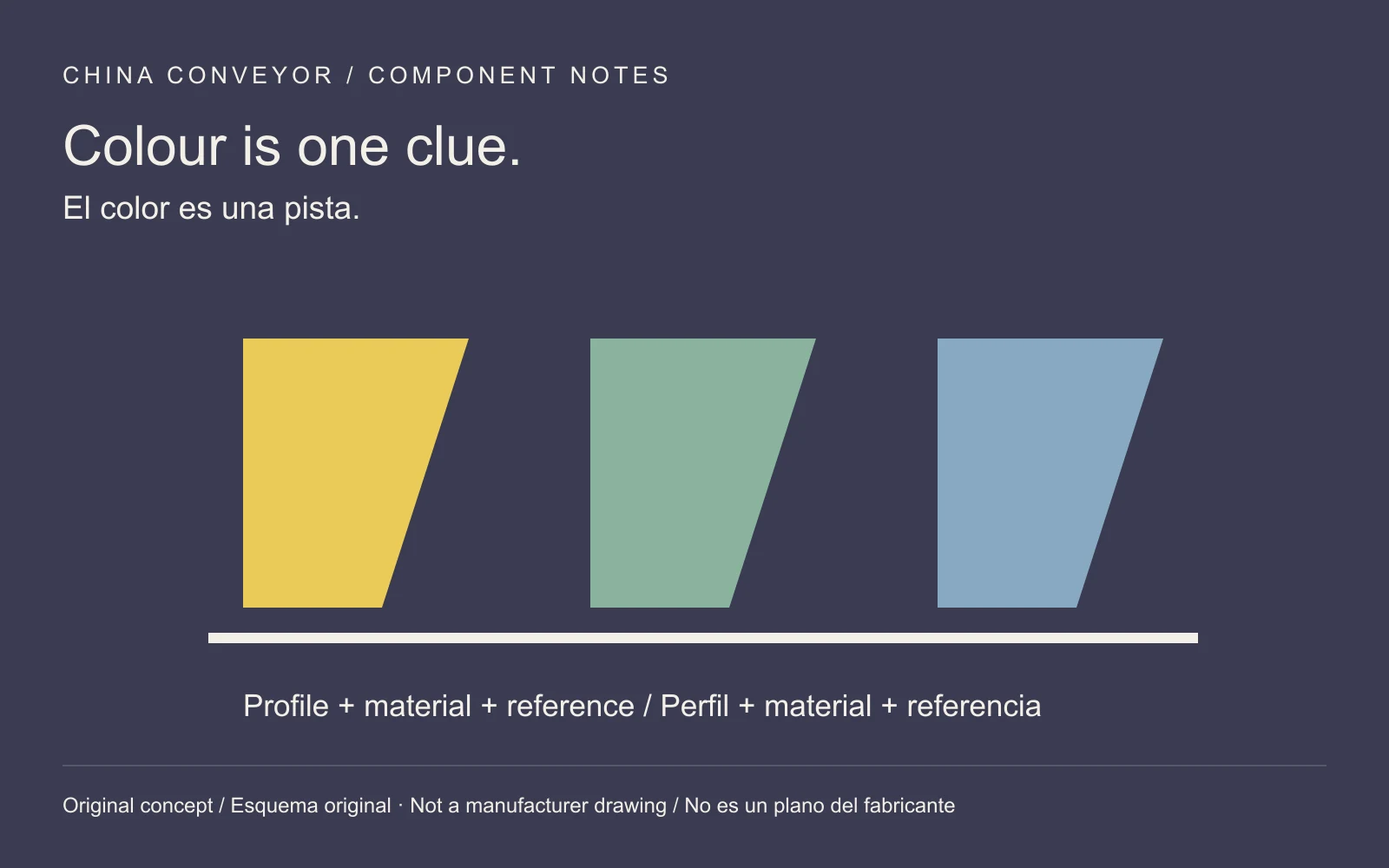
Martin Engineering describes specially formulated, colour-coded urethane for different applications. Flexco's Elevate documentation also identifies colour with particular urethane types in its own configuration record. These examples support using colour as one identification aid within the relevant product system.
They do not establish a shared colour standard between manufacturers. Ask for the exact blade part number, profile and material reference. If a substitute or retrofit is offered, request confirmation of the intended cleaner interface and application rather than treating a similar colour as evidence of equivalence.
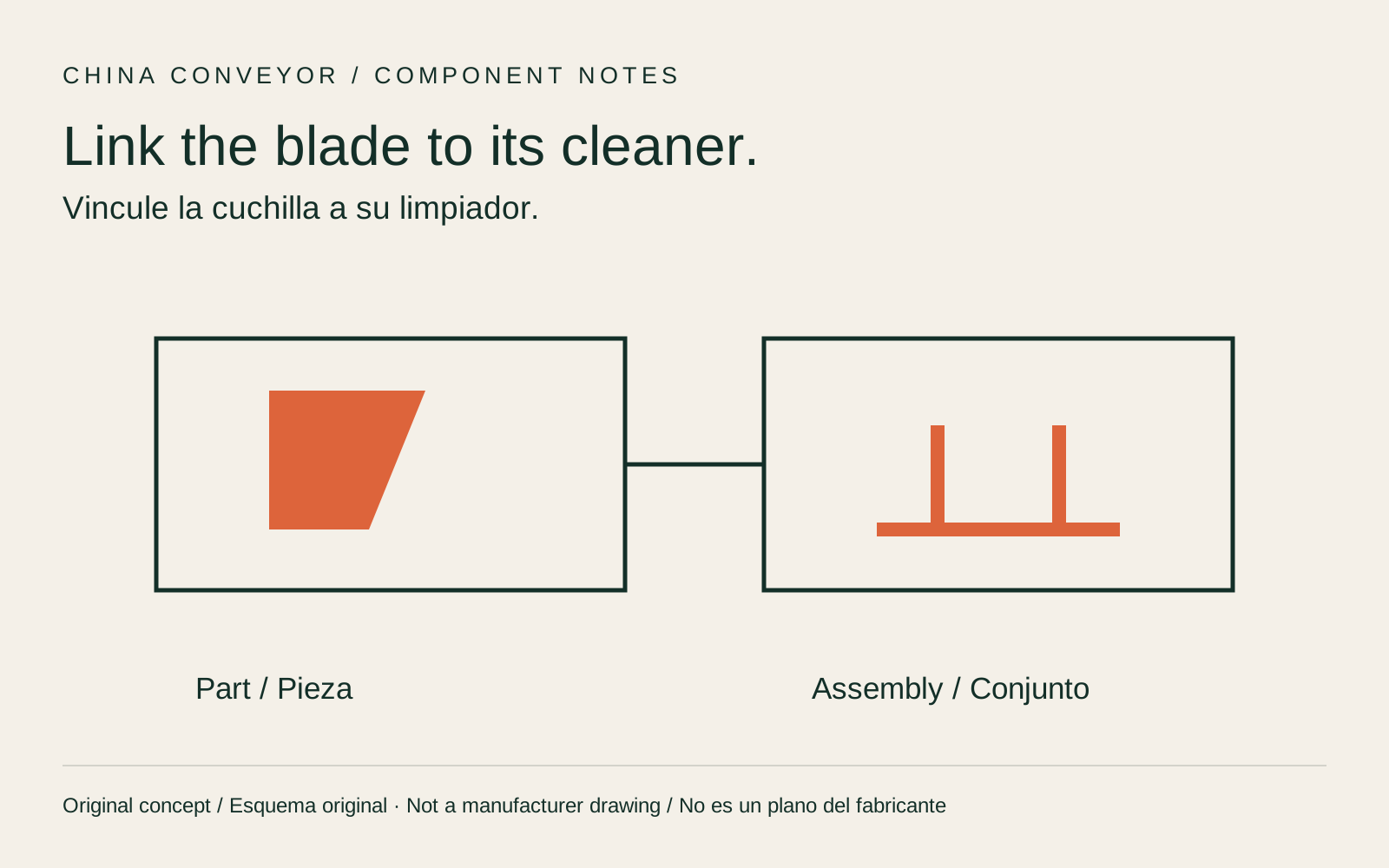
Keep blade geometry with the material choice
Martin's Compact Cleaner information describes a particular slide-on blade arrangement and its applicable configuration. That example illustrates why the shape and mounting relationship remain part of the spare. A material description alone does not show how the blade connects to the installed cleaner.
Provide the operating information requested for the proposed material and obtain the applicable instructions for the selected assembly. Have the supplier identify any required changes to associated parts. Avoid transferring adjustment values or replacement steps from a different cleaner model.
Make the delivery identifiable
Agree the supplied blade reference, quantity, included hardware and documentation before ordering. Keep the accepted configuration with the maintenance record, especially where a replacement changes the previous material or part number. Confirm what should be inspected and recorded after installation under the equipment's instructions.
The original diagrams separate the blade's visual appearance from the identity of the complete replacement. They give no universal colour-to-material mapping, adjustment setting or service-life prediction. The goal is a part that can be traced to the installed cleaner and its defined duty.
Manufacturer announcements and our analysis are distinguished. Product claims require verification for the specific application.
Sources
Martin Engineering — High-performance urethane replacement blades ↗Primary description of application-specific, colour-coded urethane. No cross-manufacturer colour standard or wear-life claim is inferred.
Flexco — Elevate i3 instructions, blade-type configuration ↗Existing manual records named urethane types and colours within Flexco's system. Numerical settings and unrelated monitoring functions are not reproduced.
Martin Engineering — Compact Cleaner ↗Product-specific mounting example shows why blade geometry and interface matter. No model limits are generalized.