Ask what the commissioning price actually proves
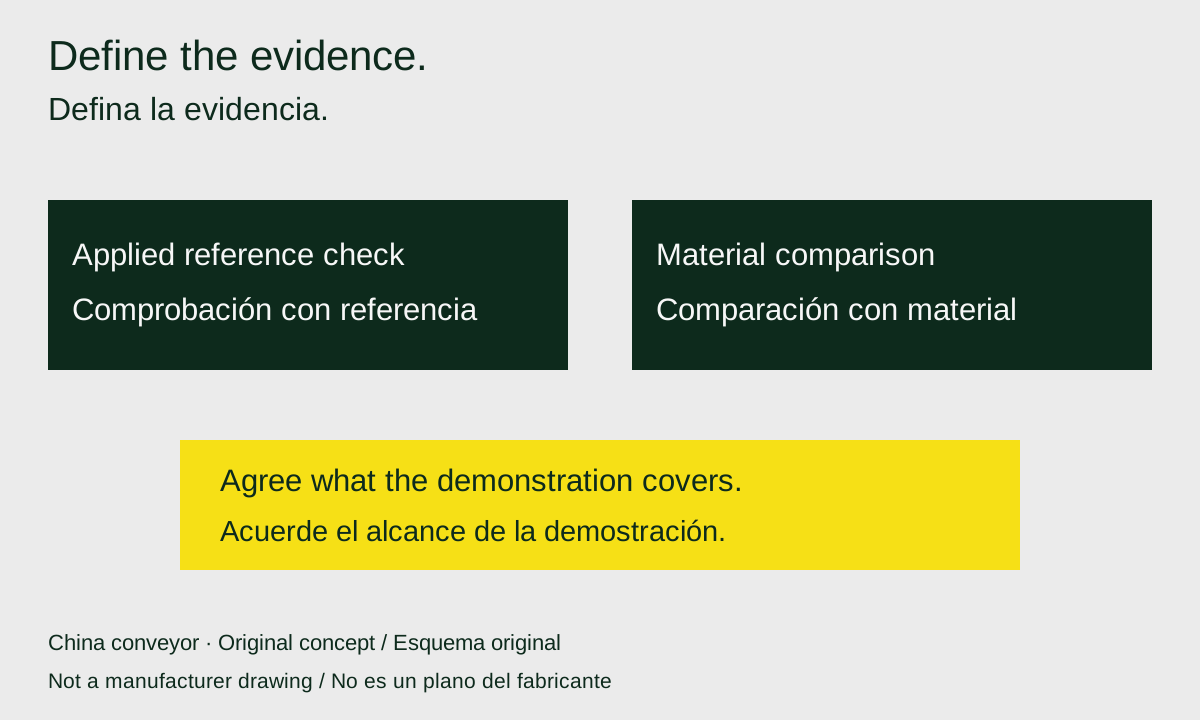
One belt-scale quotation may include test weights while another includes a comparison with a separately weighed quantity of material. Describing both as calibrated does not make the supplied work identical. Before comparing prices, name the result the site expects and the work each supplier includes.
Siemens' material-testing application guide treats a material test as verification of the installed weighing system and identifies a secondary verification scale. A simulated reference check and a comparison using conveyed material answer related but different questions. The appropriate programme should be agreed for the selected installation, rather than inferred from a calibration accessory in a catalogue.
Keep the comparison material identifiable
Ask the supplier to describe how the reference quantity and the belt-scale total will refer to the same material. Record the reference weighing arrangement, the intended operating condition and the way the test record will identify the compared quantities. Agree who provides the material, equipment and personnel.
This is a purchasing scope question, not an instruction to choose a test duration or adjust an instrument. Those details belong in the qualified team's applicable procedure. If a material comparison is excluded, retain that exclusion instead of reporting it as work completed. A repeatable reference check should not silently become evidence of a material test that never happened.
A conveyor change belongs in the weighing record
A scale is installed in a conveyor, not in an independent laboratory. Thermo Fisher's maintenance article explains why scale care includes the wider material-handling system and why conveyor changes can affect weighing performance. It recommends establishing an inspection routine rather than waiting for a suspected problem.
For example, a planned maintenance job near the weighing section is a useful occasion to ask what requires review afterwards. Keep the work description with the weighing record and let the responsible specialist determine the checks needed. Do not copy a universal interval or accuracy claim from a general article into the contract.
Hand over evidence that operations can use
Request a record identifying the configured system, the checks performed, the conditions covered and any acceptance items still open. Keep the instrument settings and supplier instructions with it. Agree who reviews results when the conveyor duty changes.
The Siemens guide dates from 2020 and the Thermo Fisher article from 2013; they support the distinction and maintenance questions discussed here, not a new product announcement. The illustrations are original concepts. They contain no calibration settings and do not establish a legal-for-trade approval or an accuracy guarantee.
Manufacturer announcements and our analysis are distinguished. Product claims require verification for the specific application.
Sources
Siemens — Performing material tests, September 2020 ↗Explains material-test verification and a secondary verification scale. No numerical test recipe or accuracy guarantee is transferred.
Thermo Fisher — Maintain your scales, July 2013 ↗Supports inspecting the wider conveyor and reviewing performance after changes. Historical numerical accuracy claims are not adopted.