Name the component before ordering the repair
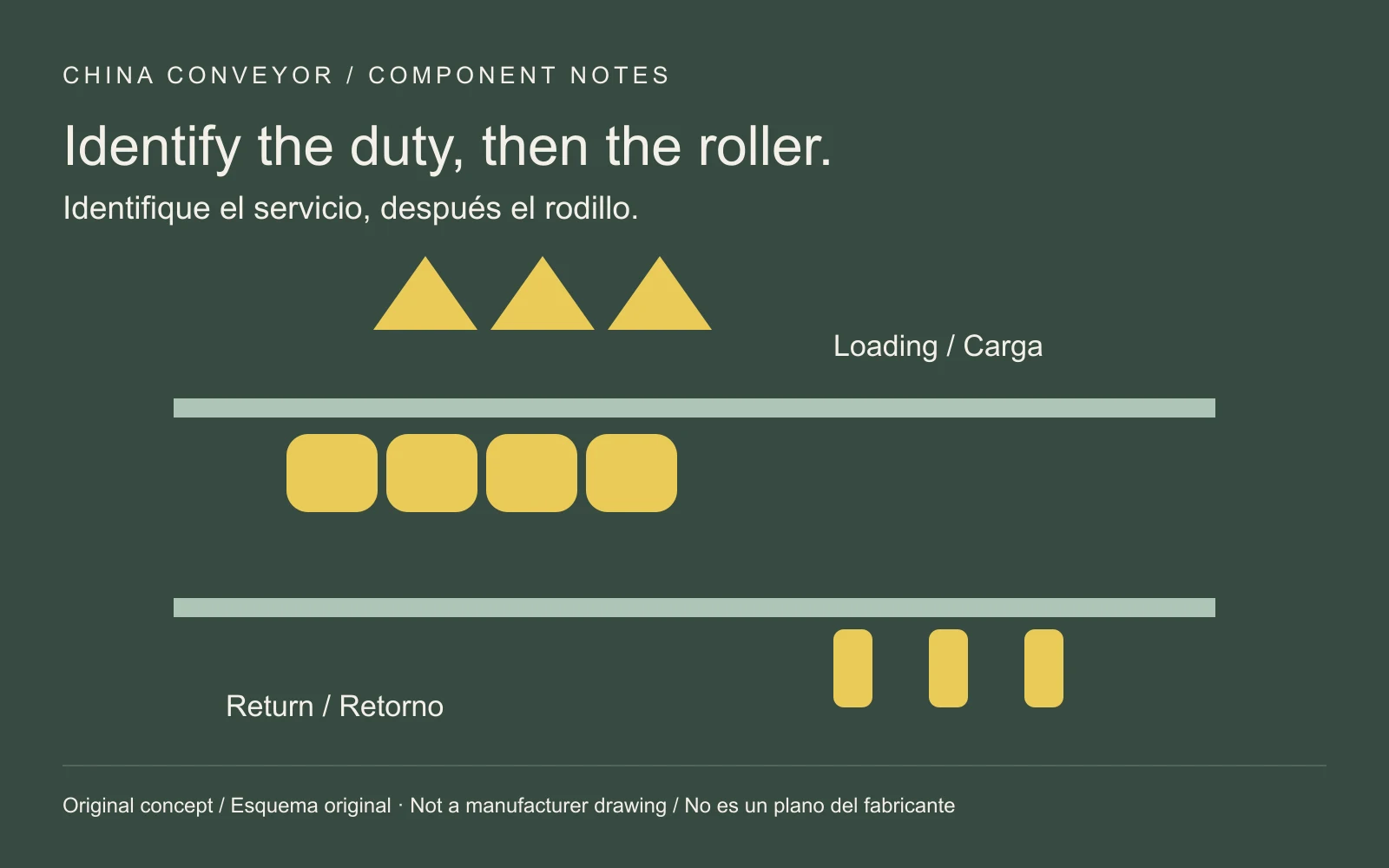
A request to fix the skirting can mean several things at a bulk conveyor loading zone. The complaint may concern a worn sealing strip, a damaged liner, belt movement under the seal or more than one of these. If the enquiry uses one name for the entire area, suppliers can quote different work against the same complaint.
Mark the observed locations on a layout and distinguish the installed parts. Record what was seen and under which operating condition. Keep a worn-part photograph separate from the explanation of why it wore; the latter may still need investigation.
Support and sealing have different responsibilities
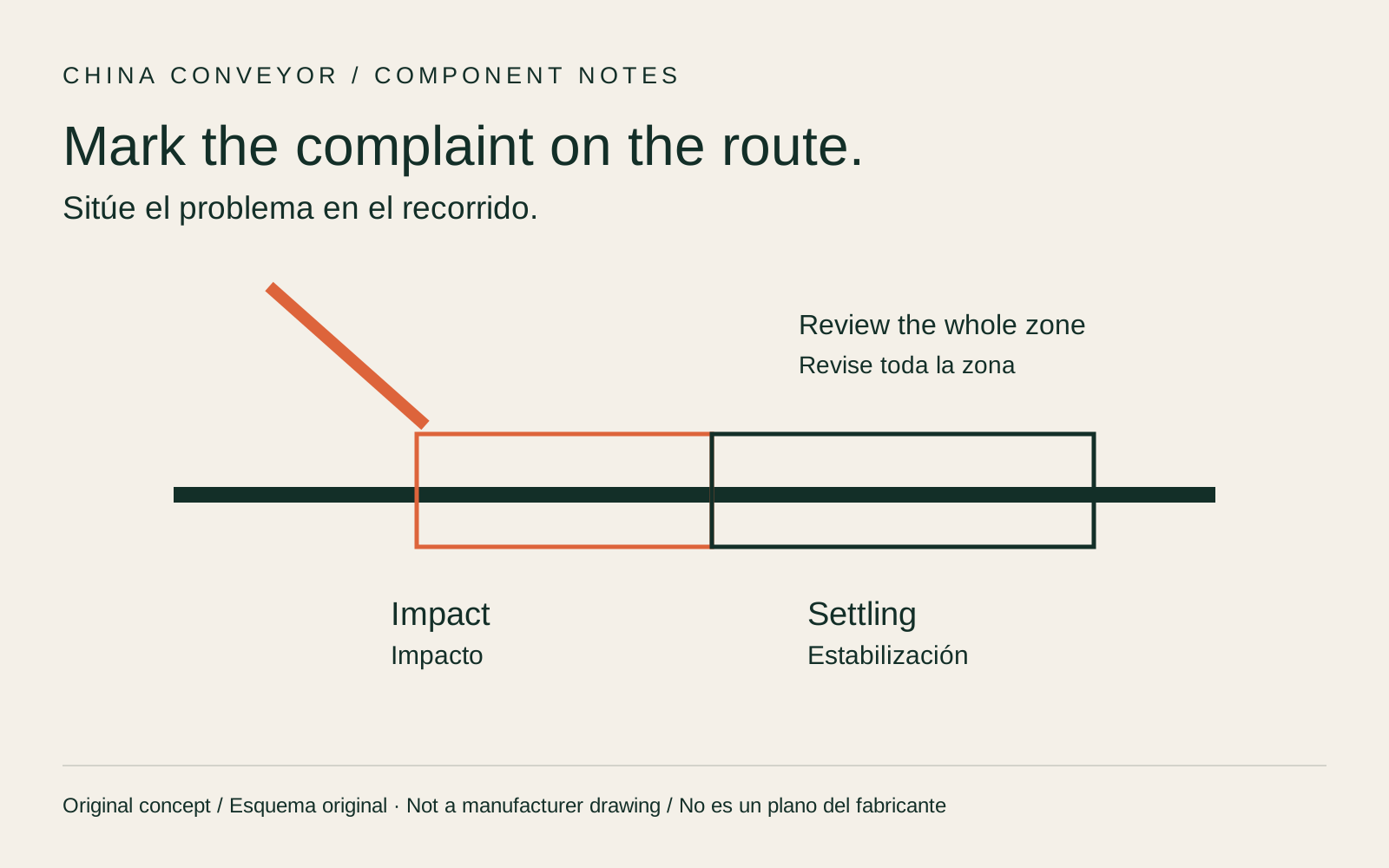
Flexco describes load-zone selection as a combination of belt support, impact protection and sealing. Its introductory guide also distinguishes the initial impact area from the area where material settles. That separation is useful when mapping the repair scope.
Ask the application engineer to identify which part of the route needs impact assessment and where stable support is needed for the proposed sealing arrangement. Do not select an impact bed from belt width alone. Supply the information requested about material, drop and existing geometry, and have the selected product reviewed for the actual installation.
Protect the seal without confusing it with the liner
Martin Engineering's transfer-point information describes wear liners and sealing as separate parts of the arrangement. A quotation should therefore identify the liner, external sealing component, mounting arrangement and access, rather than grouping everything under skirt rubber.
Request a section showing the proposed relationships to the belt and the existing chute. Use the selected system's instructions for clearances and adjustment. This article does not prescribe a gap, contact force or universal liner position: those details belong to the engineered arrangement.
Make the demonstration match the original complaint
Agree what will be observed after the work and the operating conditions represented. If the complaint occurred with one feed condition, an empty-belt demonstration answers only part of it. Record exclusions and unresolved conditions rather than treating a short observation as proof of long-term wear life.
The repair handover should identify changed components and the inspection points for future maintenance. The original concept diagram distinguishes functions and scope. It provides neither a structural design nor evidence of dust-control performance, and does not replace the manufacturer's selection and installation work.
Manufacturer announcements and our analysis are distinguished. Product claims require verification for the specific application.
Sources
Flexco — Impact beds and skirting systems ↗Distinguishes support, impact protection and sealing functions. Product performance claims are not adopted as site results.
Martin Engineering — Transfer point kits ↗Manufacturer information on transfer-point components and wear liners. No dimensions are copied as generic settings.
Flexco — Belt conveyor products introductory guide ↗Existing technical guide distinguishes loading impact, settling support and sealing. Not presented as a current product launch.