Start with the position on the conveyor
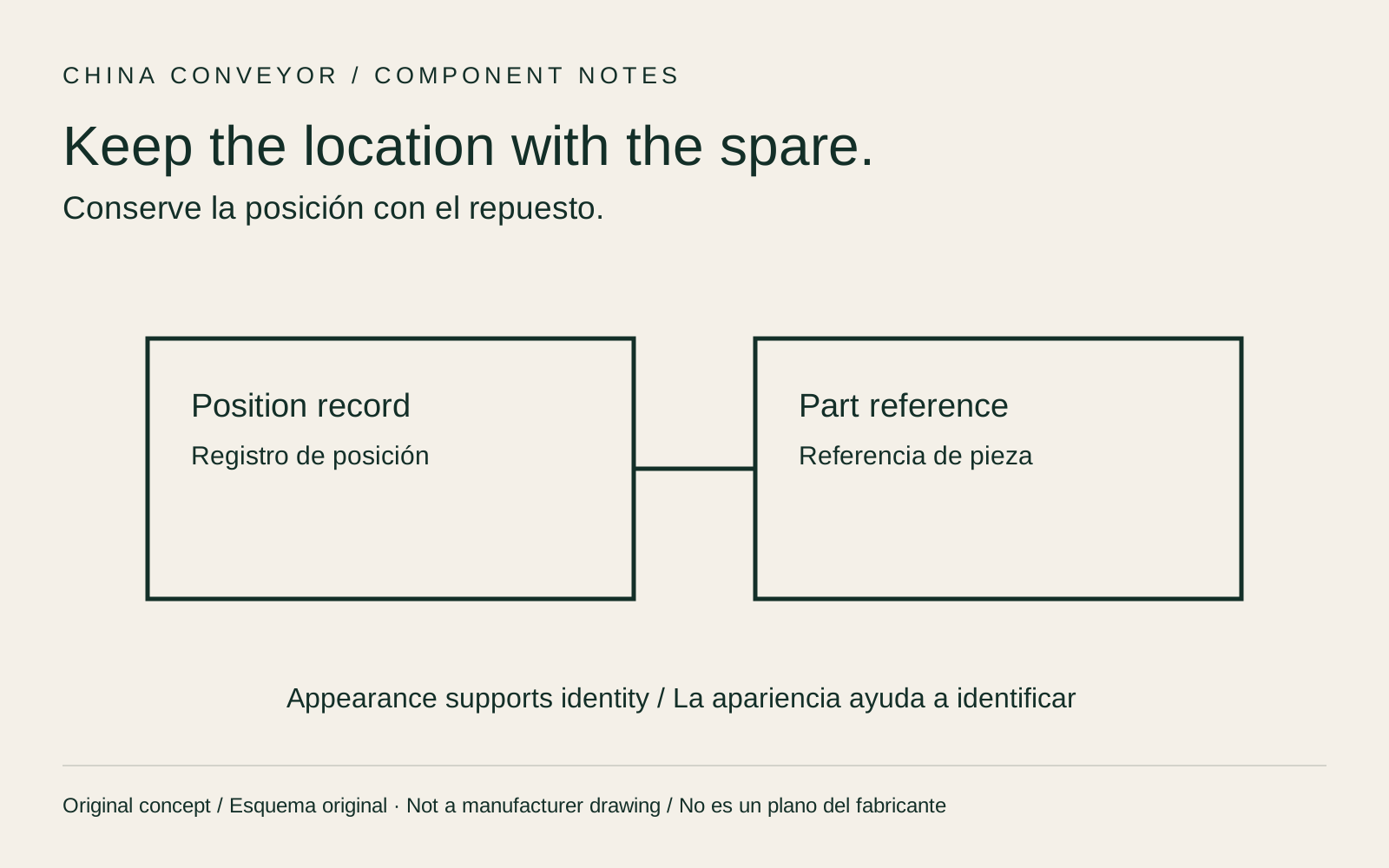
A photograph of a rubber-ringed roller does not by itself describe the duty it serves. The stores record should identify where the roller operates, which belt surface it supports and what the replacement is intended to preserve. Include a marked conveyor layout or an unambiguous position reference with the part photograph.
This matters when visually similar rollers are collected into a general spare category. An impact-area component and a return-run component should not become one purchasing description simply because both contain rubber. Record the original reference before the part is removed where it remains available.
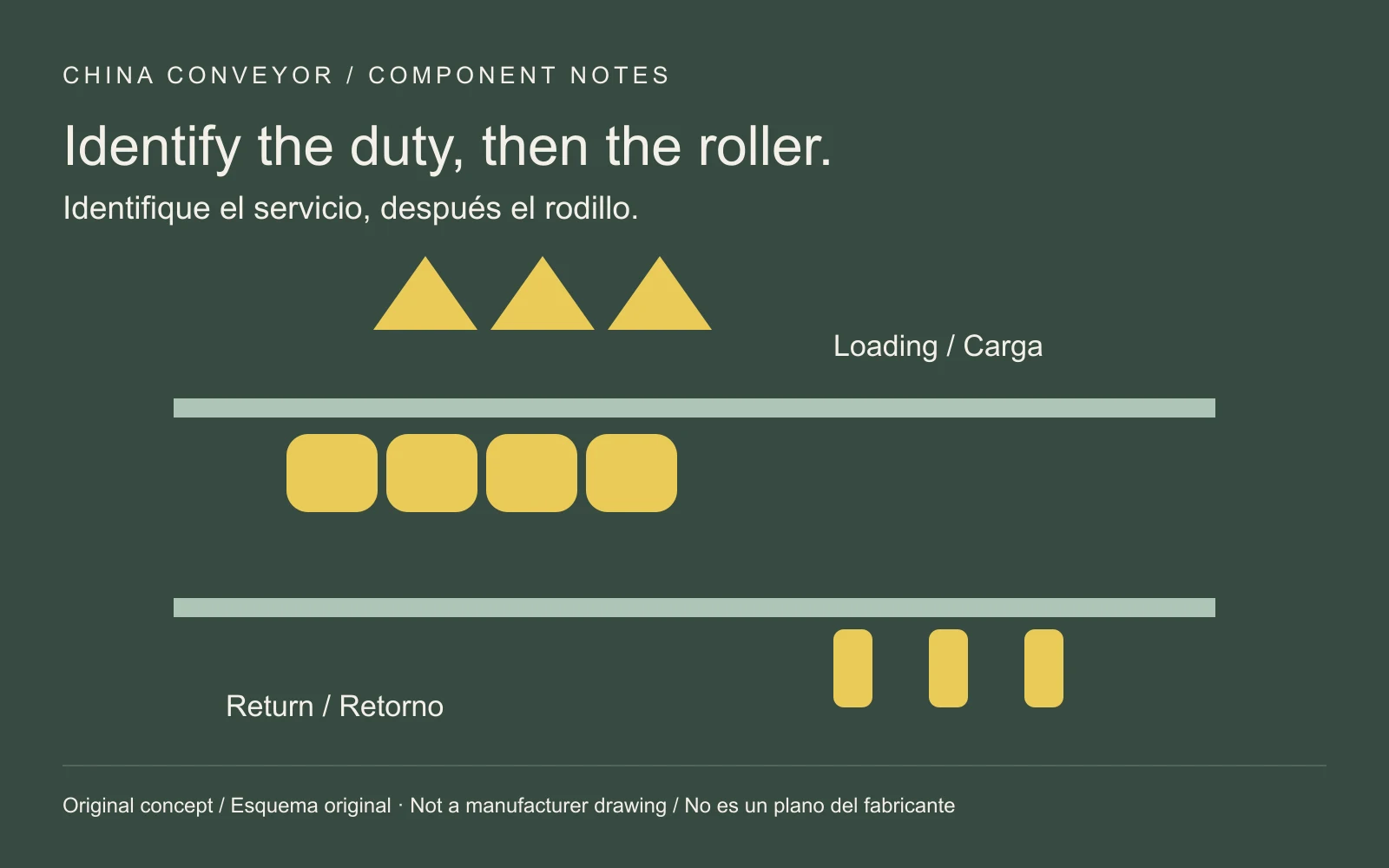
Impact and return arrangements answer different questions
PROK's resource hub separately identifies impact rollers for falling-material loads at loading areas and rubber-disc return rollers for material-build-up applications. Rulmeca's return-roller literature describes spaced rings used on the return arrangement, including different central and edge configurations. The component names point to different selection questions.
For a loading position, supply the material and impact information requested by the application engineer. For a return position, describe the existing arrangement and the material adhering to the returning belt. Have the supplier identify the exact roller and ring configuration proposed for that location.
A ringed return roller is not a substitute for the system's tensioning arrangement. Rulmeca's cited return-roller guidance explicitly distinguishes those uses. Keep any proposed change to the conveyor arrangement under the equipment designer's review.
Keep the ring arrangement with the mounting details
Request the complete reference or drawing, including the outer arrangement, shaft ends and frame interface. Distinguish the roller assembly from replacement rings or other individual parts. If rings alone are offered, ask what confirms their compatibility with the existing roller and service.
Record the relevant operating conditions rather than assuming the word rubber identifies a material specification. Ask the supplier for the selected product's requirements and limits. A nominal diameter and a photograph leave the construction and intended use insufficiently described.
Also identify how any dislodged material will be handled in the complete return area. Discussing a component's cleaning role does not describe where that material goes or establish the overall performance of the conveyor's cleaning system.
Check identity before the maintenance window
Keep the approved reference and location with the delivered spare. Check the received assembly against the drawing and ask the responsible team to resolve differences before the planned replacement. Preserve the applicable installation and inspection instructions with that record.
The original illustrations contrast loading and return positions and show different ring arrangements as concepts. They provide no manufactured ring spacing, impact rating or universal replacement specification. The useful outcome is a spare selected for an identified duty, with the appearance used to support identification rather than to replace it.
Manufacturer announcements and our analysis are distinguished. Product claims require verification for the specific application.
Sources
Rulmeca — Return rollers with rubber rings, November 2024 catalogue ↗Primary description of spaced-ring return arrangements and their stated exclusion from tensioning use. Ring dimensions are not generalized.
PROK — Technical resource hub, impact and rubber-disc return specifications ↗Manufacturer index distinguishes impact-duty and return material-build-up products. No performance or impact rating is transferred to an unspecified roller.