The cleaning change belongs in the belt record
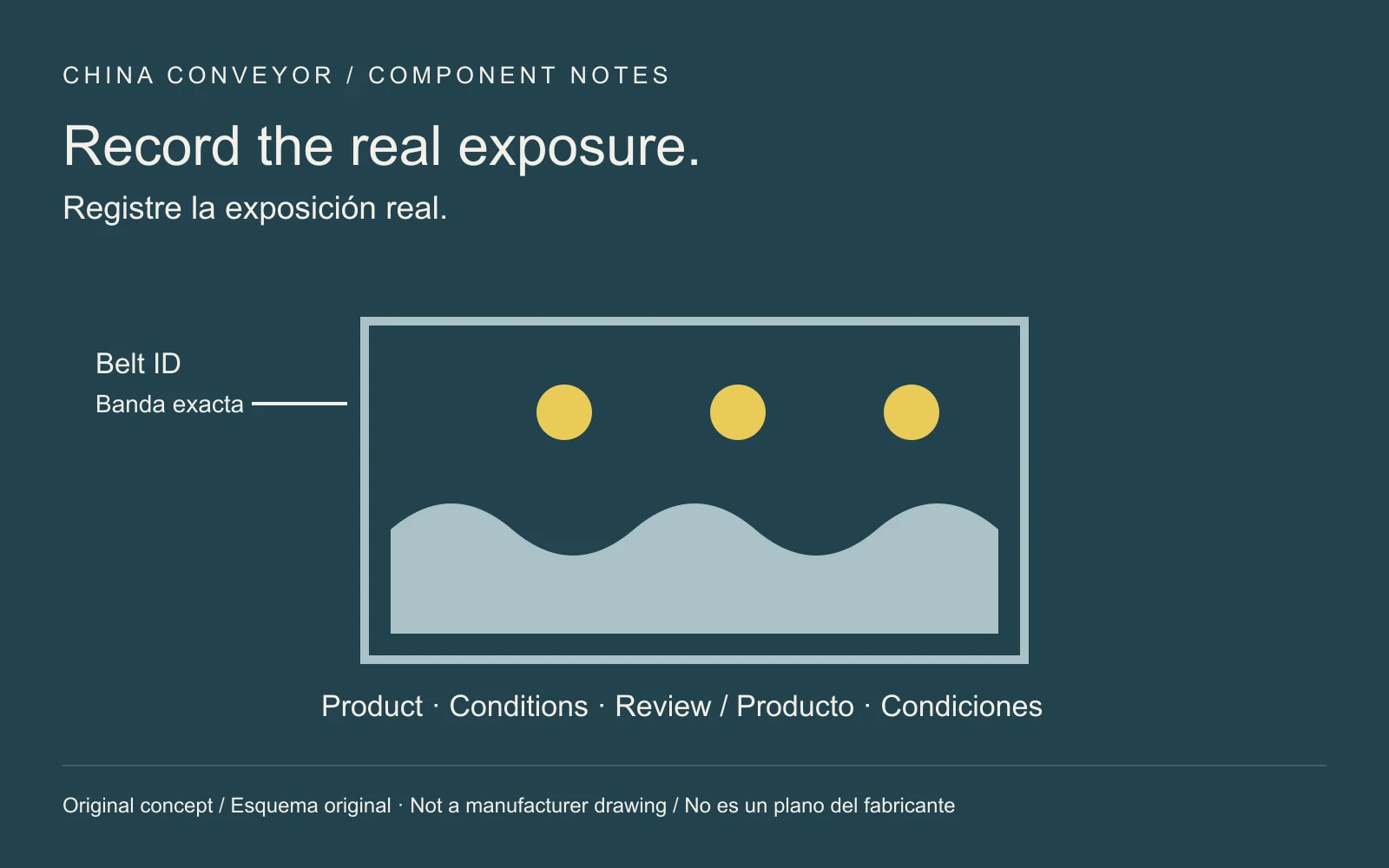
A cleaning-product change can be purchased separately from conveyor spares even though both meet at the belt surface. Link the two records before the new routine is introduced. Identify the installed belt reference and the cleaning product actually used, rather than relying on a description such as plastic belt or alkaline wash.
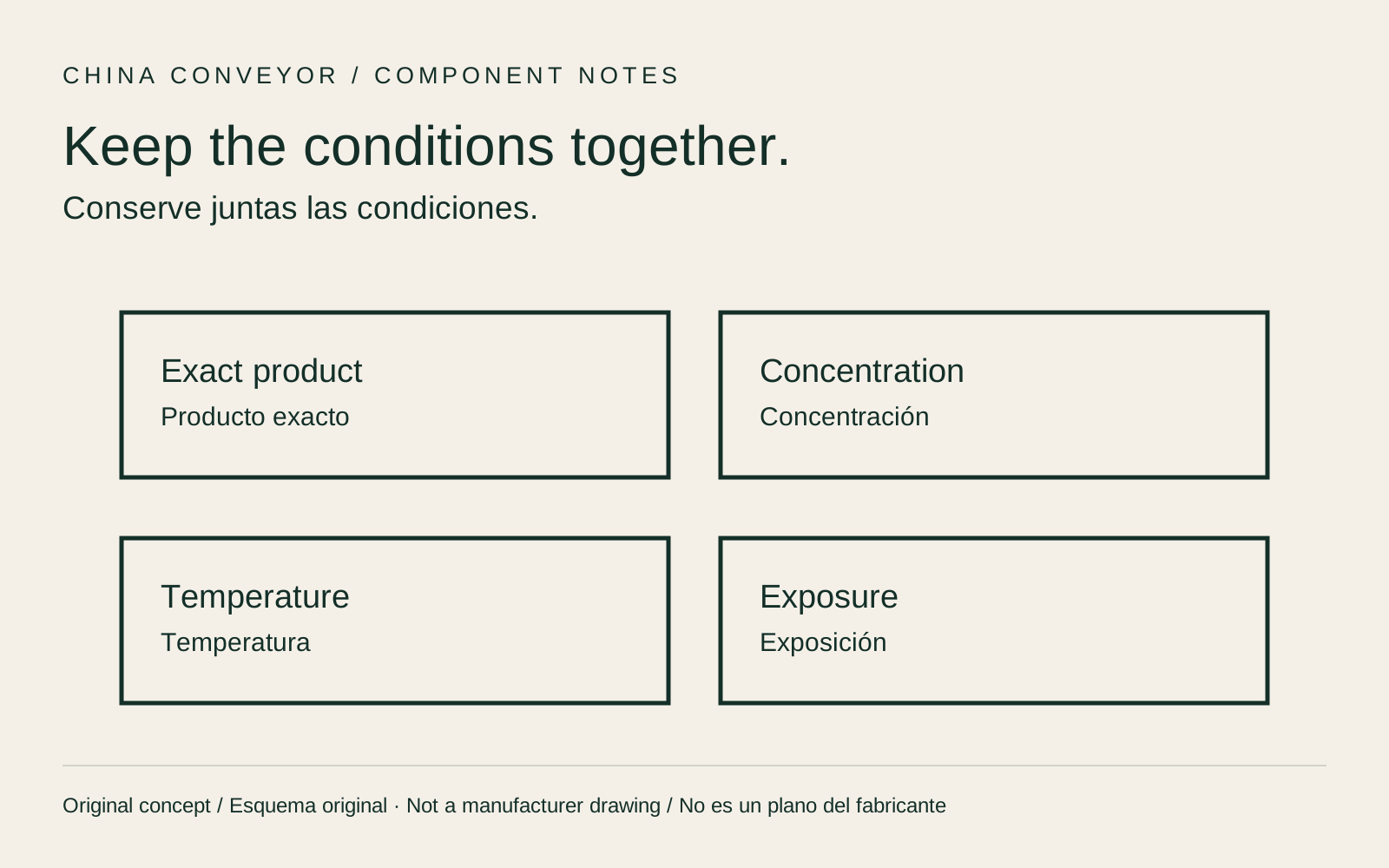
Write down the existing and proposed routine using the cleaning supplier's product documentation. Distinguish the supplied concentrate from the conditions of use. The belt supplier needs the conditions the belt will encounter, not only the name printed on the container.
Compatibility is a conditions question
Habasit's chemical-resistance tool asks users to select belts and enter chemical conditions, including concentration, exposure and temperature. It also distinguishes the belt surface from the full belt in its interface. These inputs explain why a simple chemical-versus-polymer lookup can leave relevant details unresolved.
Prepare those data for the exact product and proposed routine, and ask the belt manufacturer for the applicable assessment. Do not treat this article as a resistance result from the tool: no belt-and-cleaner combination has been evaluated here. The useful first step is a complete input record.
Separate material compatibility from cleaning effectiveness
A belt material review and a cleaning-process review answer different questions. Ask the responsible process or hygiene team to define the required cleaning outcome and the evidence for it. Ask the belt supplier about compatibility with the documented exposure. Keep both decisions attached to the same proposed routine.
If the manufacturer asks for an application trial, agree its scope and the observations to record before starting. A satisfactory appearance after one exposure does not describe every property of the belt or prove performance throughout its service life.
Preserve the approved routine and its limits
Keep the belt reference, cleaning-product revision, agreed conditions and supplier correspondence in a change record. If temperature, concentration, exposure or the belt product changes later, flag that change for renewed review rather than copying the previous approval.
The original illustration shows the information that connects the belt to its cleaning exposure. It is not a chemical dosing instruction. Habasit's published tools support product-specific selection; they do not establish that every belt described by the same broad material name behaves identically.
Manufacturer announcements and our analysis are distinguished. Product claims require verification for the specific application.
Sources
Habasit — Chemical resistance information tool ↗Public input fields identify concentration, exposure and temperature as assessment data. No query result or compatibility approval is claimed.
Habasit — Selection and calculation tools ↗Manufacturer description of its product-specific chemical-resistance selection service, not independent evidence of a cleaning outcome.