The attachment is part of the conveyed path
A slat or flight conveyor enquiry may specify chain pitch and link count yet omit the pattern that holds the conveyed assembly together. The chain can be correctly identified while the mounting arrangement remains ambiguous. This matters when replacement strands must connect to existing cross-members.
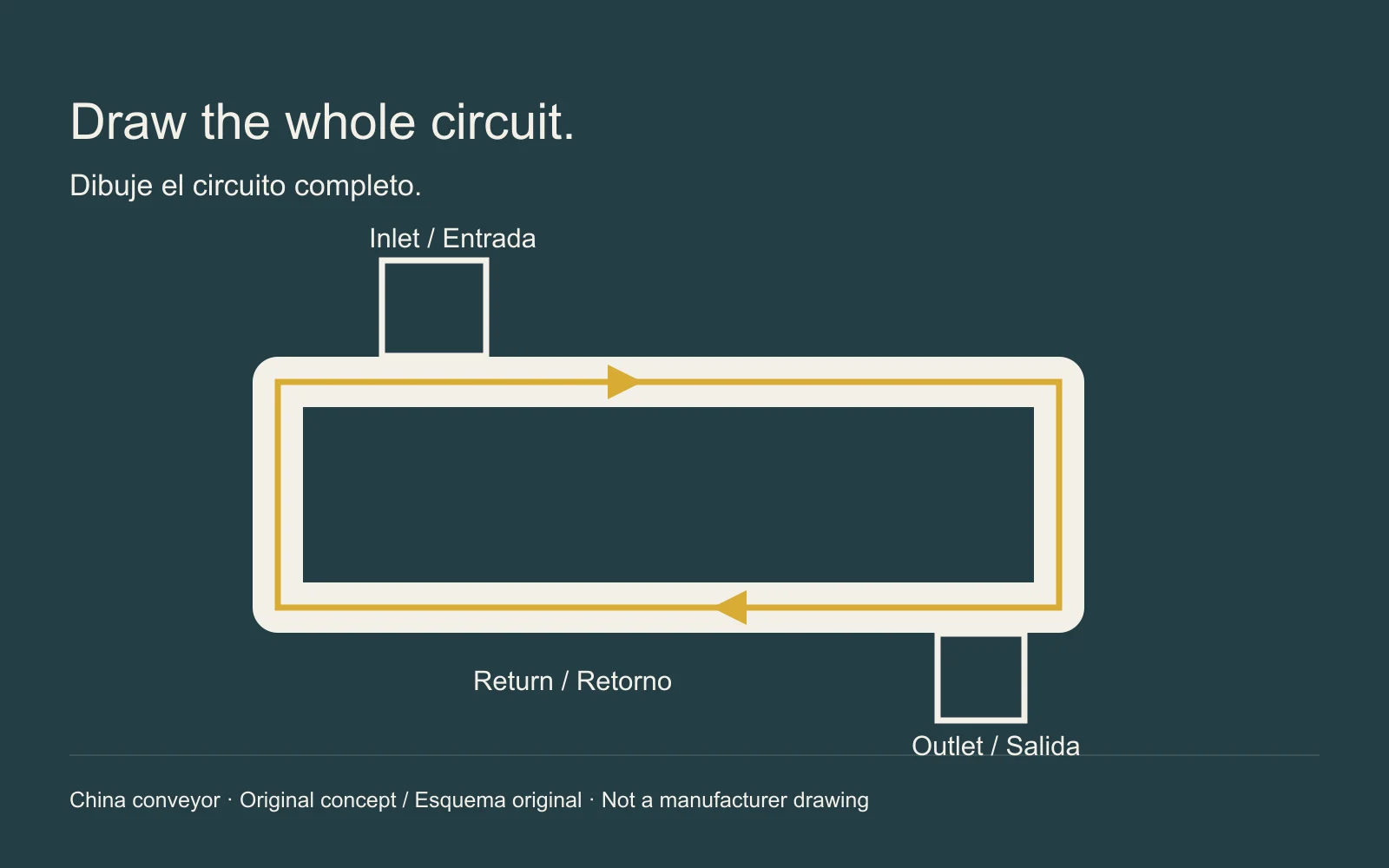
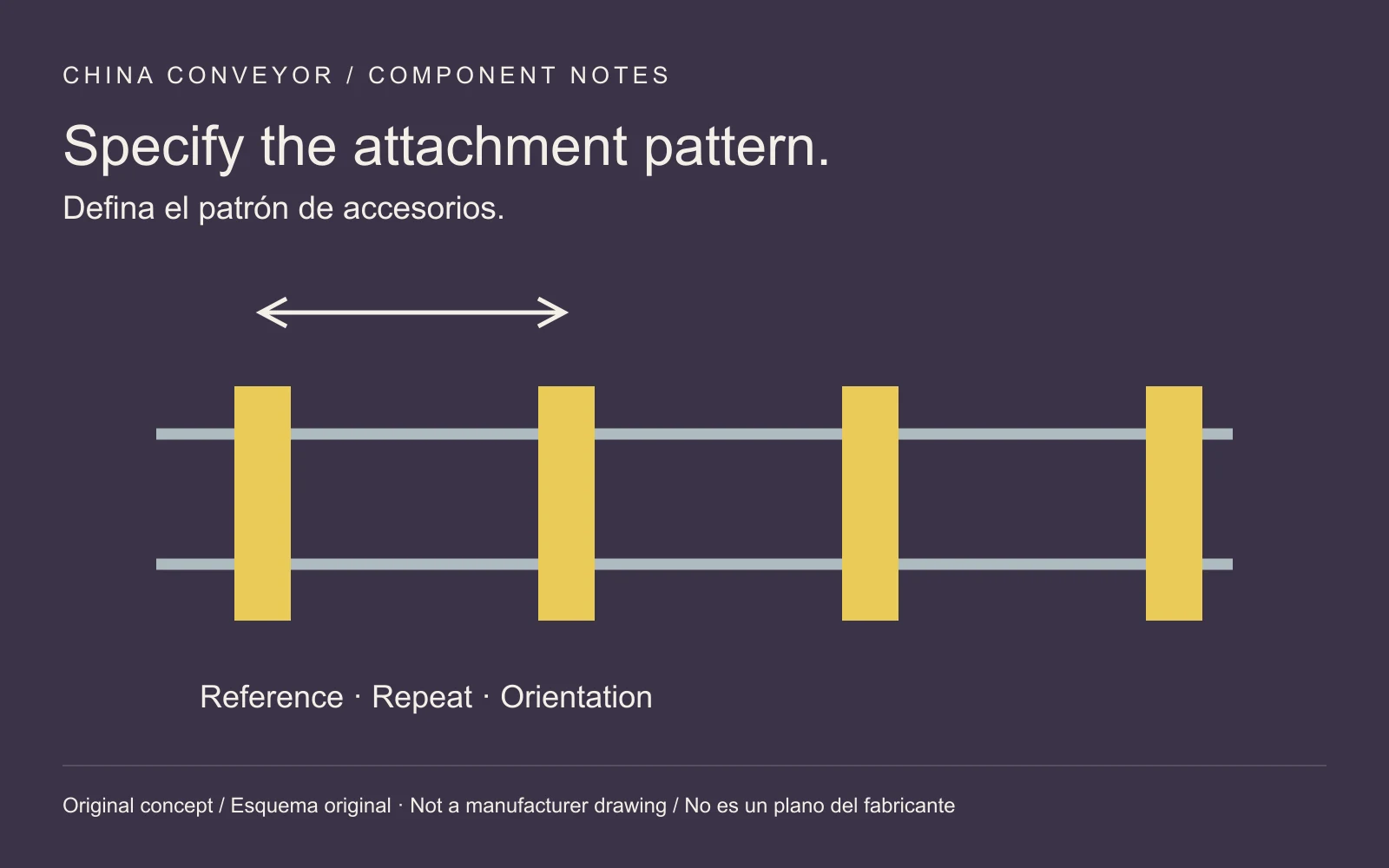
Create a marked drawing showing the first reference attachment, the repeat pattern and the end connection. Identify the viewing direction used in photographs. A picture of one loose link cannot show where that link belongs around the complete strand.
Translate the catalogue code into a drawing
Renold distinguishes standard attachment forms, including mounting orientations with different relationships to the chain plate. Its terminology is useful when describing Renold components; it should not be assumed to identify an interchangeable part from every manufacturer.
Ask each bidder to mark the proposed attachment shape, hole arrangement, position and orientation on the same enquiry drawing. State whether the supplied item is a chain with attachments, a completed conveyor assembly or parts for local assembly. Resolve those differences before comparing a price per metre.
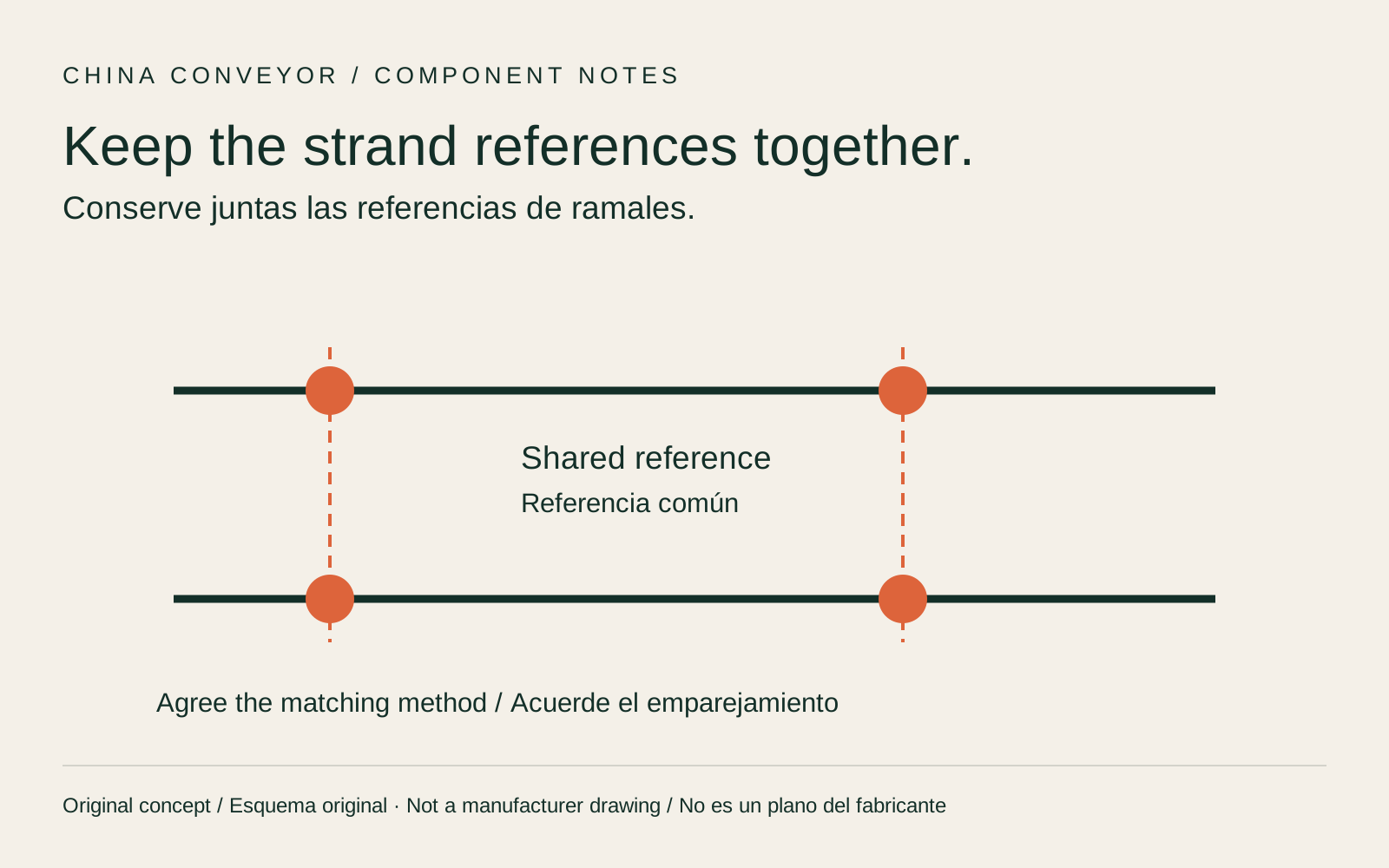
Parallel strands need a shared reference
Tsubaki's attachment-chain guidance discusses matching parallel strands and attachment alignment. That is a separate question from choosing the nominal chain size. For a conveyor using multiple strands, ask the supplier what matching and identification it will provide and how the installation drawing defines the relationship between strands.
Keep the required strand set together in the order record. If the proposal includes changes to attachments or cross-members, ask the conveyor designer to review the assembly. Do not infer correct alignment or load sharing solely because two delivered chains carry the same part number.
Inspect the supplied configuration before the shutdown
Agree an incoming inspection against the approved drawing, including the attachment pattern, marked references, quantities and end connections. Resolve discrepancies before the planned replacement rather than discovering them with the conveyor dismantled. Retain the approved drawing with the spare-part record.
The drawings accompanying this article show an attachment pattern and the need for strand references. They contain no manufactured dimensions or permissible alignment tolerance. They support an unambiguous enquiry; they are not instructions for altering a chain or setting sprockets.
Manufacturer announcements and our analysis are distinguished. Product claims require verification for the specific application.
Sources
Renold — Standard conveyor chain attachments ↗Manufacturer definitions of attachment forms and orientations. Catalogue letters are not assumed to be universal interchangeability codes.
U.S. Tsubaki — Attachment chain selection, catalogue page 128 ↗Primary catalogue guidance on parallel strands and attachment alignment. No tolerances or working-load values are generalized.