An enclosed conveying circuit has to close
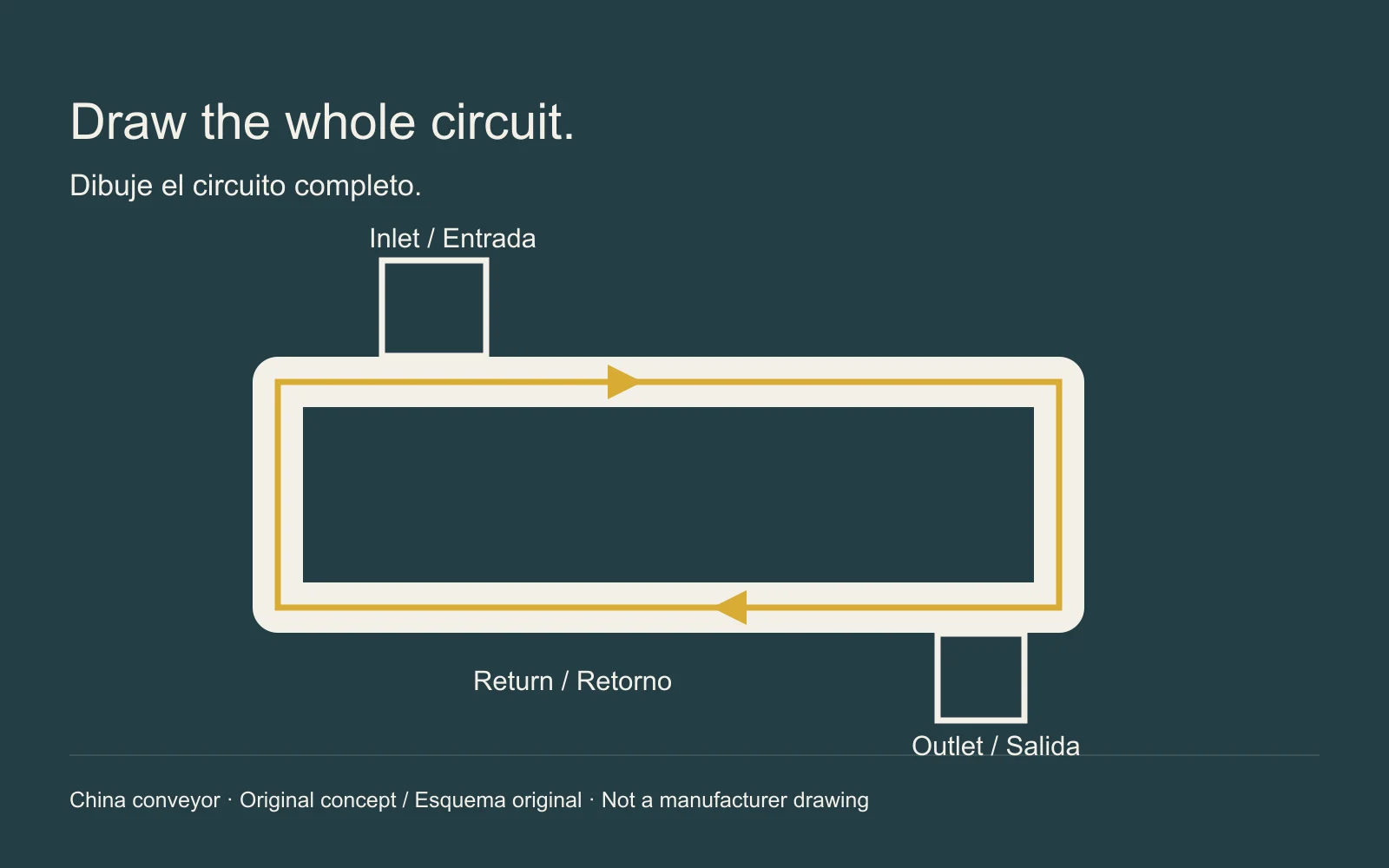
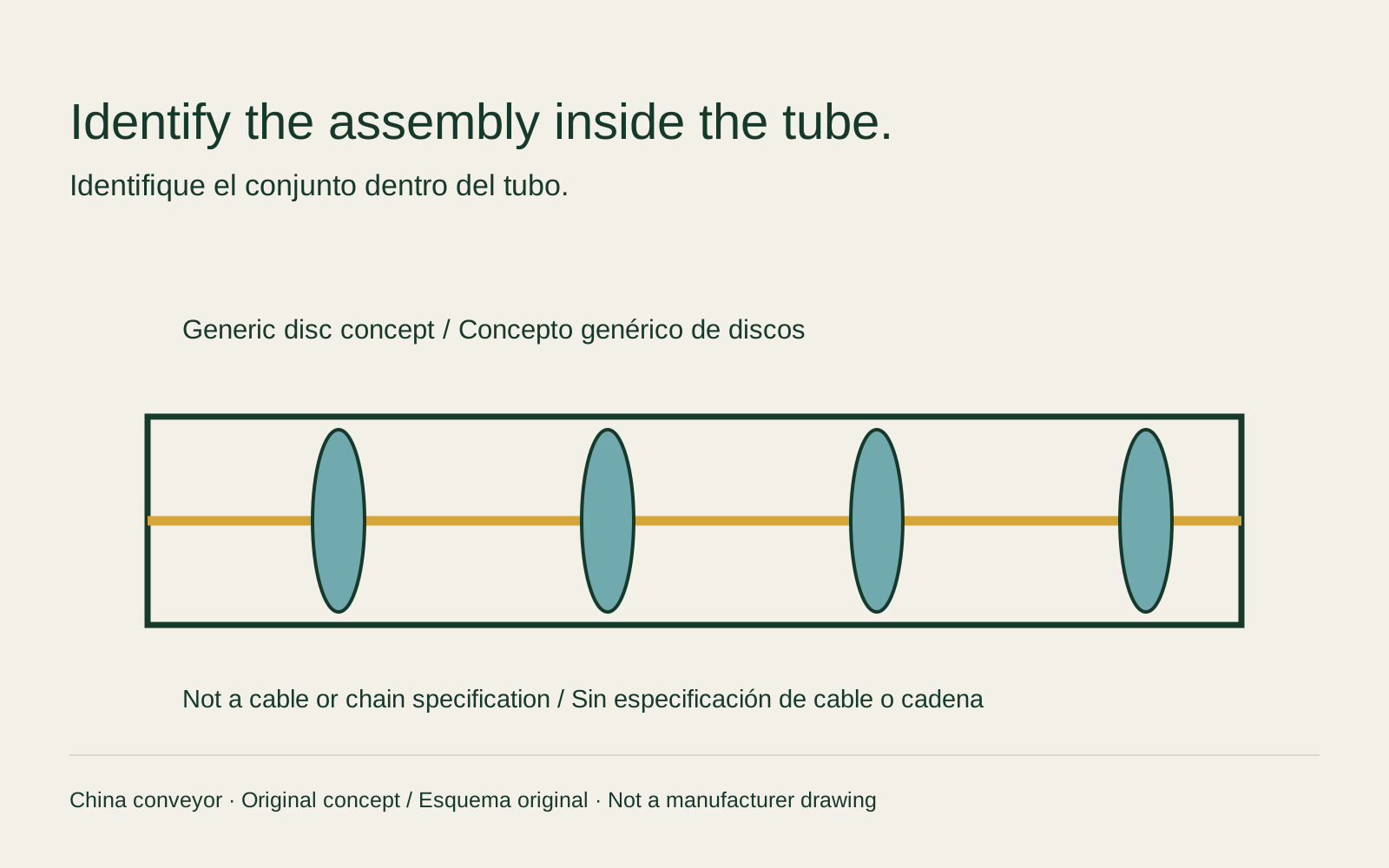
Spiroflow describes tubular drag conveyors as enclosed systems in which spaced discs on a cable or chain carry material through a tube. The assembly travels around a continuous circuit and returns to the infeed. The route drawing therefore has to do more than connect the point where material enters with the point where it leaves.
For a plant buyer, this is an early layout question. A sketch may show the desired process connection while omitting the space required by the rest of the conveyor. Ask the proposed supplier to show the complete circuit for its own equipment, including the return section and changes in direction.
The cited manufacturer explanations and comparison chart are established technical material. This article uses them to examine quotation scope, not to present tubular drag conveying as a new November invention.
Compare complete routes rather than a single distance
Spiroflow's published comparison chart explicitly describes relevant tubular-drag length limits as including the return leg. It also says the chart contains general application guidelines and directs users to engineering review. Do not lift a catalogue limit into a plant layout without that review.
Give each supplier the same locations, elevations and required discharge points. Ask which route the offer actually includes and where it requires space for drives, corners, access and supporting equipment. Record the proposed arrangement on an identified drawing revision.
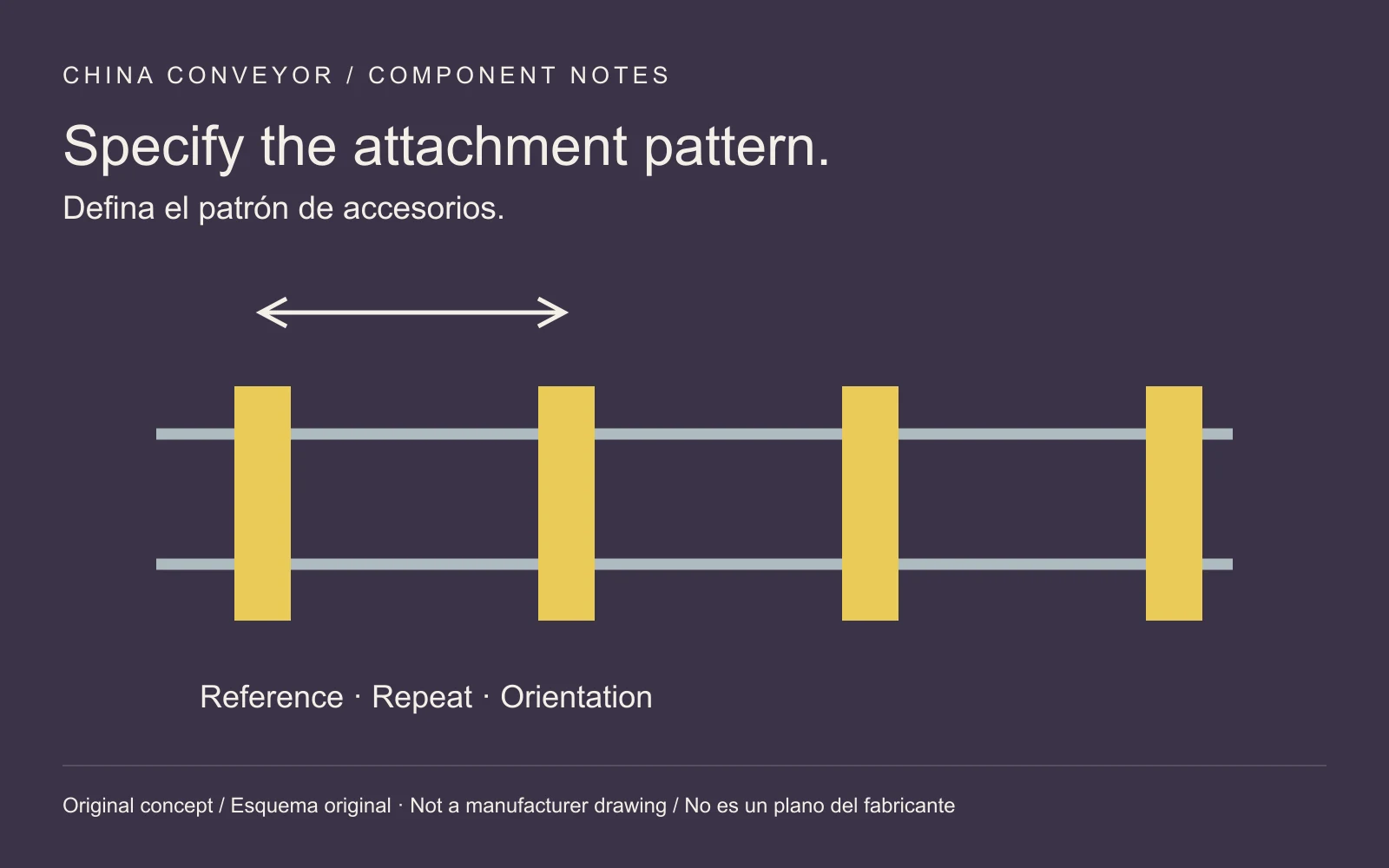
A useful comparison records the product and operating duty alongside that drawing. If one proposal uses a cable-and-disc assembly and another uses a chain-and-disc assembly, retain the distinction in the schedule of equipment and spares. An enclosed tube in a rendering does not establish the identity of the mechanism inside it.
If space constraints force a route change, have the supplier review the revised circuit and update the offer. The effect should not be treated as an extra straight piece of tube merely because that is what appears on the customer's sketch.
Include the route that maintenance will inherit
The quotation should name which assemblies, access provisions and documents are included. Ask who defines support locations and how the conveyor's interfaces with feeding and receiving equipment are assigned. Agree the information needed before the layout is considered ready for manufacture.
For future replacements, preserve the approved equipment reference, circuit drawing and assembly identification. Record changes to the route or conveyed product so that a spare cable, chain or disc assembly is ordered against the correct configuration. This article offers no tensioning setting, support calculation or installation procedure.
Ask the supplier to identify what can be demonstrated with a representative material and operating condition. Keep its stated handling benefits distinct from evidence accepted for the particular project. A complete circuit drawing and a clear service scope make those discussions easier than a quotation based only on the distance between two process machines.
The original illustrations show a generic closed circuit and a disc assembly concept. They omit dimensional and structural design and do not depict a named manufacturer's conveyor.
Manufacturer announcements and our analysis are distinguished. Product claims require verification for the specific application.
Sources
Spiroflow — How tubular drag conveyors work ↗Primary explanation of discs, cable/chain and continuous return circuit. Historical explanatory material, not a current launch announcement or a performance guarantee.
Spiroflow — Conveyor comparison chart ↗Primary comparison explicitly includes return legs in relevant length descriptions and labels its entries general application guidelines. No catalogue length is adopted as project approval.