The manufacturer is describing a particular project segment
In a product article dated May 22, 2026, Interroll positions its Sortteq Modular ChainBelt Sorter, MC-S, around compact facilities, regional distribution and existing-building upgrades. The company emphasises matching sortation to the required application rather than selecting only on headline speed. That is the manufacturer's market positioning, not an independent finding about every parcel network.
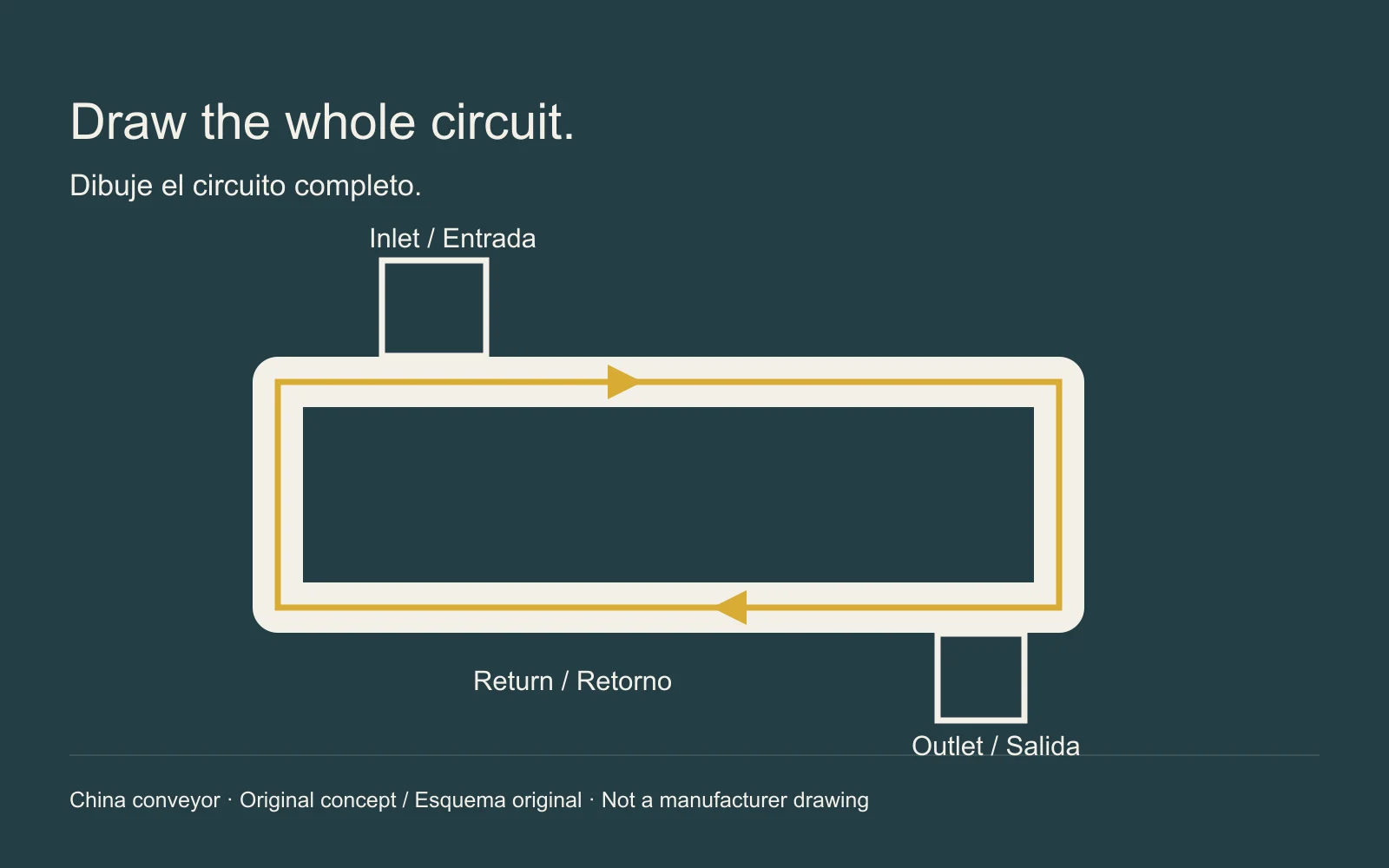
For a buyer considering this class of equipment, the practical question is the route through the facility: where items enter, which destinations must receive them and what happens after discharge. A machine envelope becomes useful when it can be reviewed against that complete arrangement.
Read the published envelope as a selection starting point
Interroll's product page describes an application range of 3,000 to 8,000 items per hour and lists a maximum throughput of up to 8,000. It also publishes sorter dimensions and destination options. These are manufacturer product data, not an accepted throughput result for an individual facility.
Prepare a representative item record and the destination requirement before asking for a layout. Ask the integrator which operating conditions its proposal represents and which parts of the available product range it uses. Keep the proposed configuration identifiable instead of assuming that every published maximum applies simultaneously.
The resulting enquiry should show the induction arrangement, sorting route and receiving equipment together. An open destination on a drawing does not describe how its discharged items will be collected, cleared or passed to another process.
Coordinate the receiving side of the sorter
List the required destinations and describe the receiving condition at each type. Ask how the proposed system handles the agreed cases when a receiving point is unavailable, and who supplies the associated interfaces. The integrator should identify the control and equipment responsibilities for those cases.
Record the intended format range and the cases selected for a demonstration. Ask what the observed result covers, including any limitations of the sample mix or receiving arrangement. A catalogue throughput statement cannot replace that project record.
Maintenance access and replacement-part identification should remain visible on the proposed layout. The manufacturer presents service simplicity as a product objective; the buyer still needs to understand how the selected installation will be accessed and supported.
Treat the dated article as context, not a new site launch
The May 2026 product discussion is cited here as existing industry material. This site has not installed, tested or independently compared the MC-S. Product claims and selection data remain attributed to Interroll.
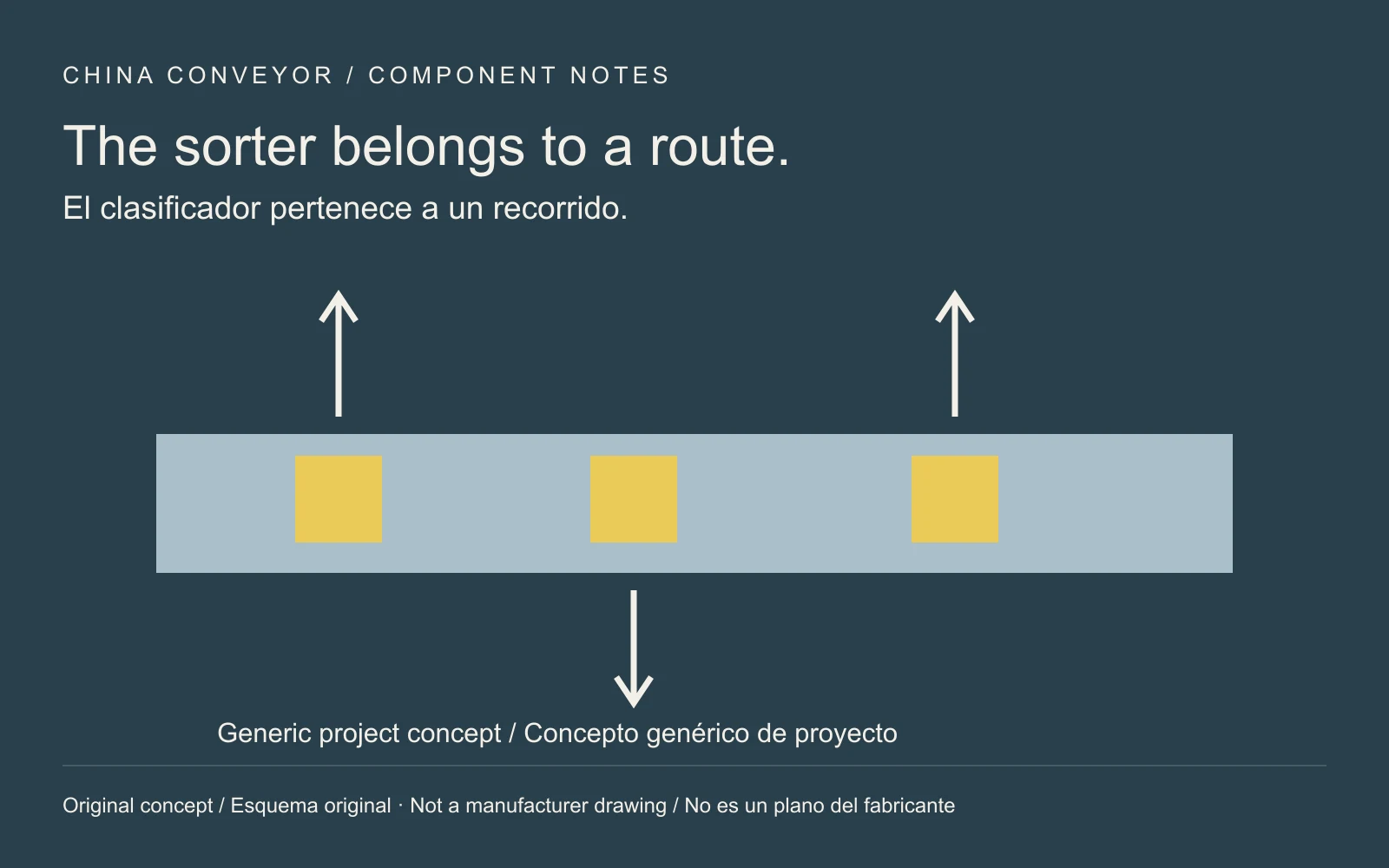
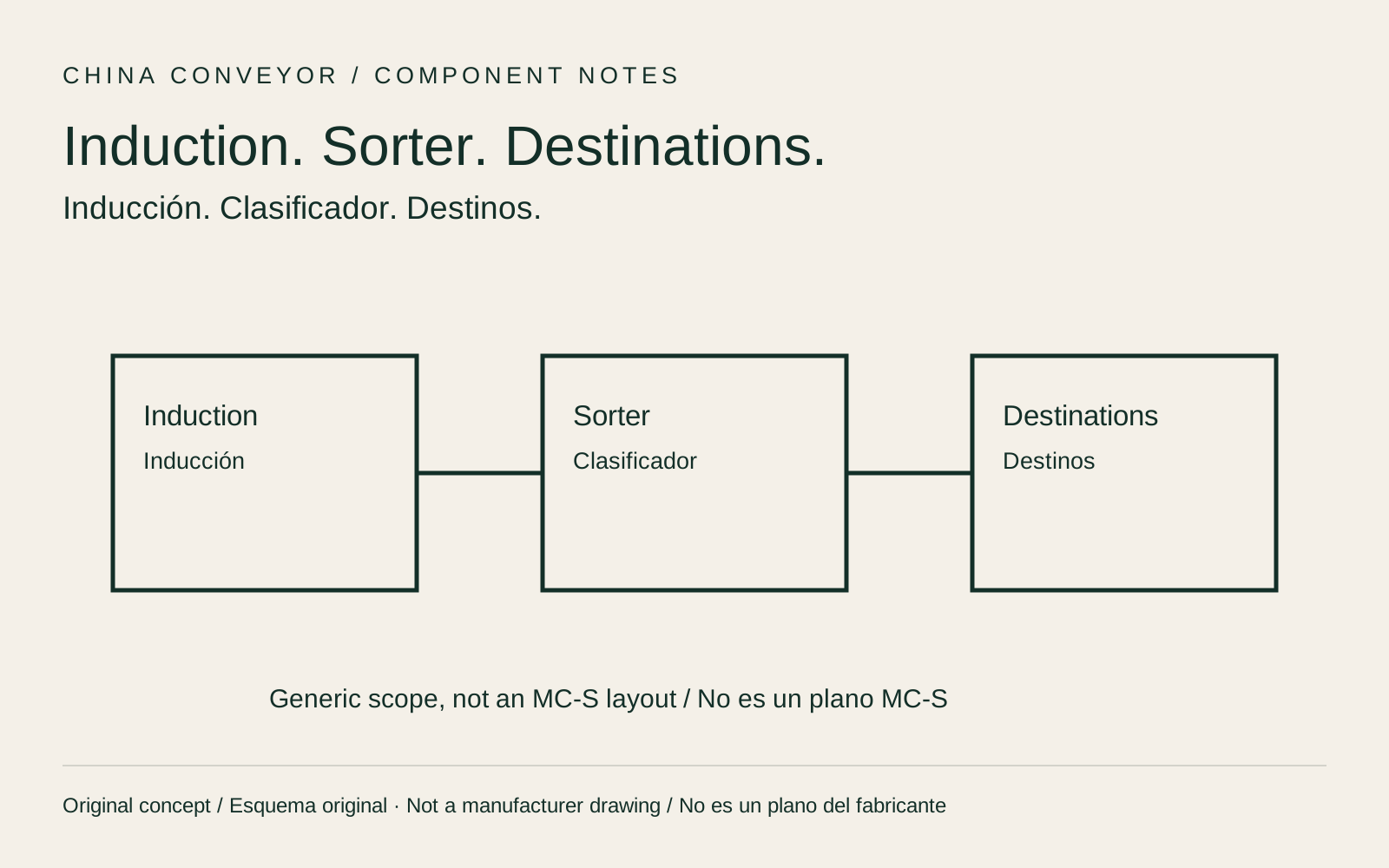
The accompanying concept diagram describes a generic sorter project boundary and does not reproduce an MC-S design. A useful project brief connects the selected sorter to induction, destinations and acceptance conditions before the performance claim becomes a purchasing assumption.
Manufacturer announcements and our analysis are distinguished. Product claims require verification for the specific application.
Sources
Interroll — Meet the MC-S, May 22, 2026 ↗Dated manufacturer discussion of positioning and project segment. Market interpretation remains attributed; no new publication date is invented.
Interroll — Sortteq Modular ChainBelt Sorter MC-S product page ↗Source for the named throughput range and product envelope. Maximum figures are not a tested site result or a promise of simultaneous performance.