A tensioner position is a clue, not a wear report
A maintenance enquiry often starts with the same observation: the conveyor has needed another take-up adjustment. The useful next question is what changed in the chain and its supporting components. Adjustment history alone cannot answer that question or define the replacement order.
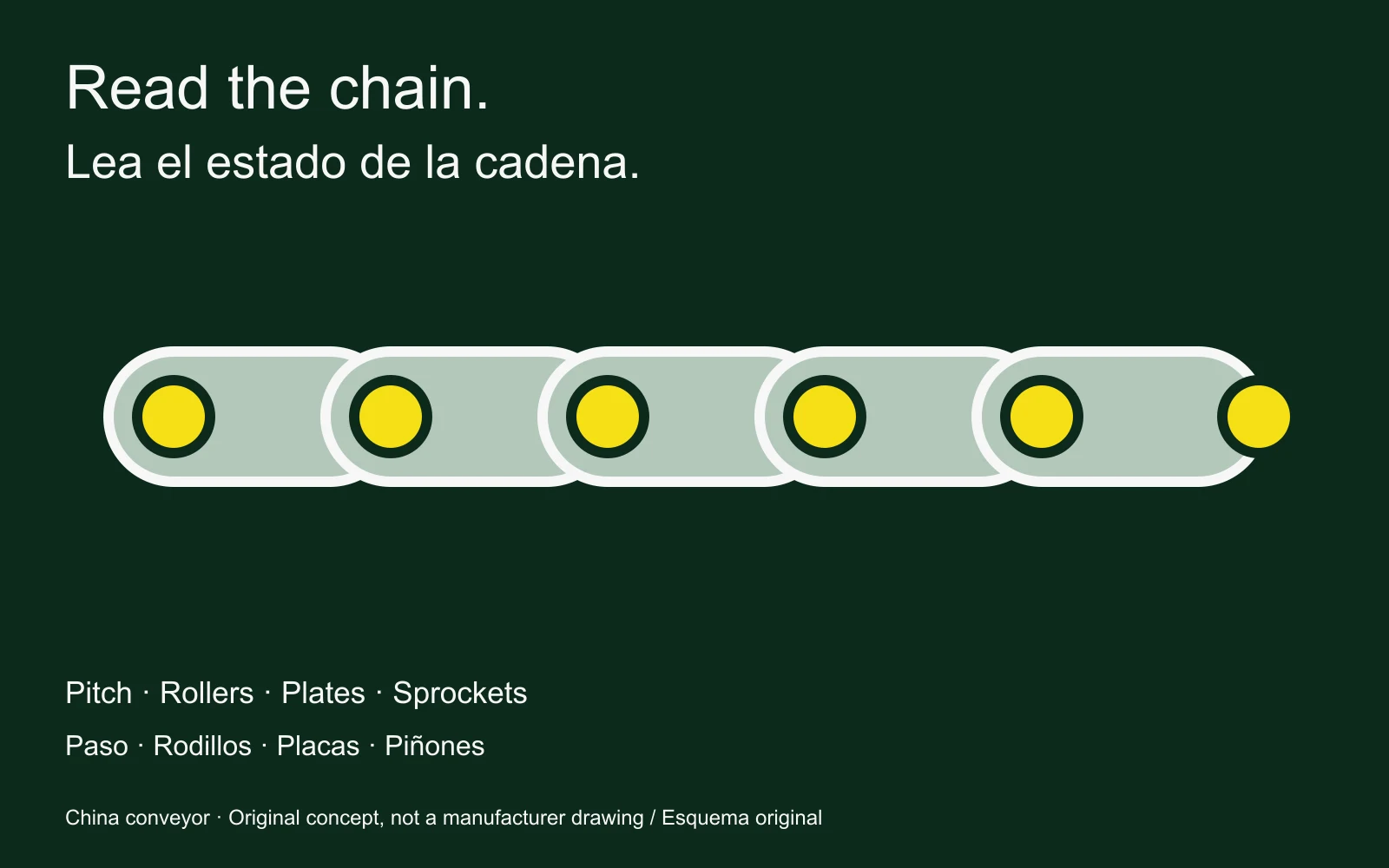
Renold's conveyor-chain guide distinguishes pitch extension from wear in rollers and link plates. Tsubaki's large-conveyor-chain guidance also treats chain elongation and sprocket wear as separate inspection items. Identify the condition being assessed before assigning the entire problem to a stretched chain. This is an inspection-planning article, rather than a report of a new product launch.
Give the measurement an identifiable reference
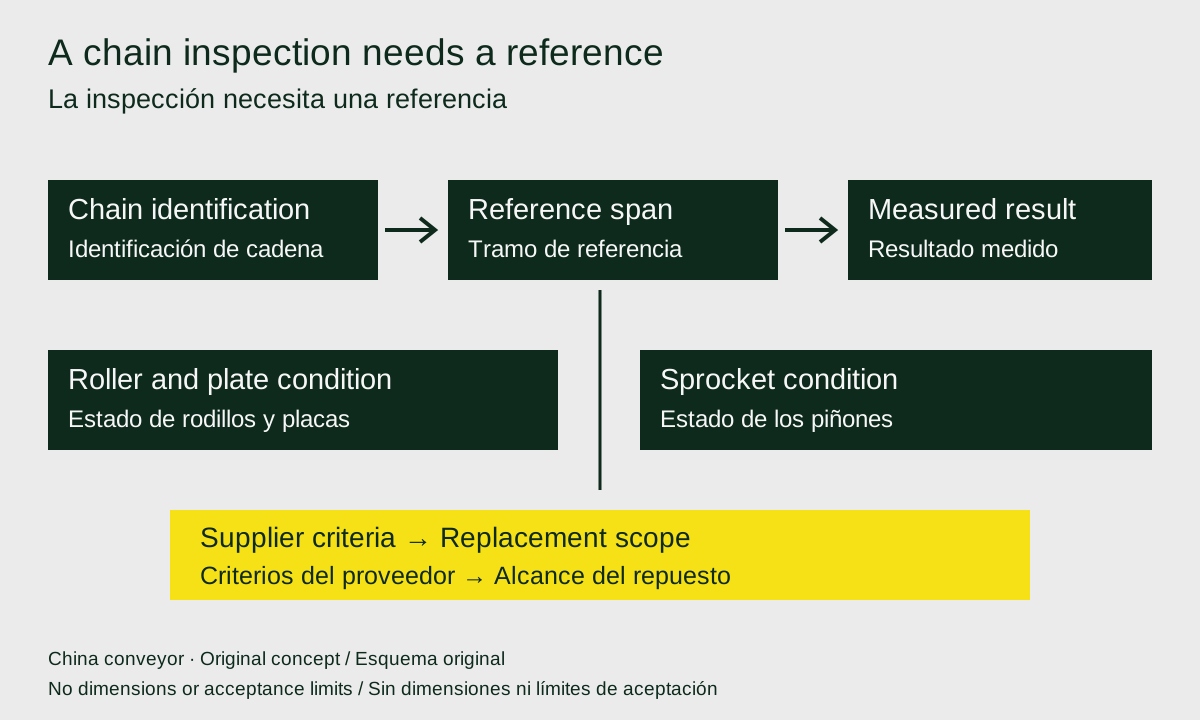
Ask maintenance and the chain supplier to agree the inspection locations, chain identification and reference dimensions. Renold describes comparing a measured span with its nominal pitch-based length; Tsubaki illustrates its own measurement positions. The selected chain's instructions should define the actual procedure and retirement criteria.
For the purchasing record, keep the location, number of pitches, result and relevant operating history together. A later reading is useful when the next person can identify what was measured. Do not compare readings obtained with different references as an uninterrupted trend. Arrange access and inspection under the site's isolation procedures; this article does not propose reaching into a running conveyor.
Keep roller and sprocket questions open
Say whether the observed problem concerns chain pitch, supporting rollers, track contact or engagement with the sprockets. Renold notes that roller wear can determine conveyor-chain life in some applications. Tsubaki advises inspecting the sprockets as well as the chain. Neither observation defines a universal replacement package for an unidentified installation.
Ask which inspected items support the recommendation. For a complete-chain offer, request the chain and attachment specification. For a wider rebuild, ask for the evidence supporting each additional component. This is easier to compare than an instruction to replace whatever looks old.
Leave purchasing with a component list
Include attachment details, matching requirements for parallel strands where relevant, the supplier's inspection criteria and the agreed delivery scope. Separate confirmed damage from questions still awaiting a site visit. The resulting order should be recognizable to the team installing it.
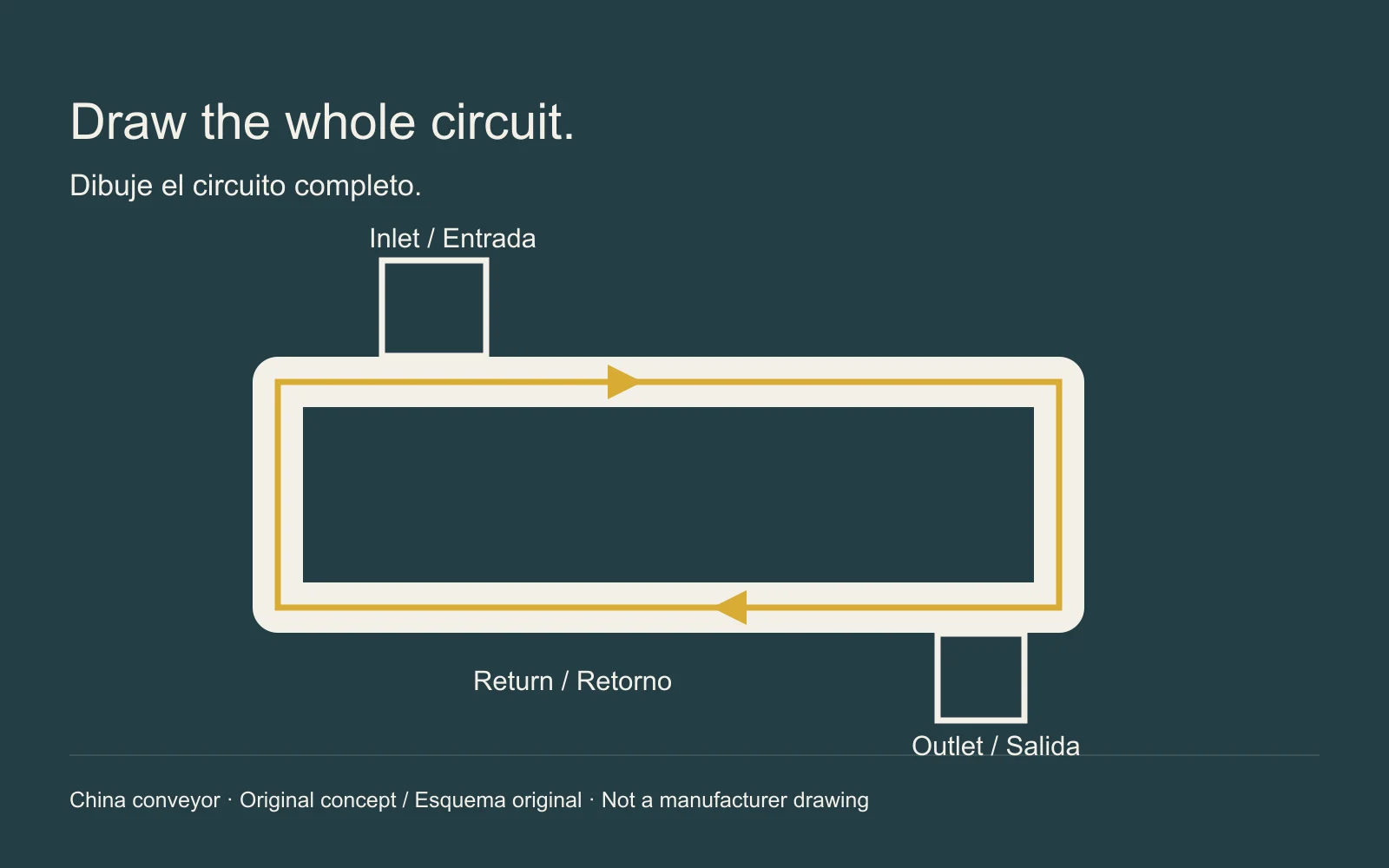
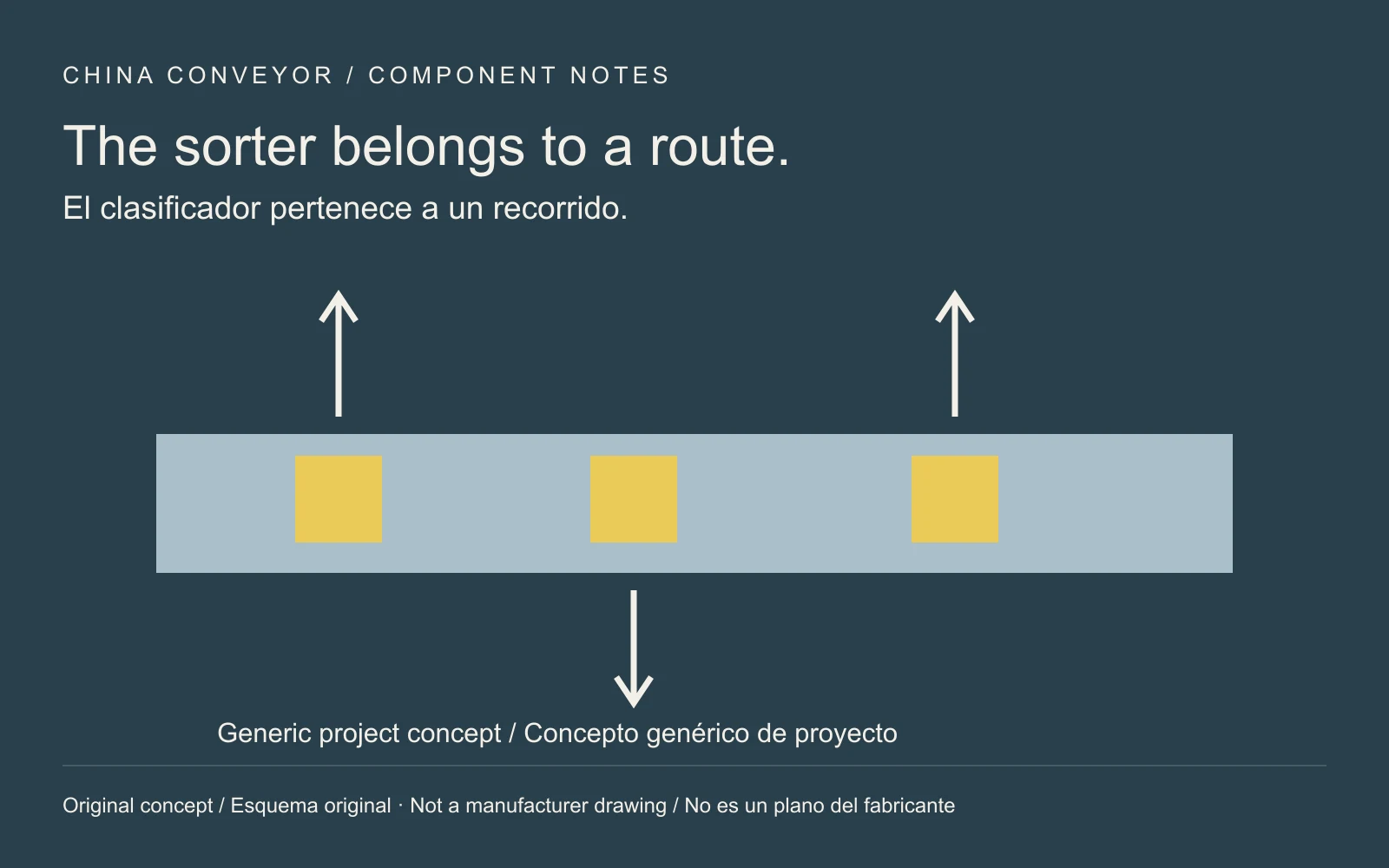
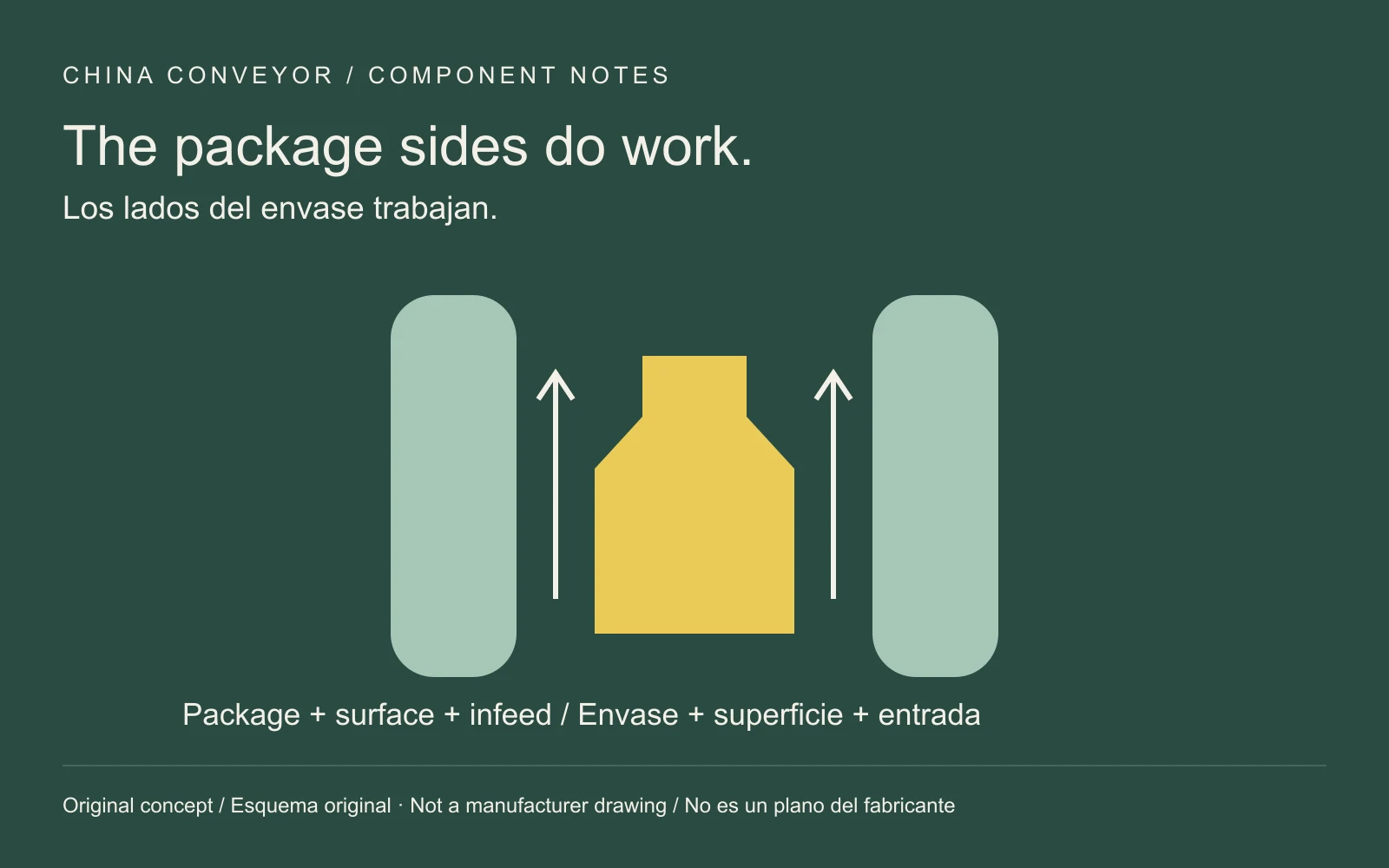
Keep take-up history alongside those findings. It explains the enquiry without substituting for chain identification or a supplier-specific wear limit. The equipment image provides context, not evidence of the condition of your installation. The original diagram explains the inspection record and is not a measurement template or an engineering drawing.
Manufacturer announcements and our analysis are distinguished. Product claims require verification for the specific application.
Sources
Renold — Conveyor chain installation and maintenance guide ↗Separates pitch extension, roller wear and link-plate wear. Product-specific limits are not treated as universal.
Tsubaki — Large conveyor chain usage limits ↗Shows measurement positions and separate sprocket checks for the covered chains. Does not approve an unidentified installation.