A ninety-degree turn is not a complete layout
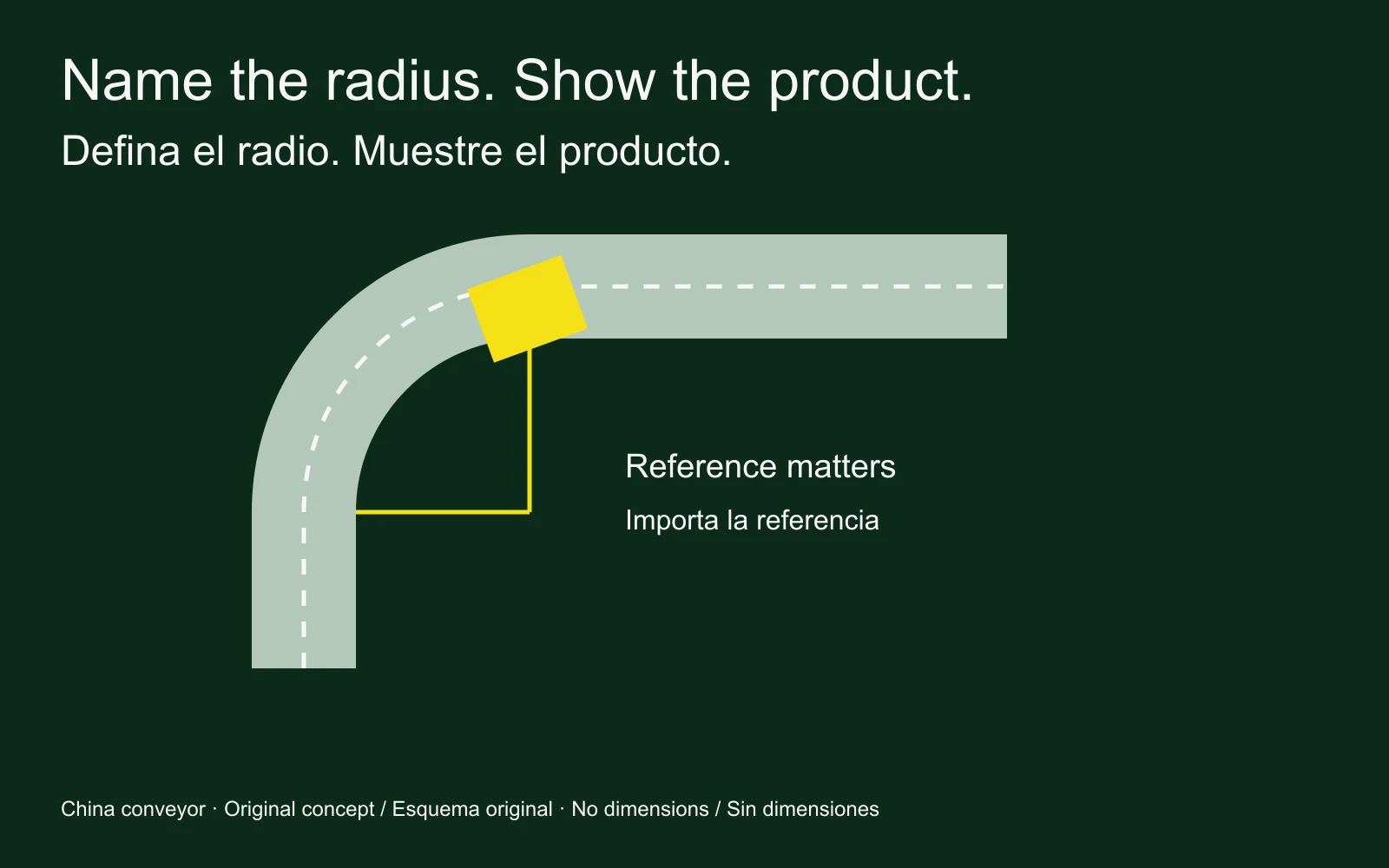
Two offers can describe the same turn angle and occupy different spaces. Before comparing them, ask where the quoted radius is measured and what is included in the overall footprint. Keep the conveyor dimensions separate from the envelope of the load passing through it.
In its S2300 tight-turning description, Intralox identifies belt speed, load distribution, turn severity and width as assessment factors. A radius value copied from another belt family does not establish that a different arrangement will perform the same task.
Give the designer the product and the boundary
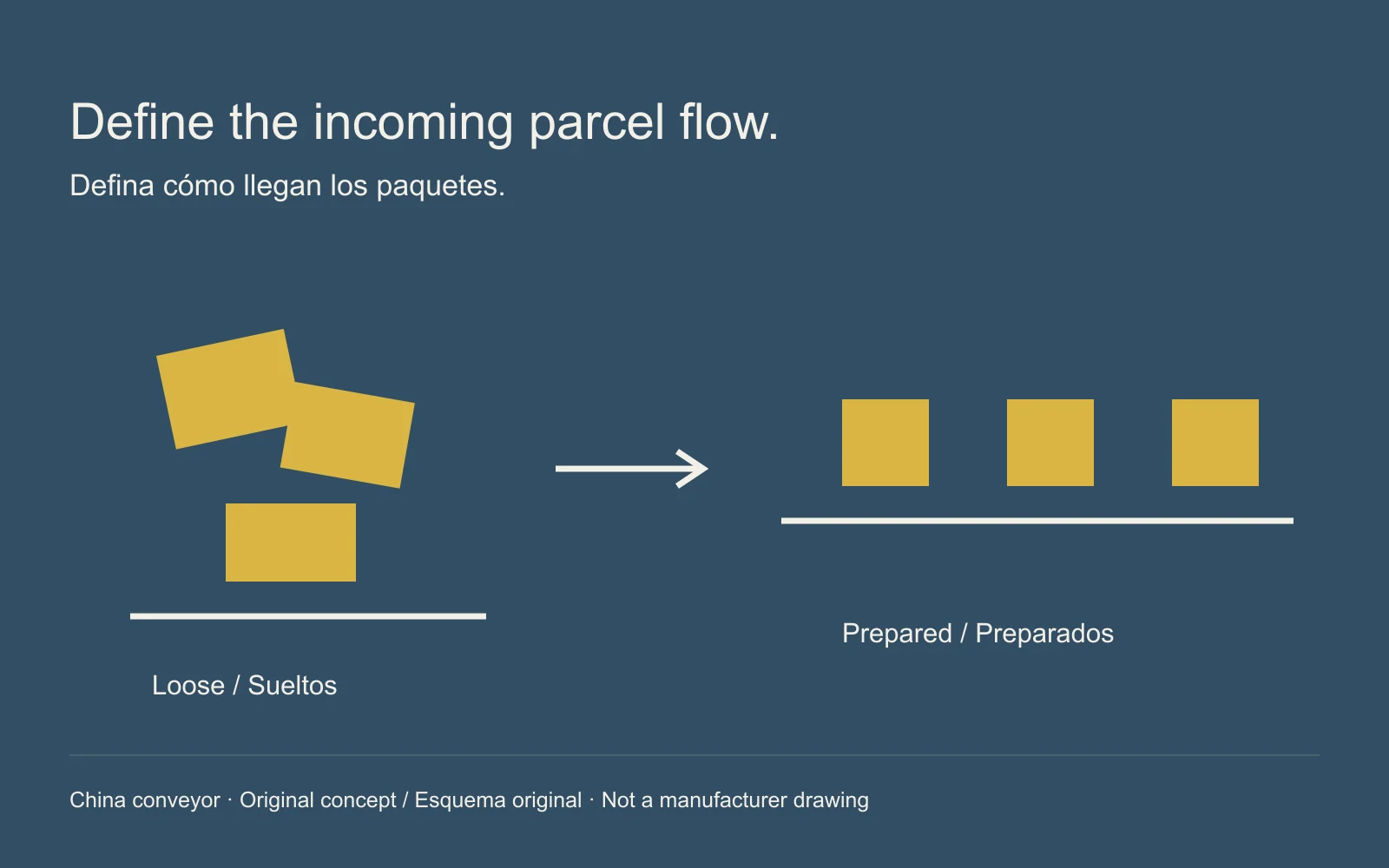
Show the available route together with product dimensions, presentation and the orientation required at discharge. Identify nearby equipment and the space that must remain available for operation and service. Ask which dimensions refer to the belt, the conveyor structure and the complete installation.
Where several product sizes use the line, agree which cases the review covers. A small package can demonstrate a different aspect of handling from a large one. Retain the tested product list rather than describing all products as compatible because one travelled through the bend.
Ask where the curve begins and ends
Check the entry, curved section and exit as a single offered route. Dorner's AM-C catalogue, for example, calls for straight sections before and after that modular-chain curve. This is a requirement for the described product, not a universal straight-length rule for every curved conveyor.
The purchasing question is whether the offered layout includes the transitions its selected system requires. Ask who provides each connection and how product orientation will be demonstrated at both interfaces. A drawing of the curved section alone may leave those responsibilities outside the price.
Keep a radius label on the approved drawing
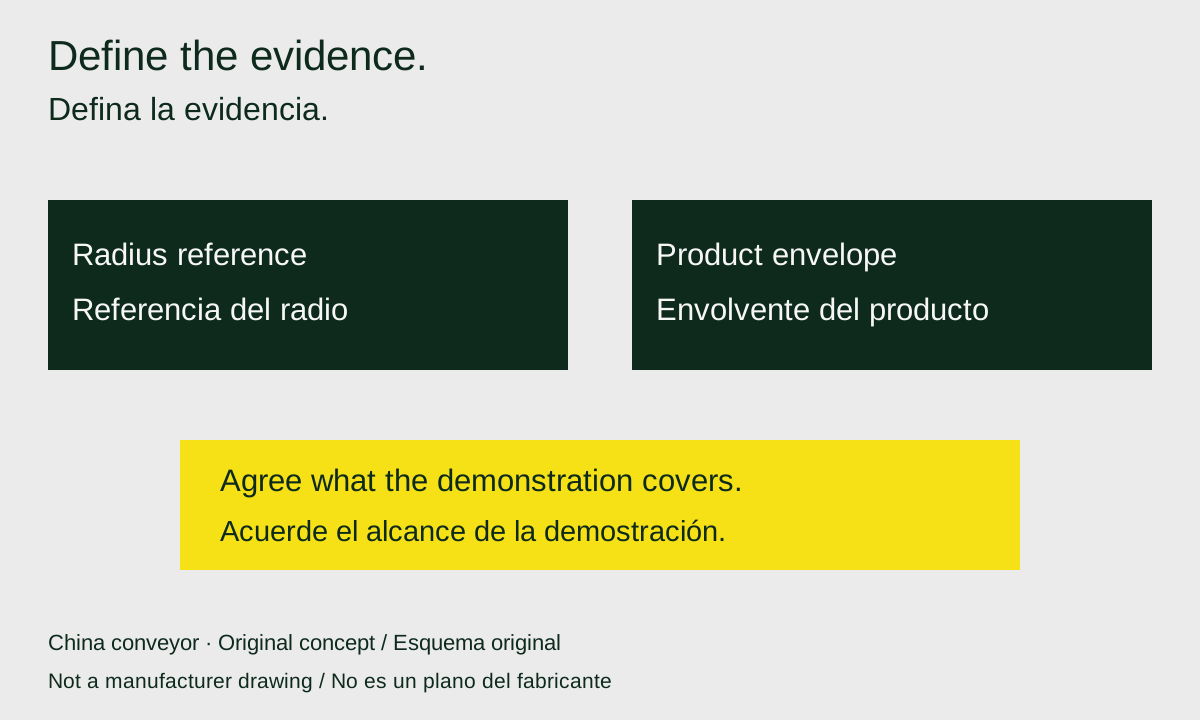
Have the supplier identify its radius reference, selected transport medium, agreed width and included sections on the final layout. Record the product cases and operating conditions covered by its assessment. Review a later layout revision against those inputs instead of assuming a similar-looking curve is interchangeable.
The original illustrations distinguish a geometric reference from a complete application envelope. They contain no minimum-radius ratio, belt-pull calculation or approved product dimension. This article is technical buying guidance, not an announcement of a new conveyor.
Manufacturer announcements and our analysis are distinguished. Product claims require verification for the specific application.
Sources
Intralox — Radius conveyor belts ↗Identifies speed, load distribution, turn severity and width in radius-application assessment. No family-specific radius ratio is generalized.
Dorner — GAL/GES catalogue, AM-C curved conveyor ↗The AM-C section describes straight inlet/outlet sections for that product. It is not a universal rule for every curved-conveyor technology.