Keep the detector in the replacement enquiry
A mechanically suitable splice can still leave an inspection conveyor incompletely specified. If the belt passes through a metal detector, identify that equipment and its installation requirements in the belt enquiry. Include the present belt and joint references and the reason for the proposed change.
Do not treat the detector as an unrelated machine simply because it has a separate asset number. The replacement review needs a shared description of the belt route and the inspection arrangement.
A metallic joint can create its own signal
Flexco's Clipper training manual includes a troubleshooting case in which a splice triggers a metal detector, and discusses non-metallic fastening alternatives. It demonstrates a real compatibility question. It does not establish that any alternative fastener is mechanically suitable for the belt or accepted by every detection system.
Ask the belt supplier to identify a suitable joint for the specified conveyor duty. Ask the detector supplier to review that exact proposal within the inspection arrangement. Keep both responses with the approved belt reference, including any application limits.
Show the frame as well as the belt
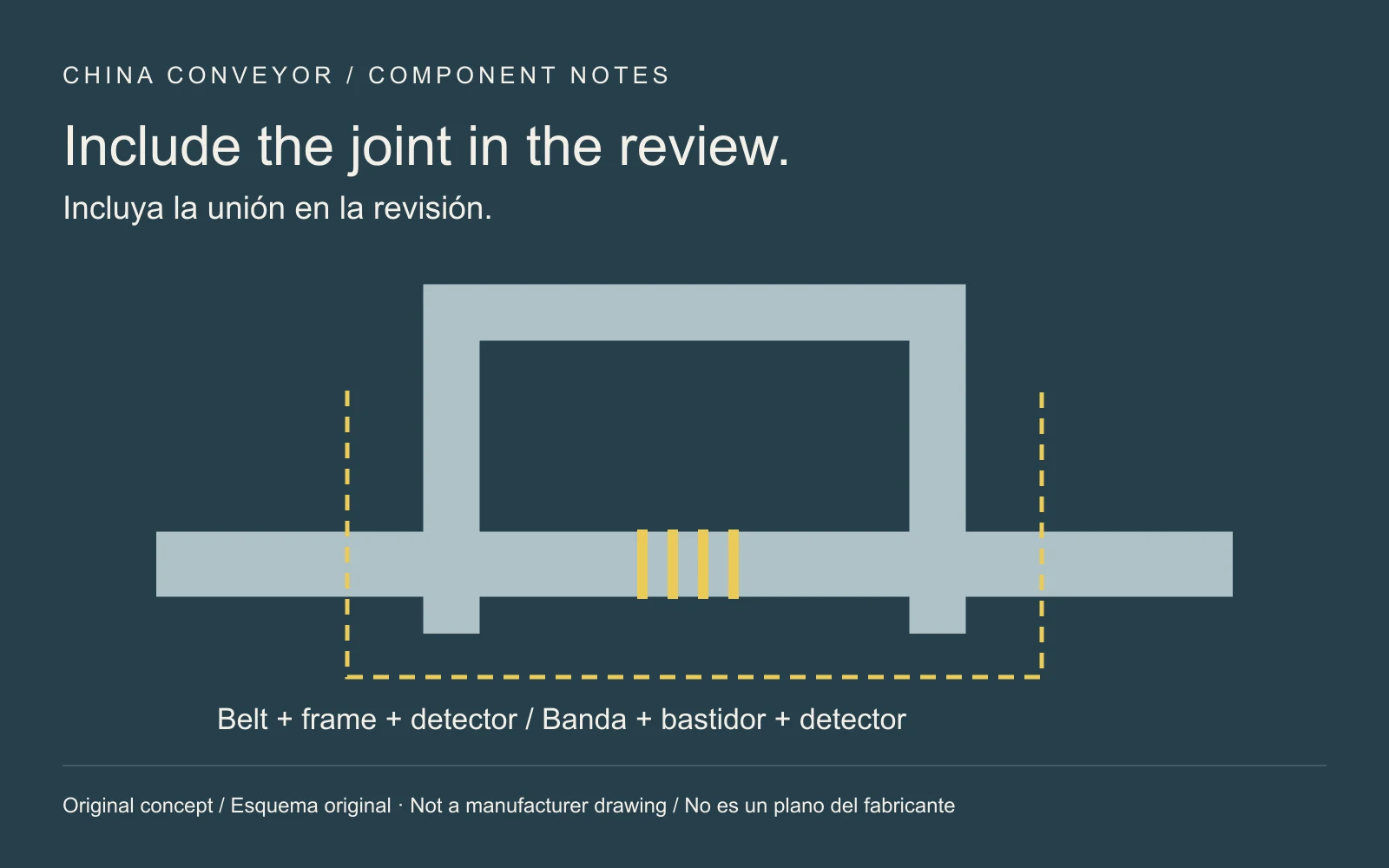
METTLER TOLEDO's metal-detection guidance explains a metal-free zone around the aperture, with the required space depending on the detector and application. Its guidance also considers belt material and joint design. Replacing the joint alone therefore does not document the whole installation.
Provide the relevant conveyor and detector layout, including nearby fixed and moving parts. Request the applicable installation requirements for that model and have the responsible supplier review the arrangement. Do not copy clearance distances from an unrelated detector or assume that stainless construction makes the question disappear.
Keep inspection performance in the acceptance scope
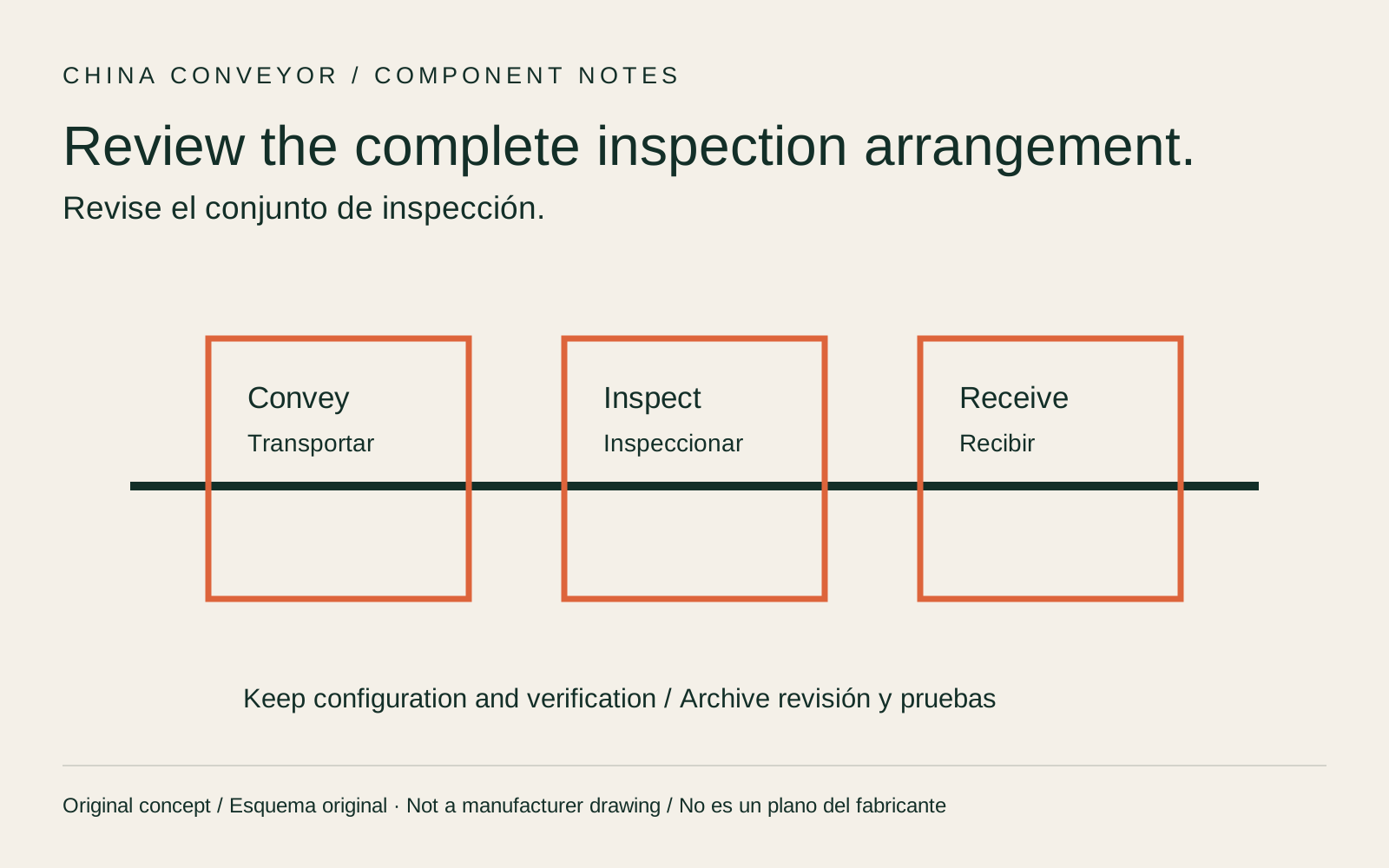
After a change is approved and installed, agree verification with the inspection-system owner using the required products and operating conditions. Record what configuration was checked and retain the result with the replacement documents. The scope should cover the actual installed system rather than only an unattached sample joint.
The original diagrams show the joint passing through an inspection zone and the need to coordinate the surrounding assembly. They specify no detection threshold or test-piece size. This article is a component-compatibility brief, not a certification of inspection performance or a recommendation to alter detector sensitivity.
Manufacturer announcements and our analysis are distinguished. Product claims require verification for the specific application.
Sources
Flexco — Clipper wire-hook training manual, troubleshooting section ↗Existing technical manual describes a splice-triggering case and non-metallic alternatives. No installation recipe is reproduced.
METTLER TOLEDO — Metal detection guidance ↗Primary guidance on installation, metal-free zones and belt-joint considerations. No universal clearance or detection claim is inferred.