A tidy returnway can still be the wrong returnway
A spare modular belt can match the recorded width and pitch yet leave an important question unanswered: what conditions will it experience after installation? Review a replacement against production, cleaning and stoppage conditions, rather than only dimensions recorded during one visit.
Habasit's engineering guide describes catenary sag as a way of accommodating belt-length changes, including thermal expansion and contraction. The apparent spare length in a returnway has a function. Treating every hanging span as unwanted slack can remove space the selected design expects to use.
Describe the operating states before choosing an allowance
Identify the belt material and series, product conditions, relevant cleaning exposure and the state in which installation dimensions were recorded. Give actual temperatures and exposure details where known, and identify values still awaiting confirmation. Ask the supplier which states its proposed configuration covers.
Intralox's material-selection article links selection to application, environment and product. It raises temperature, cleaning chemistry and moisture-related material growth as matters for review. These considerations support an application-specific assessment; they do not establish that two visually similar plastics behave alike in the machine. The article dates from 2021 and is used here as technical background, not as a new announcement.
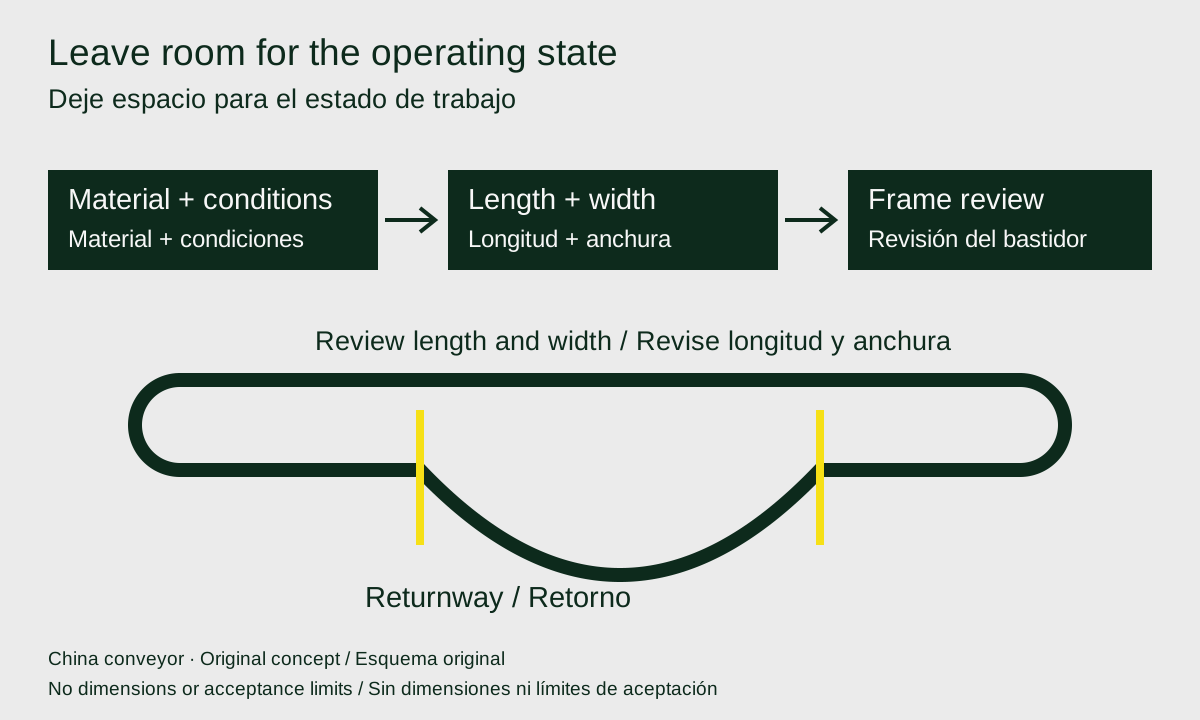
Check width as well as the hanging span
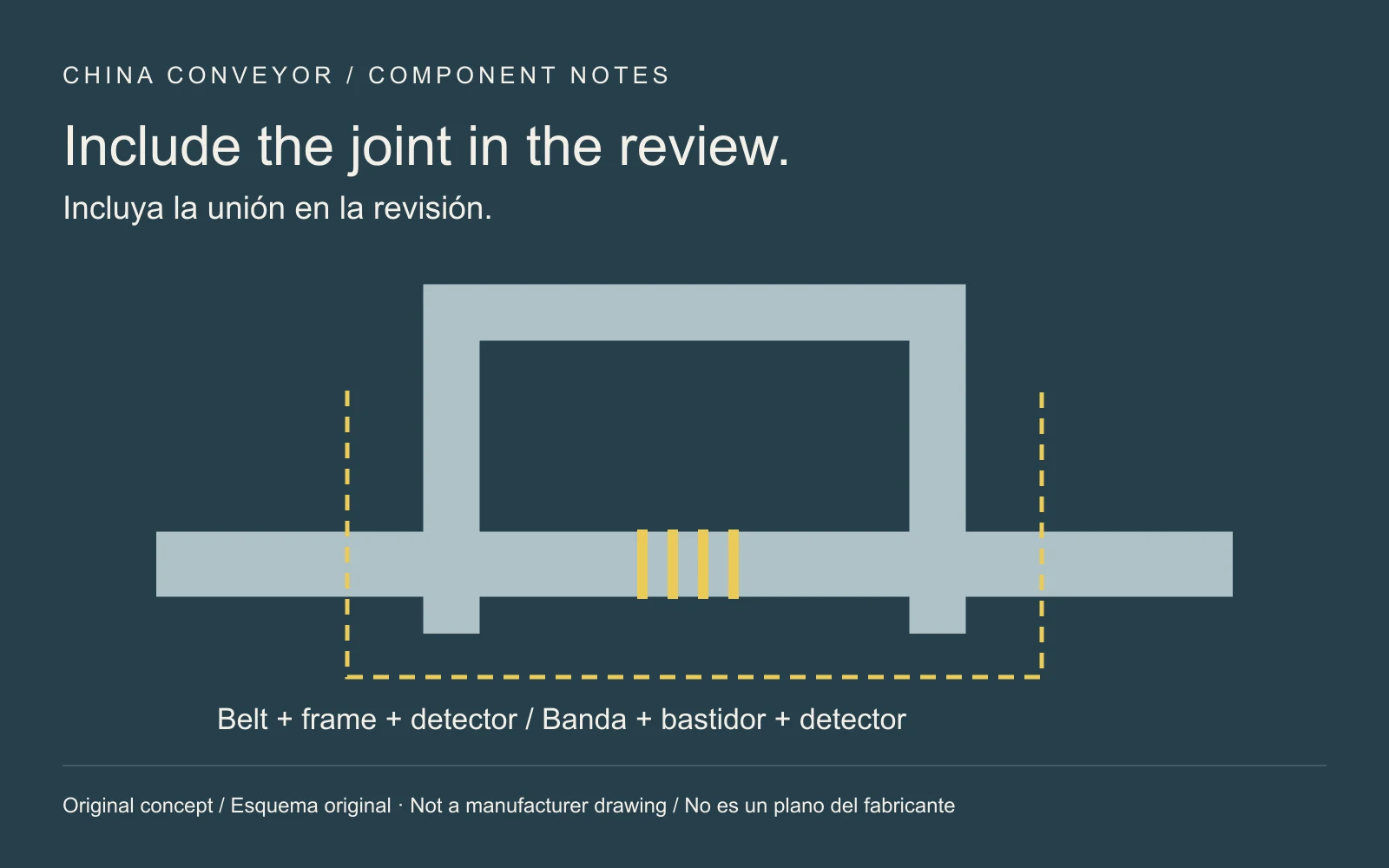
Ask the designer to show how the selected belt is accommodated along the route and across it. A returnway drawing addresses part of that discussion. The quotation should identify approved lateral clearances, supports and drive arrangements for the selected belt and frame. Request the manufacturer's applicable instructions instead of transferring a dimension from an unrelated installation.
This matters when a replacement changes material or accessories. Ask which original assumptions remain valid and which need another review. A quotation naming only a belt can leave the frame supplier and maintenance team working to different versions of the application.
Make the handover explain what normal looks like
Agree what the supplier will demonstrate in the operating states included in the project. Record configuration, observed conditions and any states not demonstrated. A traceable handover is more useful than assuming a short trial represents every future cleaning or temperature cycle.
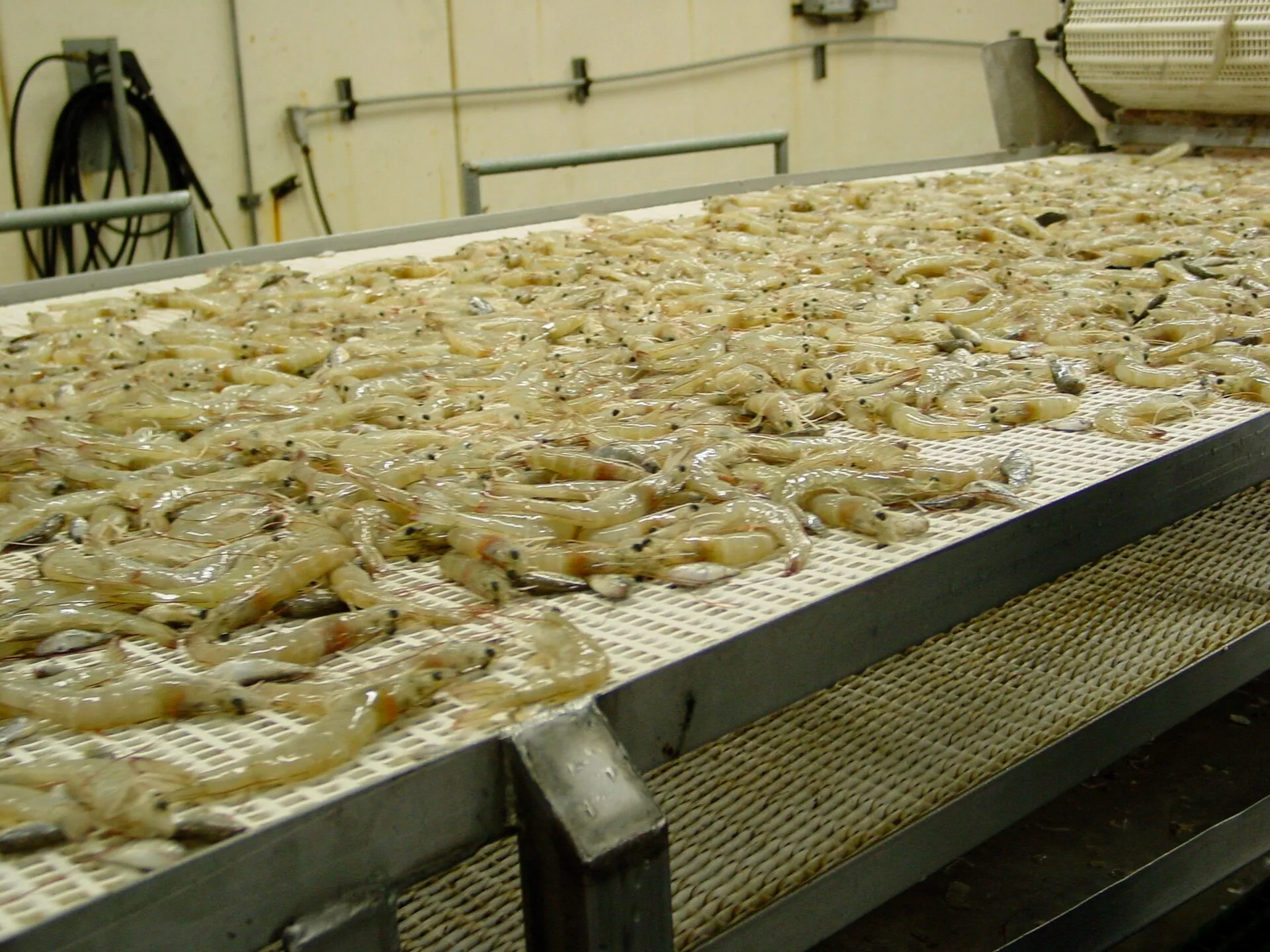
Keep the approved layout with the spare-belt specification. It explains why the next maintenance team should preserve the intended movement space, rather than judge the belt only by how tight it appears. The cover is a food-production context photograph, not identification of a belt material or validation of a thermal design. The diagram is conceptual and contains no sizing values.
Manufacturer announcements and our analysis are distinguished. Product claims require verification for the specific application.
Sources
Habasit — Plastic modular belt engineering guide ↗Explains catenary sag and thermal length compensation. Product-specific dimensions are not used as universal settings.
Intralox — Choosing the right conveyor belt material ↗Published 5 November 2021; supports reviewing application, temperature, chemistry and moisture. Not a new 2026 announcement.