Name the exposure before the cover grade
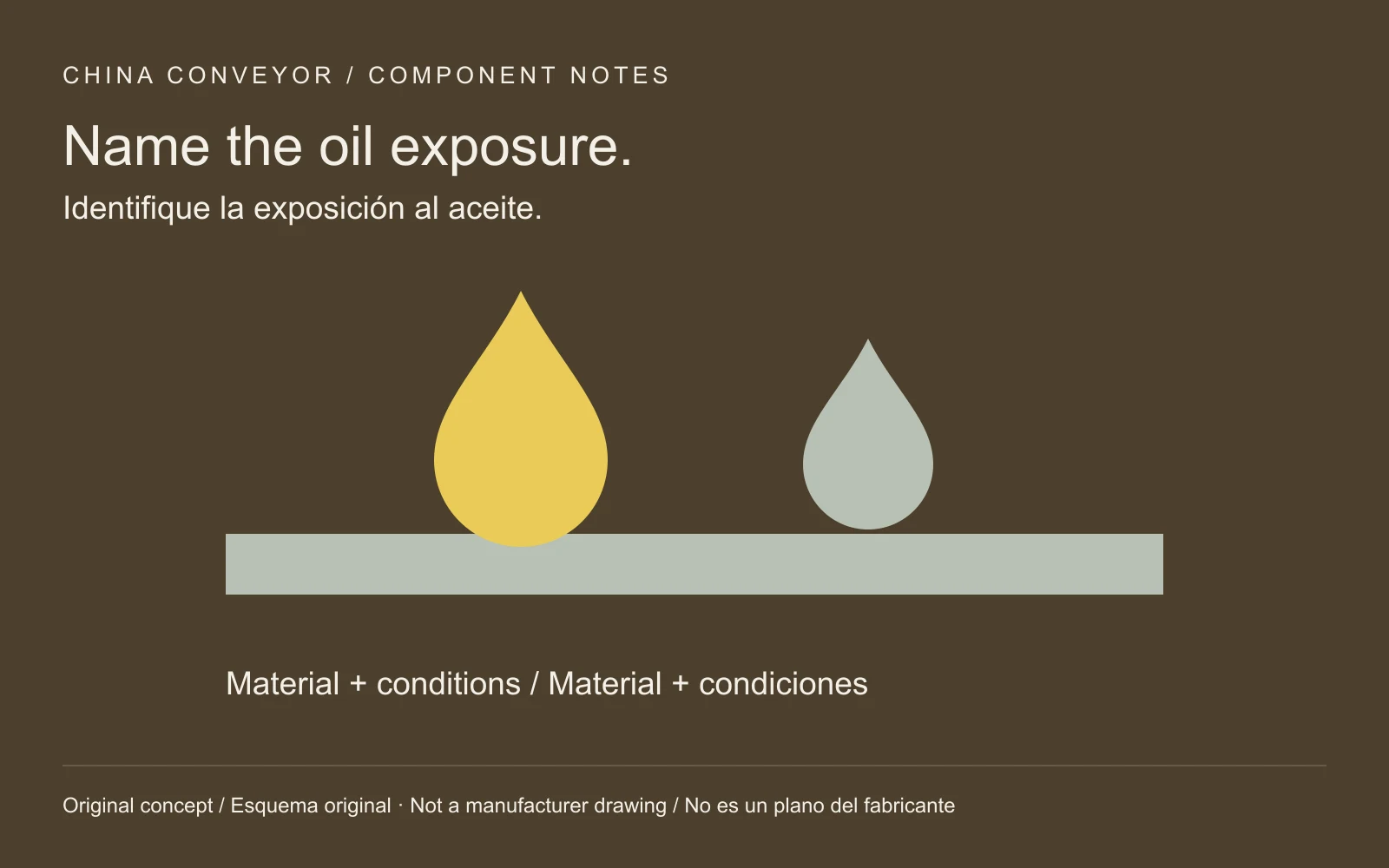
A conveyor carrying an oily product and a conveyor exposed to incidental oil can arrive at purchasing with the same description: oil-resistant belt. Start by identifying where the oil comes from and how the belt encounters it. Record the handled material, the relevant operating conditions and the reason for the replacement.
Use the actual product and application information available to the plant. If the composition or exposure is uncertain, mark the uncertainty in the enquiry rather than replacing it with a confident but broad grade name. The supplier needs a defined question to assess.
Do not collapse different oils into one category
Fenner Dunlop's conveying advice distinguishes resistance requirements associated with vegetable-based and mineral-based oils and discusses its own compound choices. The manufacturer's cover-grade page separately describes its ROM and ROS compounds for different exposures. The shared lesson is a need to identify the compound and its intended exposure, not a universal equivalence between grade names.
Ask each bidder to name the offered cover compound and explain the basis for selection against the documented conditions. Keep a commercial abbreviation separate from the evidence of suitability. A familiar letter or the phrase oil resistant does not by itself describe a level of resistance across all suppliers.
Request the conditions behind a test result
If a supplier supplies test data, ask which material or liquid was used, under what conditions and on which belt compound. Keep the result linked to that specimen and method. Have the manufacturer explain what the result supports for the intended application and what remains untested.
Describe any other duty requirements alongside oil exposure so that they are considered in the same selection. A proposal should not leave the complete belt construction or the operating environment implied while discussing only its top-cover label.
Make the order repeatable
Record the approved belt reference, construction, cover compound and applicable instructions in the purchase documents. Keep the material description and supplier assessment with that reference. If the conveyed product or exposure changes, the existing record makes the change visible for review.
The original illustrations organise the exposure and evidence questions. They are not resistance test results and do not prescribe a compound for an unidentified oil. Manufacturer product distinctions are used to explain the enquiry, without claiming a predicted service-life increase.
Manufacturer announcements and our analysis are distinguished. Product claims require verification for the specific application.
Sources
Fenner Dunlop — Oil-resistant conveyor belts, conveying advice ↗Distinguishes oil exposures and manufacturer cover choices. Grade letters are not treated as cross-brand performance equivalence.
Fenner Dunlop — Oil-resistance cover grades ↗Primary ROM and ROS descriptions illustrate exposure-specific compound selection. No comparative wear or temperature claims are adopted.