Retraction is only one part of depositing
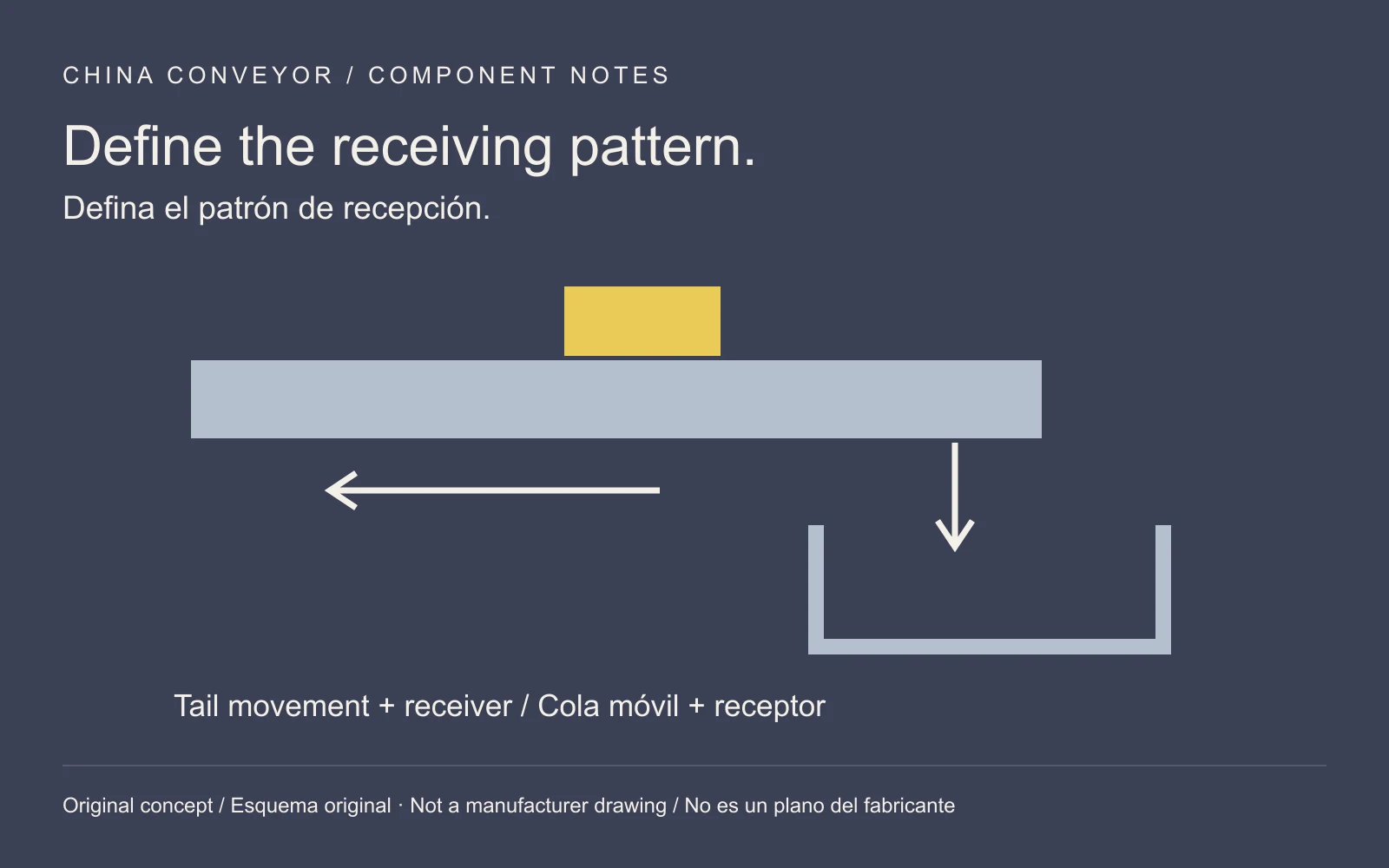
A retracting conveyor tail can withdraw to release a product onto a tray or another conveyor. Dorner describes depositing among the uses of its retractable systems, while Kleenline describes a servo-driven discharge section in its reciprocating conveyor range. The receiving arrangement is part of the application in both cases.
Begin with the product and the required pattern on the receiving surface. Show the tray or conveyor, its position and the available space. Distinguish a loose drop from a placement pattern that the next operation depends on. A retraction stroke alone does not describe that result.
State the product condition at the point of release and identify relevant format changes. Ask the supplier what samples and process information it needs to assess the complete transfer.
Write the sequence around a real receiver
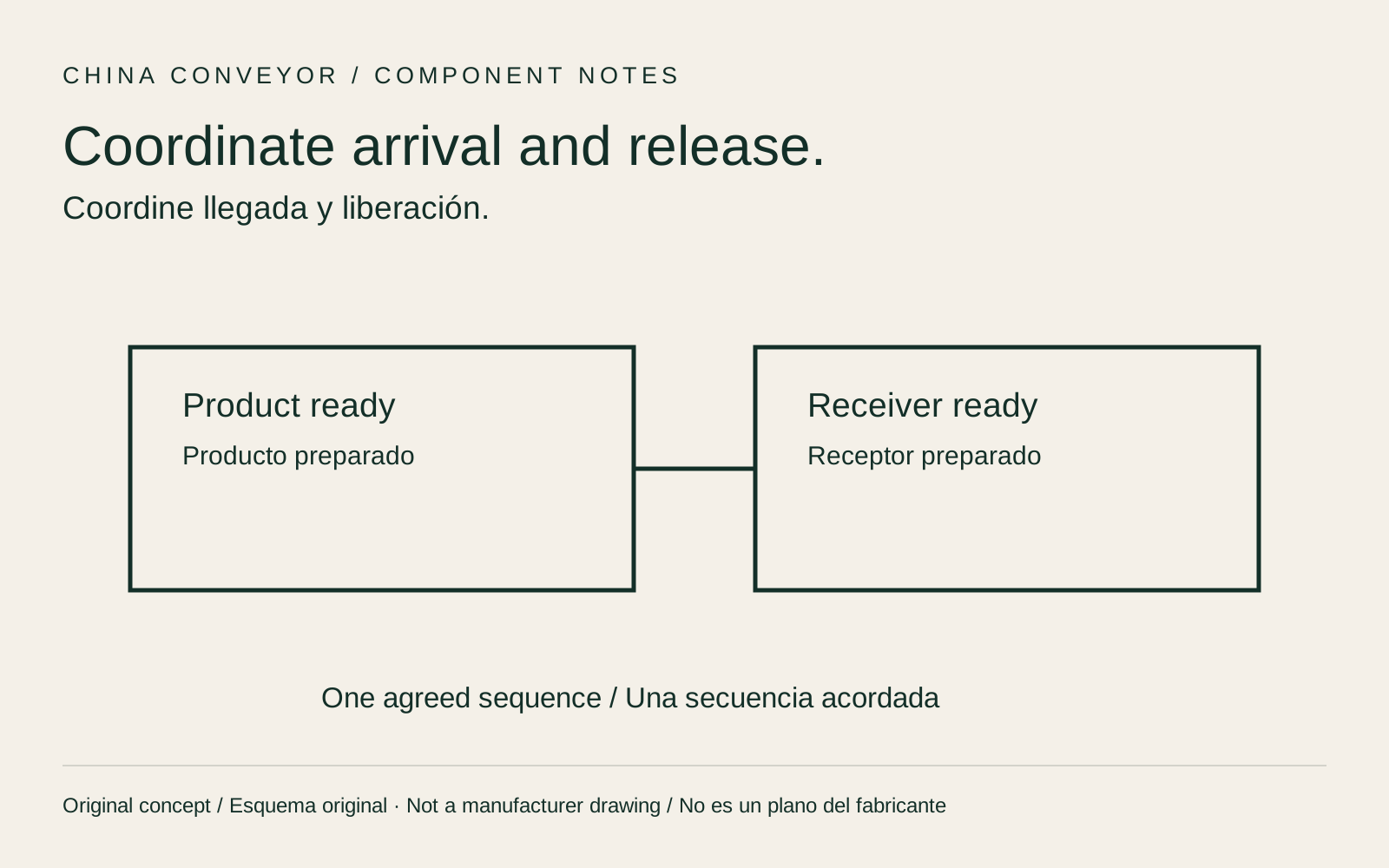
Describe when the receiving tray is available, how its position is established, when product reaches the tail and what permits the next cycle. Include the response required if a tray is missing or the downstream process is unavailable. Let the integrator design and document the control implementation from that agreed process brief.
Dorner's May 2015 tray-filling example describes both a retracting product conveyor and a tray conveyor using sensors. It is an established manufacturer case, not a new installation reported by this site. Its relevance here is the coordination of two conveying functions, not a transferable cycle-time promise.
Kleenline likewise describes a receiving conveyor that may run continuously or intermittently to produce the desired pattern. Identify which arrangement the quotation assumes.
Accept the placement pattern, not just the motion
Agree a demonstration with representative product and receiver conditions. Record the intended positions or pattern and the cases that will be observed. Ask the supplier to identify the proposed format arrangement, applicable instructions and the interfaces included in its scope.
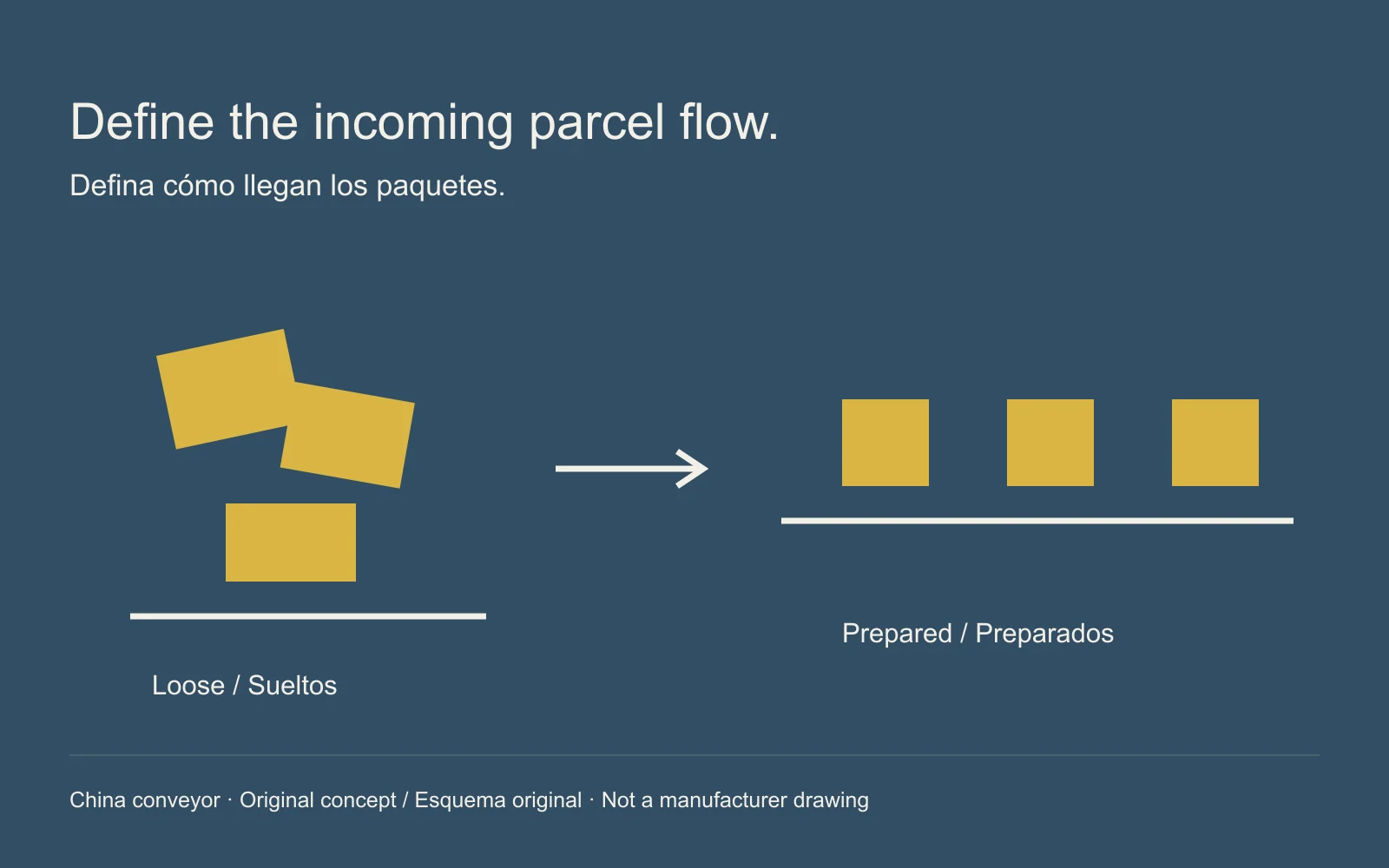
Check the delivered documentation against the approved sequence and equipment references. Keep untested formats and conditions explicit so that later changes can be reviewed against the actual demonstration. The original drawings illustrate release and receiving coordination; they contain no drop-height recommendation, servo setting or guaranteed production rate.
Manufacturer announcements and our analysis are distinguished. Product claims require verification for the specific application.
Sources
Dorner — Tray filling conveyor with retractable tail, May 29, 2015 ↗Historical manufacturer example used only for its coordinated product-and-tray arrangement. No numerical performance is transferred.
Kleenline — Single-lane reciprocator conveyor ↗Primary description of retracting discharge and receiving-conveyor operation. No rate or positioning result is generalized.