A belt width is not a complete spiral description
A food-processing spiral may be known in the spare-parts list by belt width and a familiar product name. A replacement enquiry needs to connect that belt to the way the spiral is driven. Start with the equipment and belt references, the available system drawing and the reason for replacement.
Describe whether the aim is like-for-like renewal or a proposed change to the operating concept. Combining those two aims in one request makes it difficult to compare a belt-only quotation with a conversion package.
Identify how the cage transfers motion
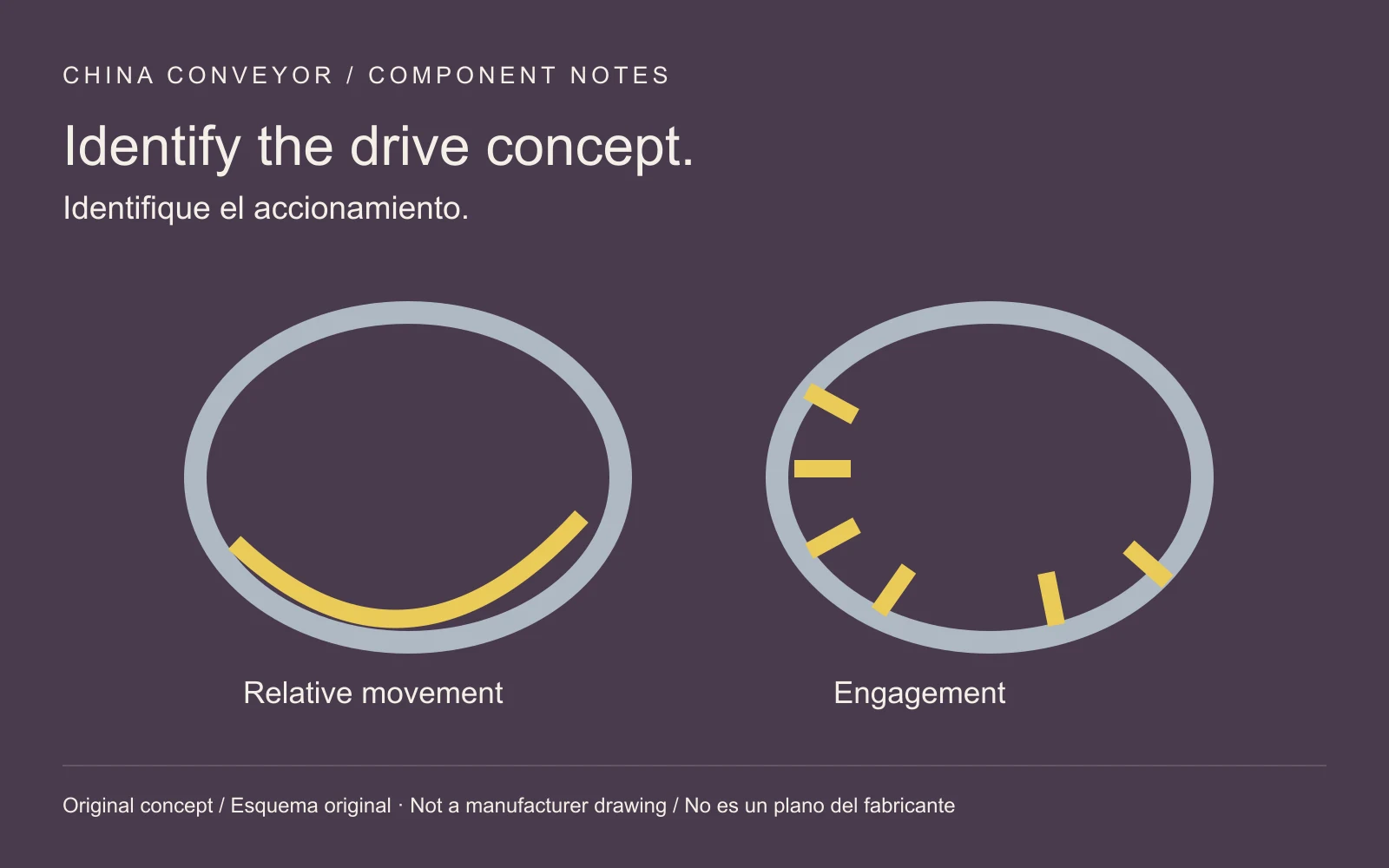
Ashworth's Lotension catalogue describes a friction-driven relationship between belt and cage, with controlled relative movement referred to as overdrive. Its PosiDrive Spiral information instead describes an engineered inner belt edge engaging a ribbed cage. These descriptions establish different drive concepts within that manufacturer's range.
Ask the proposed supplier to identify the existing concept from the machine records and confirm the scope of its offer. A product family's suitability for spirals does not establish compatibility with this cage, its controls or the installed belt support. Keep the answer linked to a specific drawing and product configuration.
Put conversion work in its own scope
If the offer changes the drive concept, request a clear list of retained, replaced and modified equipment. Have the system supplier identify the implications for the cage, belt path, drive and control interfaces, installation work and commissioning. A conversion should be evaluated as that defined package rather than inferred from a belt price.
State the actual process conditions and formats the review must represent. Request an explanation of the proposed operating envelope and the demonstration plan. Do not copy overdrive values or adjustment routines from a different system; those belong to the specific design and its instructions.
Preserve the process requirement through the change
Agree what the completed system must demonstrate for product movement and the required processing time. If a proposal changes operating arrangements, have the process owner review those requirements alongside the mechanical scope. Record what has been demonstrated and what remains outside the test.
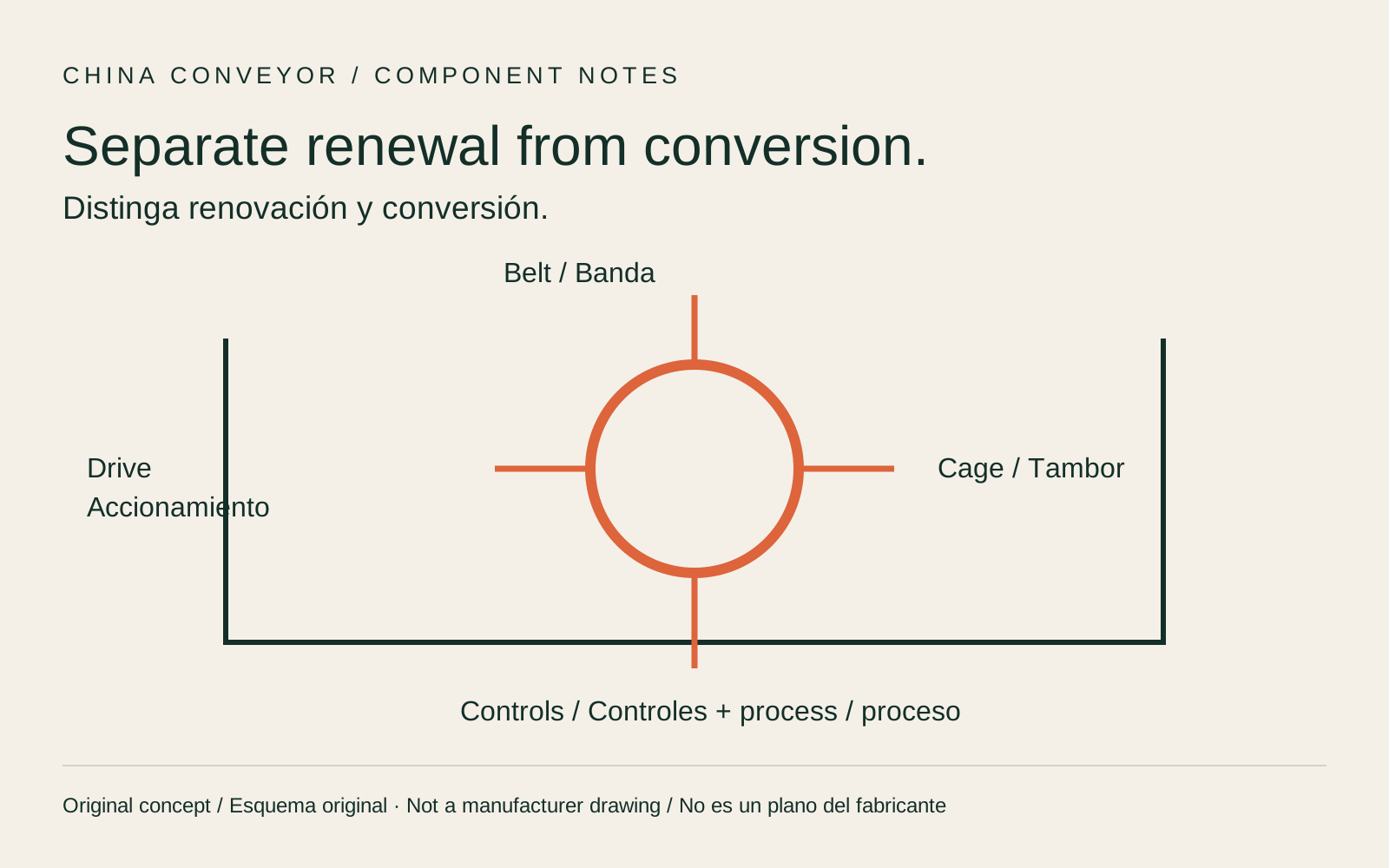
The original concept illustrations distinguish relative movement from an engagement interface. They contain no cage dimensions or setting values. Ashworth's technical material is used here to explain a selection question, not to announce a new launch or certify an unreviewed retrofit.
Manufacturer announcements and our analysis are distinguished. Product claims require verification for the specific application.
Sources
Ashworth — Conveyor belt catalogue, Lotension engineering section ↗Existing catalogue explains friction-driven cage operation and overdrive. Numerical settings are not transferred to other systems.
Ashworth — PosiDrive Spiral system ↗Describes the named system's engineered belt-edge and cage engagement. Retrofit compatibility requires a project-specific review.