Start with tension, length and elongation, not price per metre
A conveyor belt is priced by the metre, but it is bought by the duty. The carcass, the tension member inside the rubber covers, is what carries the load, and the choice between a steel cord carcass and a fabric carcass is decided before covers, colours or brands enter the discussion. Steel cord suits high tension and long distance because its cords stretch very little under load. Fabric suits shorter runs, tighter bends and faster jointing because its woven plies are flexible and can be joined in more ways. A buyer who compares only the price per metre will miss the costs that follow the choice: take-up travel, pulley sizes, splice crews and the downtime needed to make a joint. This guide therefore works through the decision in the order a specification should be written: required tension, route length and elongation budget, splice plan, troughing and pulleys, and only then covers and price.
Read the rating the way the maker defines it
Steel cord belts are rated by a single number that is the total breaking strength in newtons per millimetre of belt width. The familiar ST series runs from ST630 to ST5400, so an ST2000 belt is rated at 2000 N per mm. Fabric belts are rated by a textile code such as EP or NN, plus a strength figure and a ply count, for example EP500/4. EP means polyester warp yarns with nylon weft yarns, and NN means nylon in both directions. The trap is that makers do not all use the strength figure in the same way: on some datasheets it is the rating per ply, on others it is the total for the finished belt. Never compare two fabric quotations, and never compare a fabric quotation with a steel cord quotation, until each maker has stated in writing whether the figure is per ply or total, how many plies it covers, and which standard the rating is declared against. The October 2026 components guide that prompted this article correctly places textile belts under ISO 14890 and steel cord belts under ISO 15236-1, but a standard number on a quotation is not a test result; ask for the datasheet behind it.
Elongation decides the take-up, and often the carcass
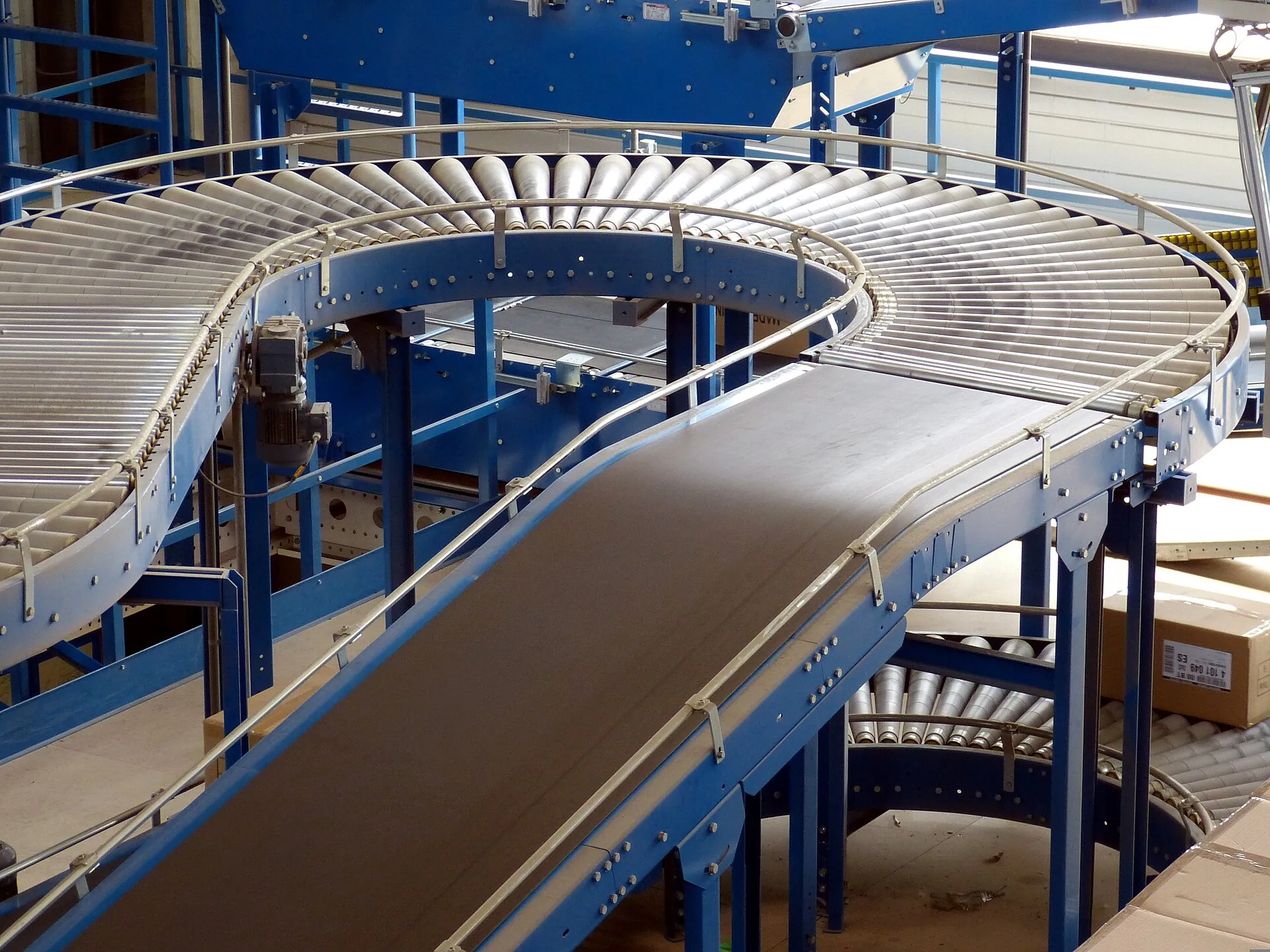
Elongation is the stretch of the belt under working tension, and it is the property that most often forces the carcass decision on a long conveyor. ContiTech publishes a maximum elongation of 0.25 percent at rated tension for its Flexsteel steel cord belts, and presents that low figure as the reason such belts allow acceptable take-up travel on long overland systems and on short stacker and reclaimer systems where minimum elongation is critical. Fabric belts stretch materially more: one published fabric belt datasheet summary caps longitudinal elongation at reference load at 4 percent for the full-thickness belt. Take-up travel is roughly length multiplied by elongation, so on a long route the difference between a fraction of a percent and a few percent is measured in metres of take-up tower, not millimetres. That is why a fabric belt that is perfectly adequate on a 100 metre plant conveyor can be the wrong carcass on a multi-kilometre overland route, even if its breaking strength looks sufficient. For every quotation, demand the elongation figure at the working tension, not only at break, and check it against the take-up travel the structure can actually provide.
The splice is part of the purchase, not an afterthought
A belt arrives in sections and leaves the factory as a loop only after splicing, so the joint method is a carcass property, not a site detail. Steel cord belts are joined exclusively by hot vulcanised splices, according to a peer-reviewed study of splice diagnostics on an ST2500 belt; the same study notes that a properly executed vulcanised splice can reach up to 100 percent of the steel cord belt rating, against up to 80 percent for textile belts. ContiTech reports dynamic splice efficiencies above the 50 percent rating defined in DIN 22110 Part 3 for its Flexsteel splices, and states that with proper technique its splices should last the life of the belt; both statements describe that maker's tested method, not a guarantee for every crew or site. Fabric belts offer a wider menu: hot or cold vulcanised step splices, and mechanical fasteners where the duty allows. Mechanical fasteners are faster to fit and need less specialised equipment, but vendor guidance puts their strength at roughly 50 to 70 percent of belt strength on a fabric belt, and they are not an option for steel cord at all. Before ordering, therefore, settle who makes the splices, with what press and cure capacity, how long each joint takes, and whether the splice crew is on site or on call; a steel cord belt with no vulcanising plan is an unfinished purchase.
Troughing, pulleys and covers are separate decisions
A belt must also form a trough, bend around pulleys and survive contact with the material, and none of those requirements is settled by the carcass name alone. Fabric belts gain transverse flexibility from their woven weft, which helps them trough at narrower widths, and ContiTech publishes troughability tables based on the ISO 703 test procedure, giving minimum belt widths for its fabric constructions at stated idler angles and tensions. Steel cord belts have no woven transverse member, so their troughing behaviour depends on the specific construction, including any transverse reinforcement the maker adds; ask for the ISO 703 result for the exact width and trough angle, rather than accepting a general claim that steel cord troughs well. Pulley diameters work the same way: every maker publishes minimum pulley diameters, and the minimum for a steel cord belt at a given width is larger than for a fabric belt, because the cords cannot accept as tight a bend. Finally, the cover is independent of the carcass. Under DIN 22102, grade Y is the normal abrasion grade, grade W is the high abrasion grade with a maximum abrasion loss of 90 cubic millimetres, and grade X combines high tensile strength with cut and gouge resistance; the same cover grade can be fitted to either carcass. Choosing a tougher cover never corrects a carcass chosen for the wrong tension or elongation.
A decision table and eight questions for the quotation
Put the choice in one table before requesting prices. Choose steel cord when the route is long, the tension is high, the take-up travel is limited, or the elongation budget rules out fabric; accept the cost of hot vulcanised splices, larger pulleys and a skilled splice crew. Choose fabric when the route is short to moderate, the tension is within the textile range, tight bends or small pulleys matter, or fast mechanical or cold joints are genuinely needed for maintenance; accept the larger take-up travel and the lower joint efficiency of a fastener. Choose neither on price per metre alone: compare belt, splices, take-up structure, pulley changes and splice downtime together, and ask for documented service evidence in a comparable duty rather than brochure life figures. Put these eight questions in the request for quotation: is the strength figure per ply or total, and under which standard; what is the elongation at working tension; what is the minimum pulley diameter for every pulley on the route; what is the ISO 703 troughability result at the specified width and angle; what splice method, efficiency and crew are specified; what cover grade and thickness match the material and drop height; what evidence supports the claimed service life in a comparable duty; and what spare belt length, splice kit and press capacity will be held on site. This article covers carcass selection only; the companion guide on this site on choosing a splice works through joint construction in detail, and the forthcoming long-distance systems article will treat drives and layout rather than repeating this decision.
This guide helps define questions and requirements. Technical decisions require application documentation and review.
Sources
ContiTech 2015 Heavy Duty Conveyor Belt Catalog: Flexsteel steel cord belts ↗ContiTech heavy-duty belt catalogue (2015), Flexsteel pages: maximum 0.25 percent elongation at rated tension, long-overland and stacker/reclaimer relevance, and dynamic splice efficiencies above the DIN 22110 Part 3 50 percent rating. Manufacturer catalogue claims for one product family, hosted by a distributor; not a guarantee for other makers or crews.
Non-Destructive Diagnostics in the Assessment of Splice Geometry in Steel Cord Conveyor Belts ↗Peer-reviewed diagnostics study on an ST2500 belt: steel cord belts are joined exclusively by hot vulcanised splices, while textile belts may use hot vulcanisation, cold bonding or mechanical fasteners; a properly executed vulcanised splice reaches up to 100 percent of steel cord rating and up to 80 percent for textile belts. Laboratory study on one belt class; splice performance on site depends on crew, materials and cure conditions.
Top 5 Conveyor Components Manufacturers in China: Rollers, Idlers, Pulleys and Belt Suppliers Guide ↗Syndicated EIN Presswire components guide (19 October 2026), as reprinted: textile belts under ISO 14890 and steel cord belts under ISO 15236-1, with CEMA 502 for idler load ratings. Paid press-release origin; used here only for the standards framing and as the article prompt, not for any belt performance figure.
DIN 22102 cover grade table for fabric conveyor belts ↗Supplier datasheet summary for DIN 22102 cover grades: grade W tensile strength 18 MPa, elongation at break 400 percent and maximum abrasion loss 90 cubic millimetres; grade Y 20 MPa, 400 percent and 150 cubic millimetres; grade X 25 MPa, 450 percent and 120 cubic millimetres, with ply adhesion values. Supplier-published table, not the DIN text itself; values must be confirmed against the ordered belt datasheet.
Fabric conveyor belt technical indexes under GB/T 7984 ↗Supplier fabric belt specification summary: full-thickness fabric belt longitudinal elongation at reference load capped at 4 percent, with tensile strength range 160 to 3150 N per mm. Single supplier summary under GB/T 7984; used only as an order-of-magnitude contrast to steel cord elongation, not as a universal fabric figure, since elongation varies by construction and maker.