Start with the underside that meets the belt
A lightweight pack that shifts during inspection is a plausible vacuum-conveyor application. Yet its overall length and mass do not describe the contact between the underside and the belt. Include photographs and representative samples showing the actual base, including variations relevant to the job.
State what must remain controlled: orientation through a camera, position at a process station, or another defined movement. Distinguish that requirement from a general request to hold products down. The test should represent the product as it reaches this part of the line.
Treat the holes, chamber and air supply as a system
Dorner describes suction through a perforated belt and application-specific vacuum-conveyor design. Nercon's manufacturer information connects hole size and position with the bottle's size, weight and base profile, and includes the plenum and blower in the engineered arrangement. Neither description supports selecting the whole conveyor by motor power alone.
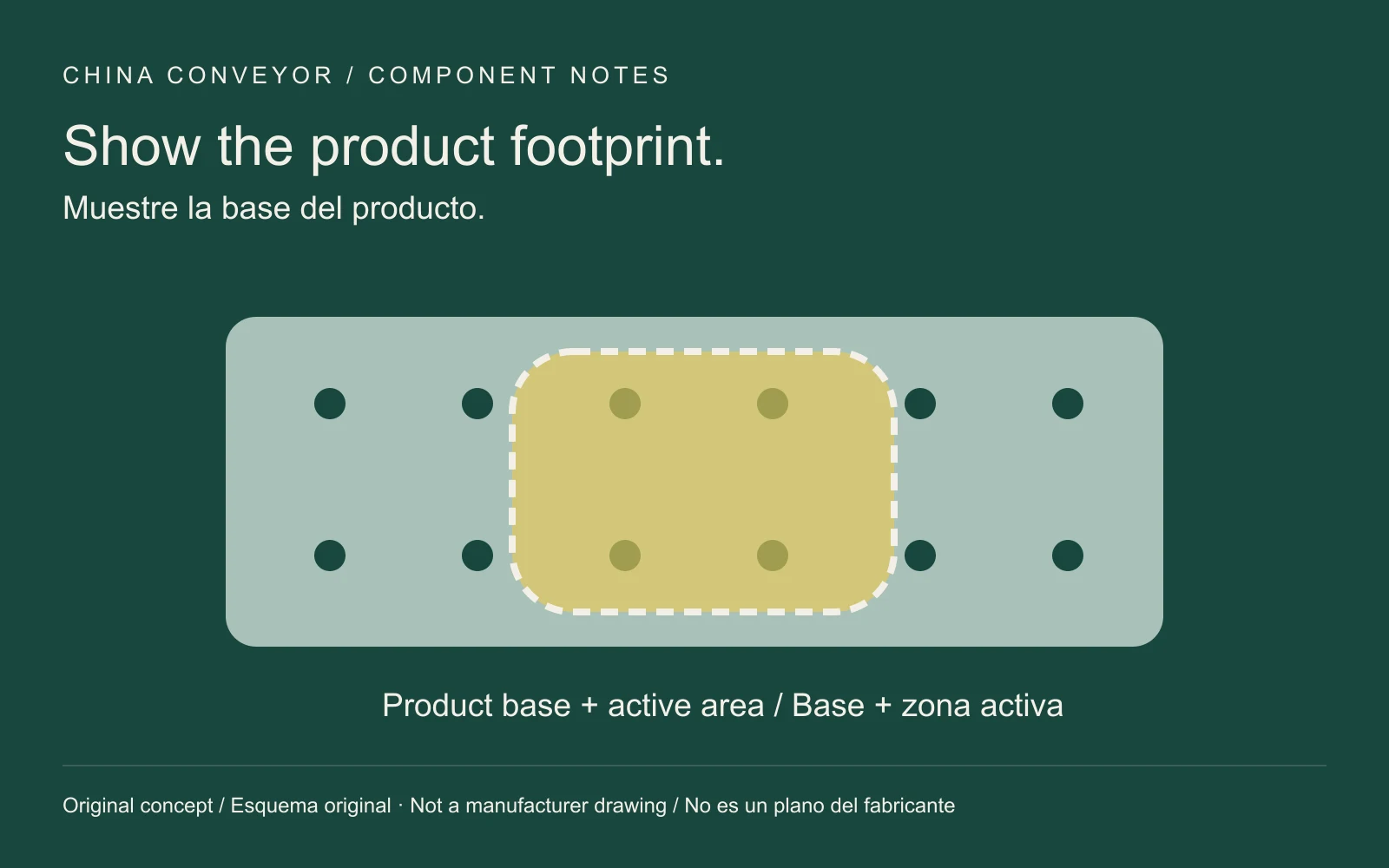
Ask the supplier to show the proposed working area and explain how the product sits above it. Request the exact product conditions and supply requirements assumed in its offer. Keep the selected perforation arrangement with the machine documents so that a replacement belt can be identified accurately.
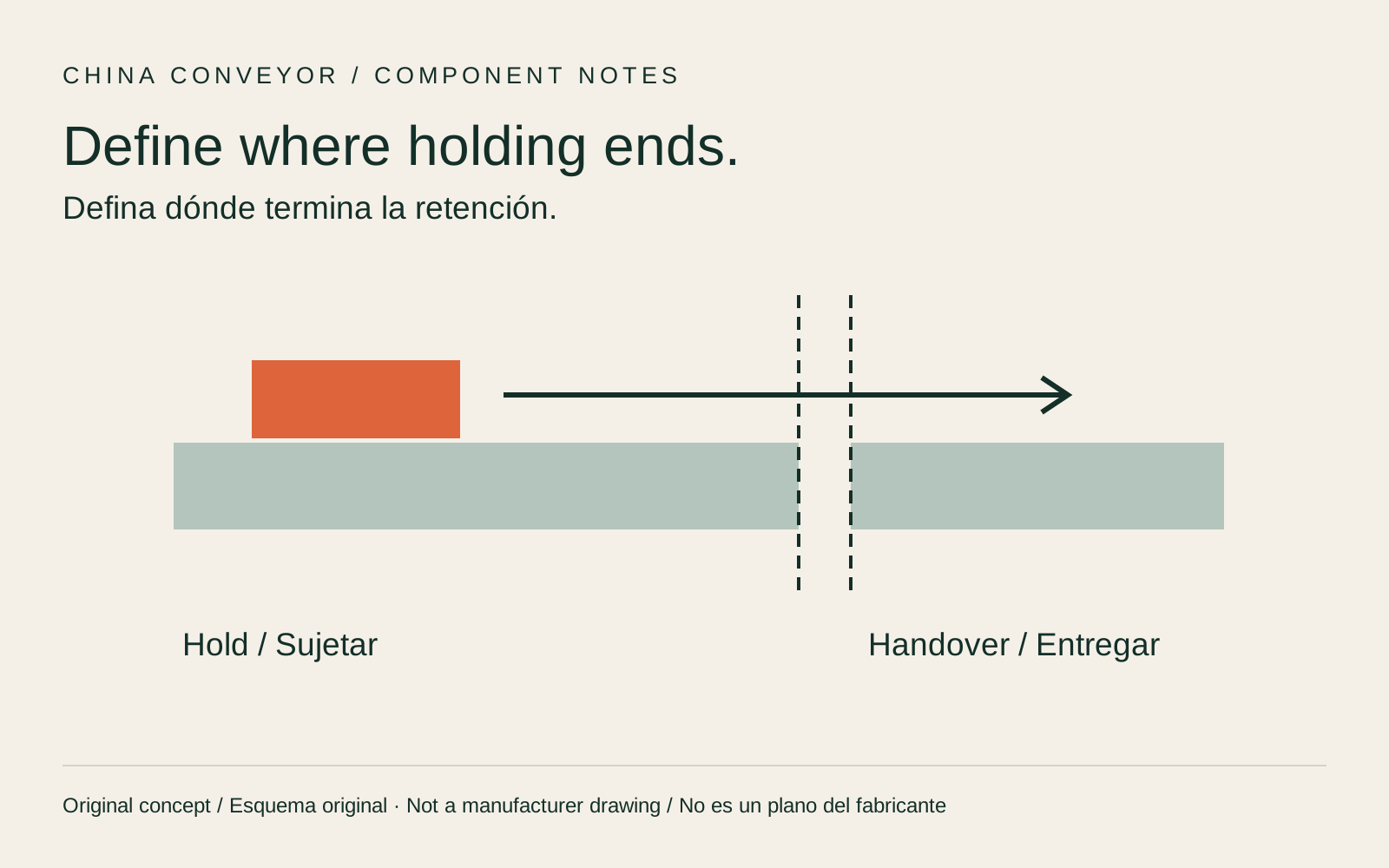
Include the handover where holding must end
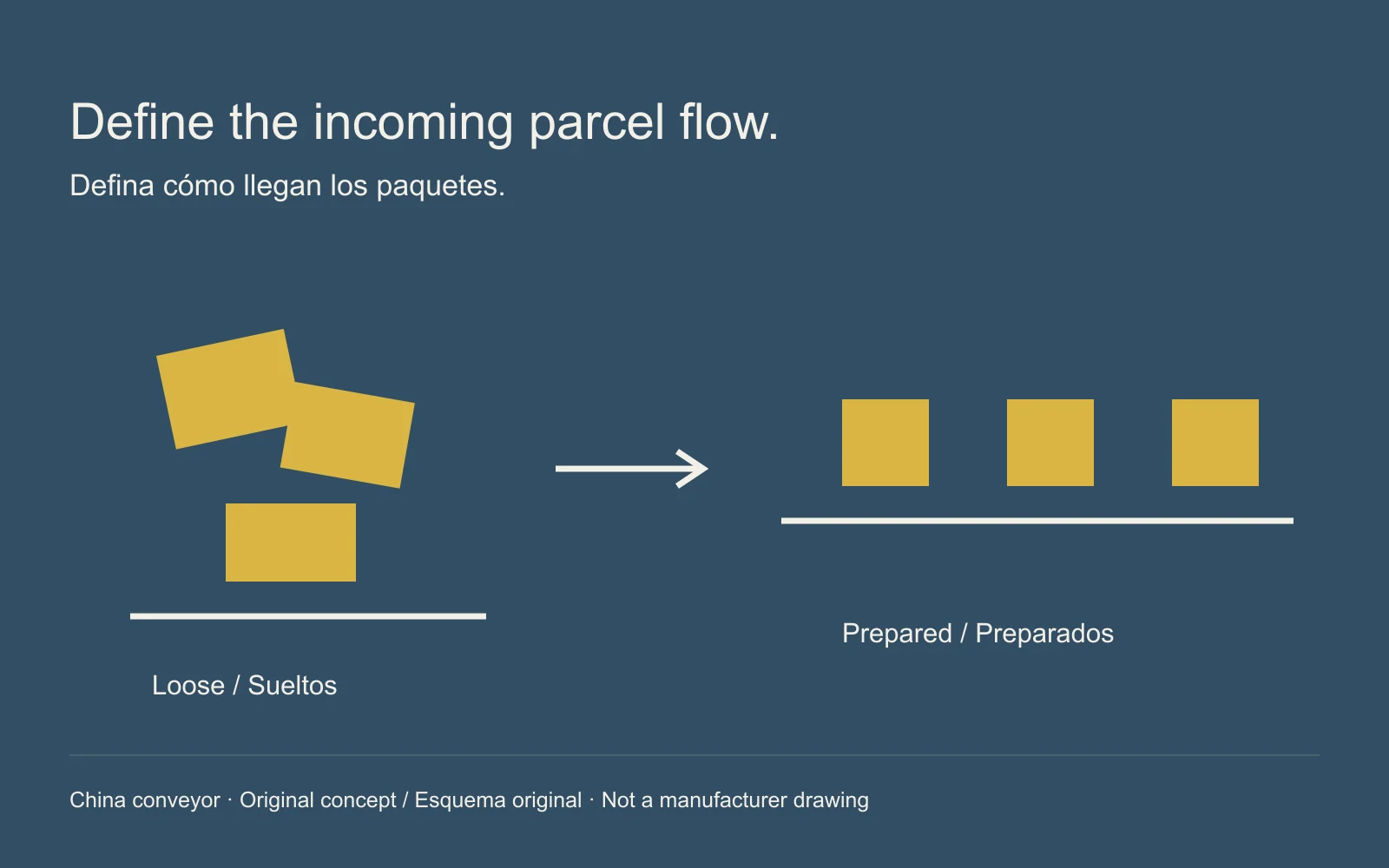
A successful demonstration needs a defined entry and exit as well as a stable middle section. Show the upstream presentation and what the downstream machine expects to receive. Ask how the proposed arrangement releases or hands over the product at the agreed point.
Use samples covering the relevant formats and base conditions. Agree which observations count as acceptable movement and which conditions remain untested. A supplier demonstration with one clean sample is evidence for that demonstration, not proof for every format in the catalogue.
Put service details beside the holding requirement
The enquiry should also ask how the belt, chamber and air system will be accessed and maintained in the intended environment. Request consumables and replacement-part references for the quoted configuration. Confirm the available utilities before treating the installation as complete.
The original drawings illustrate the relationship between product footprint and suction area. They are not a hole-drilling pattern, blower-sizing calculation or guaranteed holding-force result. The useful output is a testable product-handling specification and an identifiable assembly.
Manufacturer announcements and our analysis are distinguished. Product claims require verification for the specific application.
Sources
Dorner — Vacuum belt conveyors ↗Primary overview of perforated-belt suction and application-specific design. No holding-force or speed claim is inferred.
Nercon — Vacuum conveyor systems ↗Relates hole arrangements, product base, plenum and blower selection. Manufacturer examples are not presented as this site's trials.